If you have any question about this tour or need help with planning a trip, please do not hesitate to get in touch with us.
Our travel experts are ready to help.


Why Book with Bookmundi
No credit card or booking fees.
Best price guaranteed.
Carbon neutral tours.
25,000+ trip reviews, with an average rating of 4.8 out of 5.
What are customers saying about Bookmundi
4.67/5
Excellent based on 850 customer reviews from

Karen
Problem-free booking and service right through the process
1 week ago
Exploring La Gomera - 8 Days
BM-39912Share this tour link.
5.0Based on
8 days
“
Very clear instructions on the walking route. We used the Pathfinder app which was very impressive. Our luggage always ended up in the correct place. Two days finished with 4.5km walk on the road which detracted from the overall experience.
Anonymous | Traveled in March
5 - Excellent
Carbon neutral
CO2 emissions resulting from all trips on Bookmundi will be offset via investments in carbon reduction projects.
Return ferry from Los Cristianos (Tenerife) to San Sabastian (La Gomera) when travelling both ways with the same ferry operator. There maybe a supplement if we have to purchase 2 one-way tickets.
Others
One piece of luggage per person transferred between your accommodation, not exceeding 20kgDigital information pack including Navigational App, maps and route notesEmergency hotlineGPX Files
Good to Know
Travel Insurance
Visa
Other Practical Information
Itinerary
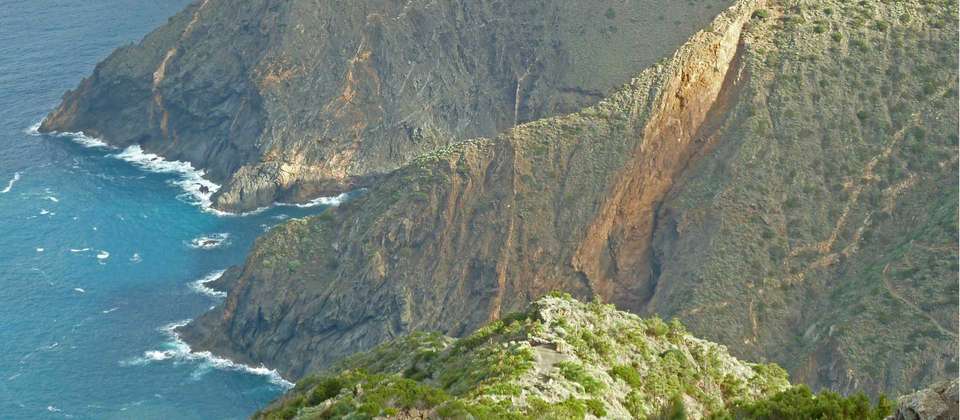
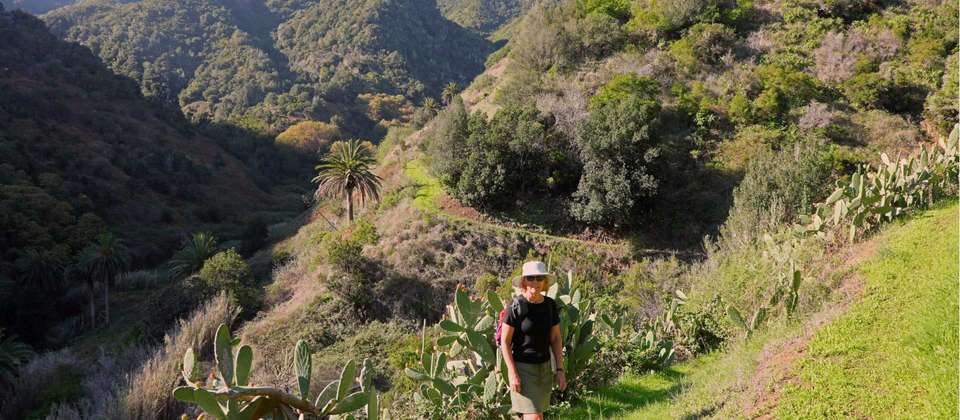
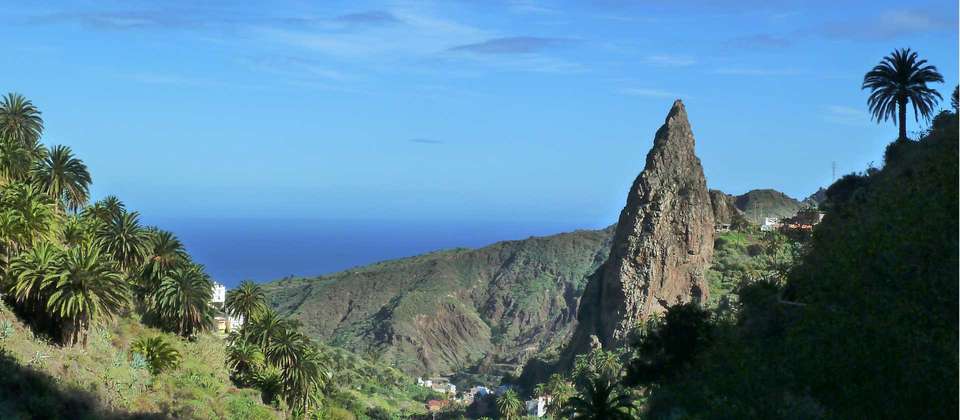
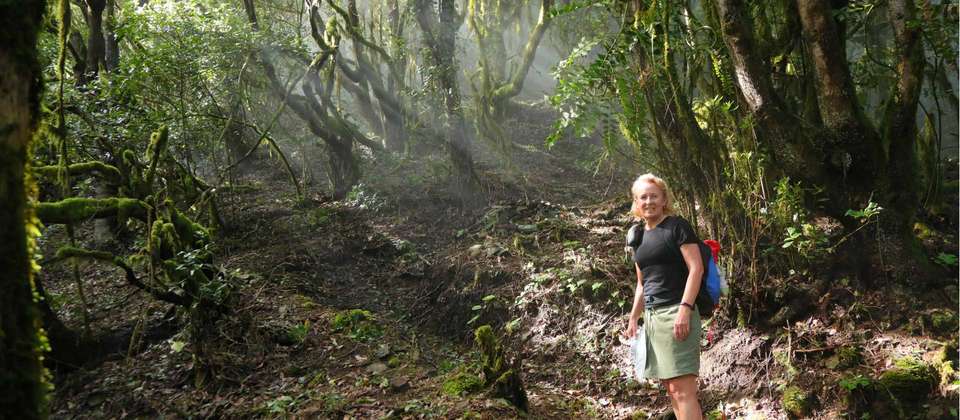
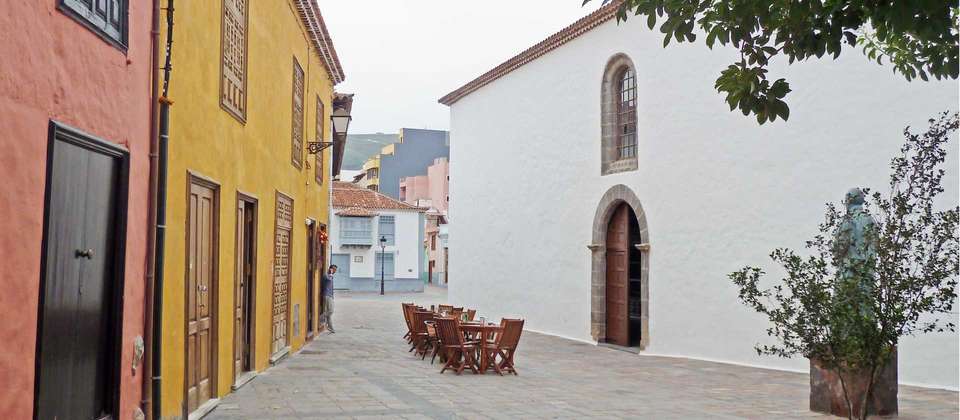
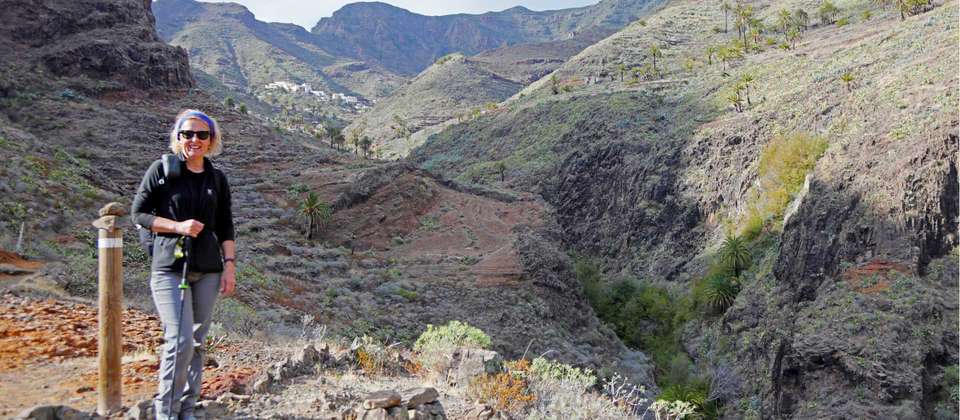
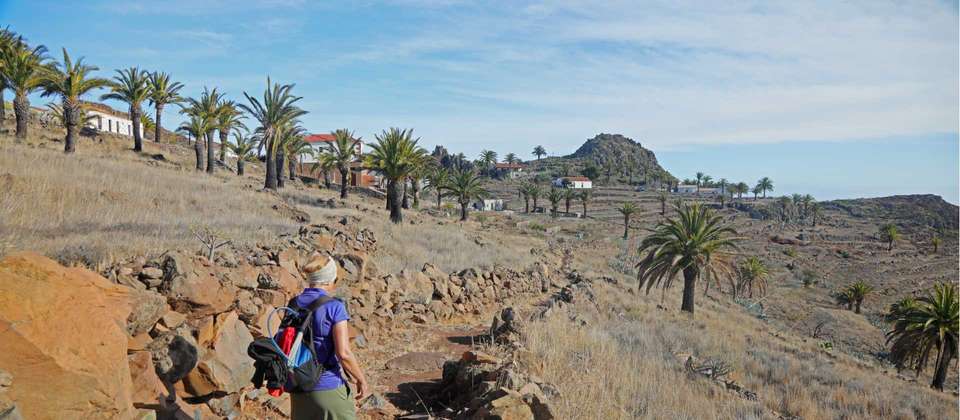
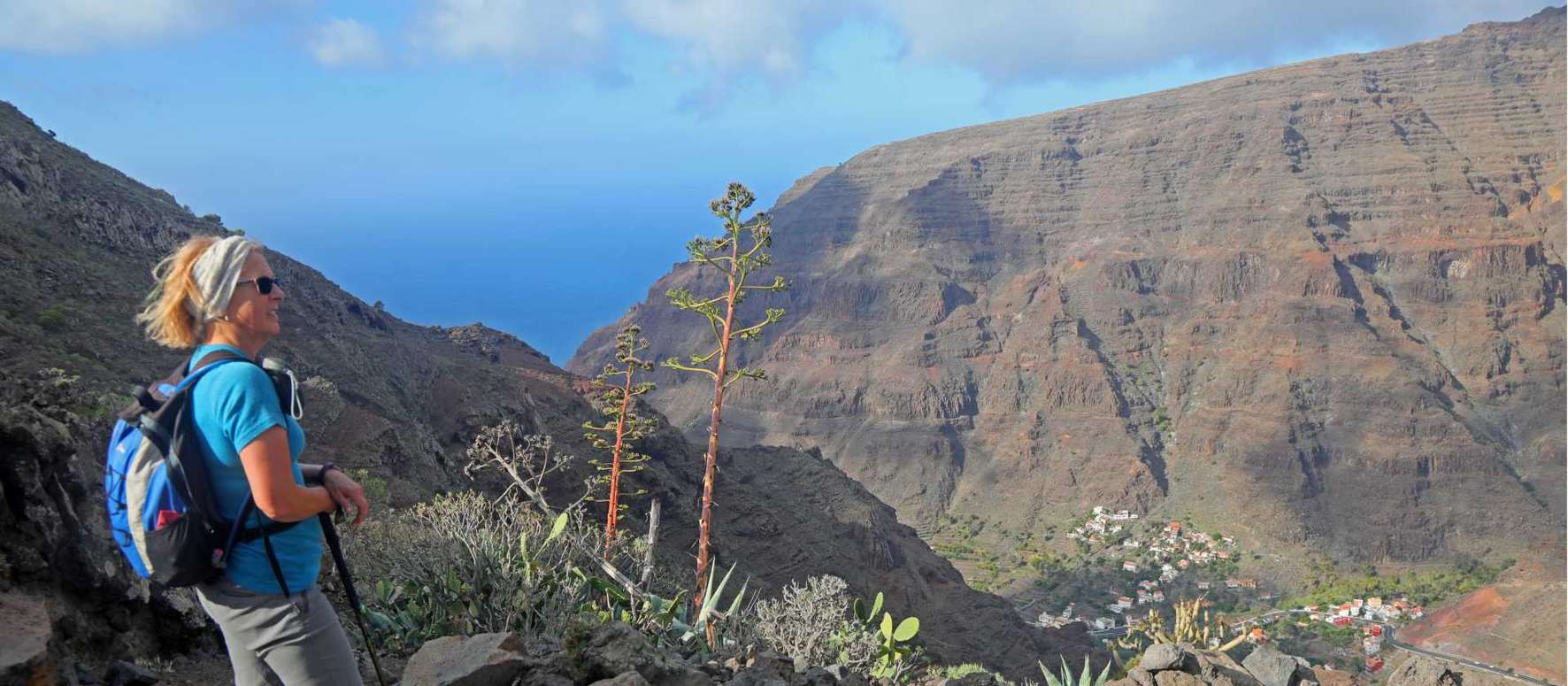
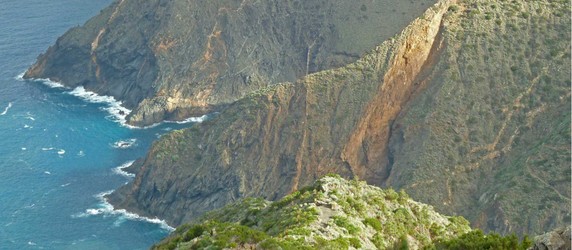
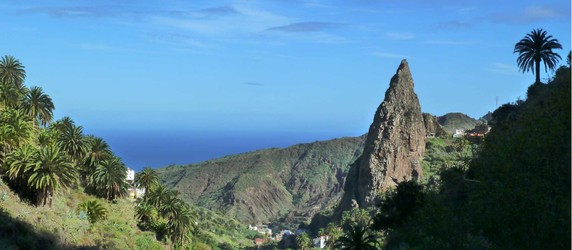
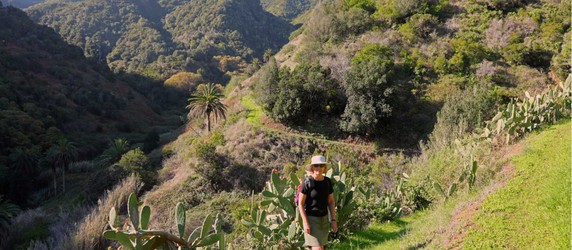
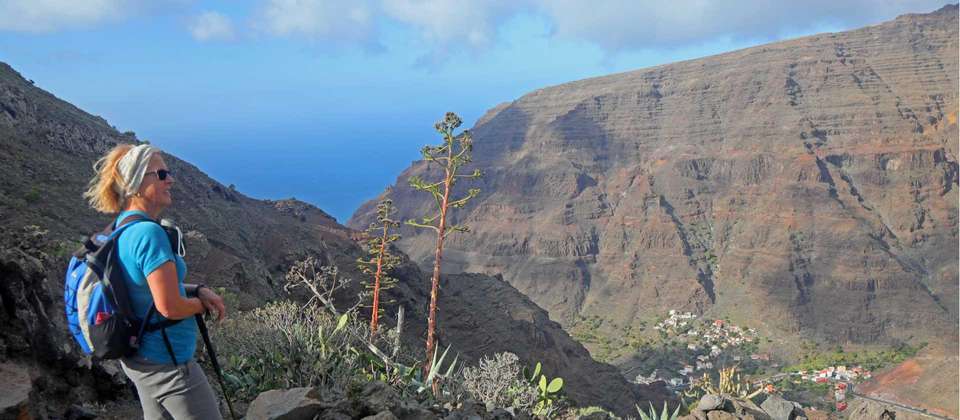
Experience the lush plantations, mountains and whitewashed villages of exotic La Gomera. If you want traditional Spanish atmosphere with an island twist and year-round pleasant temperatures on your next walking holiday, don’t think twice: La Gomera is the place to go. From sea level with its exotic banana plantations, walk up through the rocky landscape to reach the unique 'laurisilva' cloud forest that covers the top of the island. This is the start of a perfect weeklong walking holiday if you want to be alone with nature. The scenery keeps changing as you walk down through magnificent ravines to the warm, sunny coast… and then climbing again through hidden tiny settlements and towards awe-inspiring views of volcanic ‘chimneys’. Due to its volcanic origins, La Gomera’s scenery is very dramatic. Whether you’re walking inland or along the coast, there is very little flat land, with deep ‘barrancos’ cutting into the island. Average temperatures vary by just a few degrees between winter (19°C/66°F) and summer (25°C/ 77°F), so you will see (and taste!) an impressive range of tropical and citrus fruit. They typically grow on ingeniously built terraces on the steep valley sides, which may remind you of places in Southeast Asia or Hawaii. In just 8 days, this walk will introduce you to the beautiful scenery and friendly people of La Gomera.
day 1Arrive San Sebastian (from Los Cristianos, Tenerife)
Arrive by ferry at the port of San Sebastian from Los Cristianos, Tenerife (roundtrip included). Your hotel is located approx 15 minutes by foot or a short taxi journey (± €10). Accommodation: Hotel Torre del Conde is our 3* hotel and is situated in the centre of San Sebastian on a bed & breakfast basis. Dinner can be taken in one of the many restaurants in town. There are two beaches within easy reach on foot. Or upgrade and stay in the Parador hotel.
day 2Transfer to Agulo, walk to Vallehermoso approx 13.7 km/8.5 miles, 5.45 h
day 3Vallehermoso to Chipude 10 km/6.2 miles, 4.5 -5 h
day 4Free day or walk to Valle Gran Rey approx 11.7 km/7.27 miles, 4 h
day 5Chipude to Playa de Santiago 20 km/12.4 miles, 8 h
day 6Free day, explore and relax in Santiago
day 7Return to San Sebastian 15.7 km / 9.7 miles, 5.5-7 h (assuming you finish at Bar El Atajo)
day 8Arrangements end after breakfast
What's Excluded
A
AnonymousVerified Traveler
5.0 | Excellent
Very clear instructions on the walking route. We used the Pathfinder app which was very impressive. Our luggage always ended up in the correct place. Two days finished with 4.5km walk on the road which detracted from the overall experience.
A
AnonymousVerified Traveler
5.0 | Excellent
Excellent hiking adventure. The instructions and accommodations were very good. Gomera is a jewel of an island!
A
AnonymousVerified Traveler
4.0 | Very Good
The walks were through beautiful landscapes. Some walks were on the challenging side but well worth the effort. The arrangements for pickup and instructions provided were reliable.
A
AnonymousVerified Traveler
5.0 | Excellent
This was a great trip, well organised and with stunning scenery. All the accommodation was good and comfortable.
A
AnonymousVerified Traveler
5.0 | Excellent
This trip was very well organized. I was very satisfied well planned and communication great through out. Thanks to Andy was on hand to sort a problem. I recommend them and will be using them again soon.
Similar Tours You Might Like
Discover our top tours similar to Exploring La Gomera - 8 Days that you might like.
A serendipitous walk in the Sierra de Tramontana in Majorca. With peaks up to 1370m/4500ft, the Sierra de Tramontana is a rugged limestone mountain range in Majorca. It runs parallel to the NW coast of the Spanish island, forming one of the most spectacular coastlines of the Mediterranean. Mountain tops are bare, but lower slopes are thickly forested with holm oak and Aleppo pine. In the settled valleys there are ancient terraces of olive, orange and almond groves. A protected length of coastline that you'll walk along includes an important bird sanctuary and you may see the rare European Black Vulture near Puig Roig. The villages of the Majorcan mountains, such as Valldemossa, Soller, Deia, Biniaraix and Fornalutx are particularly attractive, with their mellow stonewalls and flower-bedecked balconies. Our carefully compiled walking route descriptions take you to the peaks of El Teix (1063m), along the 19th century "Archduke's trail" above Valldemossa, and the fine viewpoint of Massanella peak (1351m) near Lluc monastery. We follow the restored Pilgrims’ Way, which ascends a rugged barranco (gorge) from Biniaraix to Mirador d'Ofre. Also on our itinerary is the spectacular coastal footpath between Cuala Tuent and Mirador de ses Barques. Based at Soller for two nights you may choose to follow delightful footpaths to Deia, or take the vintage tram down to Puerto Soller for a boat trip to the beach of Sa Calobra (below the lofty cliffs which are the habitat of a wide range of seabirds including Eleonora's Falcon) or travel the vintage narrow-gauge railway to Palma de Mallorca and back. Our walking tour is based on three centres, the Santuari (monastery) of Lluc, the cathedral town of Soller and Valldemossa, famous for its Carthusian monastery and for its associations with Chopin and the Austrian Archduke Ludwig.
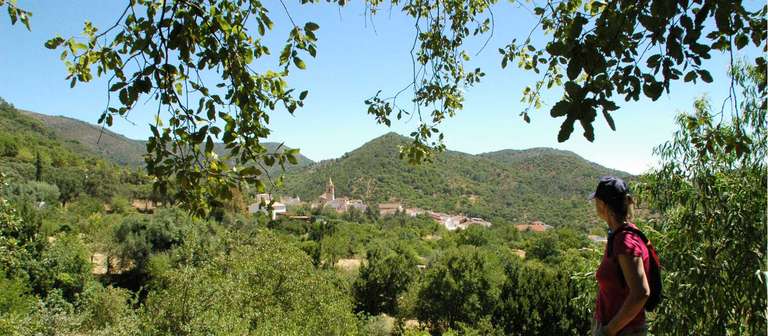
Sierra de Aracena Natural Park offers stunning walking year round through historic white villages & Moorish forts along old Smugglers' Trails surrounded by oak, elm and chestnut forests. Sierra de Aracena y Picos de Aroche is the second largest Natural Park of Andalucía (declared a Natural Park in 1989 and awarded the European Charter for sustainable tourism), lying in the north of Huelva province, which in turn is the most westerly province of Andalucía, not far indeed from the Portuguese border. With only 40,000 inhabitants scattered over its 3.000 sq km it is probably one of the least known and visited of all the parks in Andalucia. You’ll be surprised by the lush vegetation almost all year round, the profusion of wild flowers through spring, the autumnal colours lighting up la Sierra and a gourmets feast of wild mushrooms found in masses given the right conditions. The rolling hills and white villages offer wonderful walking opportunities. The character of the villages has changed little over the centuries, their history reflected in their architecture and the landscape surrounding them. On walks you pass along Roman cobbled tracks, glimpsing abandoned watermills and ancient hill forts left by the Moors. You can still see villagers working their small allotments, hear the ringing of goat bells among the oaks and chestnuts, and the bubbling of the many streams and springs which abound in these hills. Many of these tracks are accompanied by the ancient arabian water system “acequia” and were frequently used during the Spanish Civil War and after to smuggle goods into Spain from Portugal. Herds of the black Iberian pig grazing among the groves of cork and holm oak are a common sight. The area is rich in bird life with an important population of black vultures. Other raptors are common and include the Golden, Short-toed and Bonelli’s eagles. You can see stork’s nests on almost every village church as well as the endangered black stork, and as you wander along the streams, sightings of heron and egrets are common. Andalucía suffered acutely during “La epoca negra” – the black period – or simply “el hambre” - the hunger - during the 1940’s and 50’s, after the Spanish Civil War, forcing emigration to larger cities and abroad to find work to support their families. In La Sierra some opted to join the smuggling trade and become “Mochileros” – packmen. It was a tough and risky business carrying up to 30kgs in homemade backpacks from the Portugese border village Barrancos into the Sierra to be then moved down to Sevilla. Organised by smuggling bosses, the mochileros would carry loads of main staples beans, coffee and tobacco over 100 km in a 24 hr period. Empty mule trains would be used along the wider paths to distract the Guardia Civil whilst the Mochileros would use the higher, rockier paths to stealthily enter La Sierra and deliver their goods to places such as La Posada in Alájar where hiding places where provided until the goods were moved on.
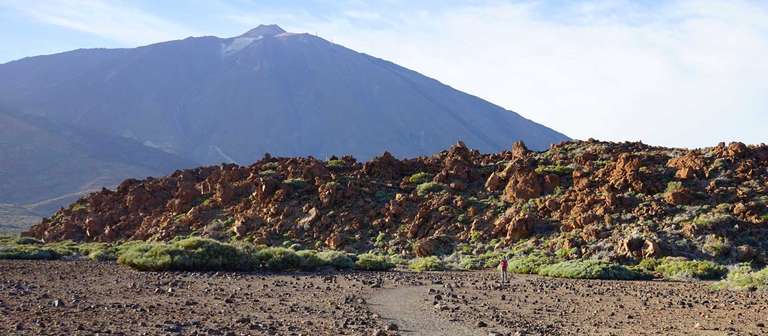
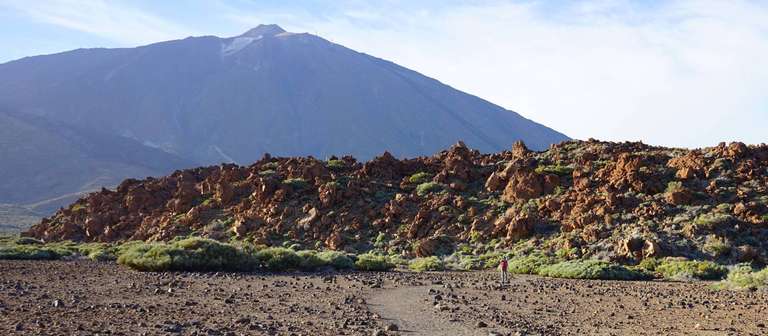
Discover cloud forests, volcanoes and plantations on this exotic Spanish island. Your first view of the great volcano Mount Teide (3718m, 12188ft) will probably be from the aeroplane window. A day or two later you will be there, walking across the Cañadas del Teide, a massive crater of 16km diameter to arrive at the unrivalled Parador Las Cañadas del Teide, your overnight stop (2200m).
Mount Teide is Spain's highest mountain and the third tallest volcano in the world. Tenerife is the highest island in the Atlantic and is the largest of the Canary Islands at 1275 square miles, 2053 km2. Walking on North Tenerife is hugely varied and our aim is to show you as much as possible. After the Cañadas del Teide adventure, you explore the north west of the island with its own mountain range, the Teno and views across the sea to the island of La Gomera and down the cliffs to the impossibly located village of Masca. Finally, there is a walk in the rugged Anaga Peninsula - its top is covered in dripping ancient 'laurisilva' woodland. Descending past fertile cultivated fields, tiny villages, then dry cactus strewn valleys, you'll reach the rocky coast of this stunning Canary Island.
This is an island walking adventure like no other.
This hike could be combined with the 8-day La Gomera walk (code JG8) to make a fabulous two-week Canarian walking holiday.
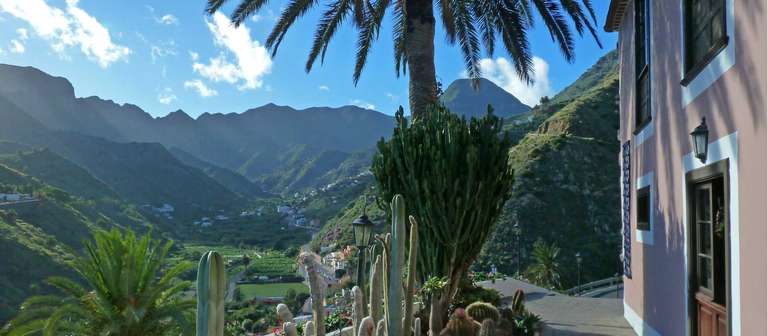
Experience La Gomera's lush plantations, mountains and whitewashed villages. With free days to relax or explore further, plus 3 nights spent in your private apartment, this is our longest itinerary in La Gomera.
The circular walk allows you to fully enjoy this hidden gem of an island and its truly dramatic scenery, all the way from sea level with its exotic banana plantations to the misty ‘forest in the clouds’ that covers the top of the island.
What’s more, it includes a visit to the village of Hermigua, idyllically set in the middle of a ravine, which is covered in both sides by countless terraces.
La Gomera has survived from the frenzy of development seen elsewhere in the Canary Islands and has retained an old-world rural feel, with homesteads, small vineyards and rocky peaks set in an amazing crown of laurel cloud forest.
The island has a relaxed atmosphere and, although you will not come across any hordes of tourists, what you will find is a good infrastructure of roads, amenities and services, as well as a great range of affordable, traditional restaurants and small family-run hotels.
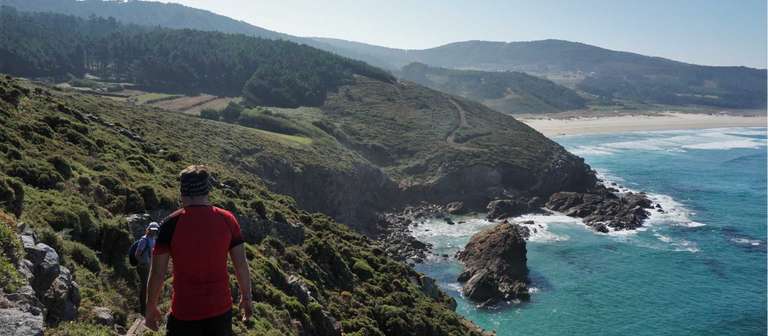
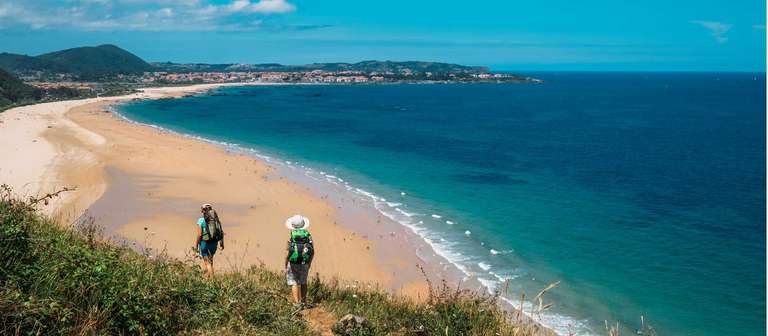
For those drawn to wild, windswept coasts and hidden gems, the "Camino dos Faros: The Lighthouse Way" offers an unforgettable walking adventure along Spain’s Costa da Morte. This 8-day, self-guided tour is tailored for seasoned explorers and seniors seeking a moderately challenging yet deeply scenic trek.
The route, crafted by local friends, is a distinctive alternative to the classic Camino, hugging the dramatic cliffs and deserted beaches between Malpica and Finisterre. Each day, you’ll traverse rugged footpaths once trodden by Galician fishermen—paths that at times demand sure-footedness and a touch of courage. The itinerary thoughtfully avoids the most difficult segments, incorporating vehicle transfers as needed, so you can focus on savoring the panoramic ocean views and quiet coves ideal for a refreshing summer swim.
Evenings unfold in inviting fishing villages, where welcoming accommodations and exceptional regional cuisine await. From Michelin-starred restaurants to casual seaside shacks serving freshly grilled fish, the gastronomic delights of Galicia are as much a part of the journey as the scenery. Along the way, your trek will lead you to six fascinating destinations, culminating in Vimianzo.
The true highlight of this tour is the rare chance to explore a coastal Camino route, largely untouched by crowds, where natural beauty and authentic local culture go hand in hand. For travelers who yearn for immersive landscapes, vibrant village life, and a taste of Galician hospitality, this walking tour package promises a blend of adventure, comfort, and culinary discovery.
Follow one of the original pilgrimage routes to Santiago between Bilbao and Santander. 'El Camino del Norte' originates from the 9th Century and was one of the original Camino routes for pilgrims walking to Santiago de Compostela. Sheltered from the rest of the Muslim dominated Iberian Peninsula by the Picos de Europa and Cordillera Cantabrica, it was considered the safest route for Christian pilgrims making their way to the tomb of St James. The full route starts in Irun near the French border and joins the French route at Arzua. This stage, from the bustling city of Bilbao, home to the iconic Guggenheim Museum, takes you through a variety of landscapes and architecture, both ancient and modern, while staying in small hotels with local character. The dramatic coastline and mountain paths make the northern way both challenging and rewarding, whilst the quieter trails offer a great alternative to the more popular French route.
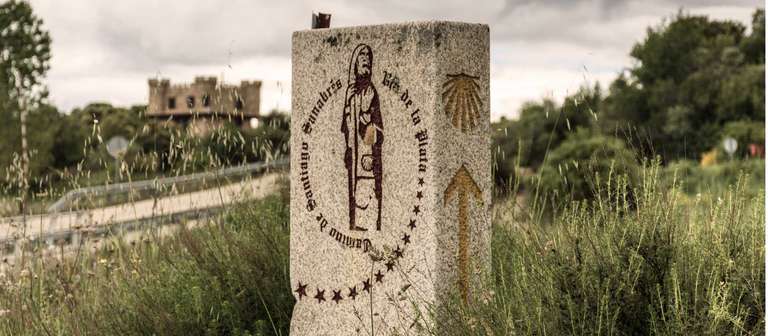
Trace the footsteps of ancient traders and pilgrims on the "Camino Sanabrés to Santiago," a self-guided 7-day walking trip through Spain’s tranquil Galician countryside. This route, perfect for experienced travelers and seniors, offers a moderate trekking experience that weaves together natural beauty and centuries-old history.
Beginning in the historic city of Ourense—famed for its lively tapas scene and soothing thermal springs—you’ll journey through quiet hamlets, oak and chestnut forests, and rolling hills. Along the way, visit impressive landmarks like the Trappist monastery in Oseira and savor authentic local delicacies, from Cea’s artisanal bread to the monks’ herbal ‘Eucaliptine’ liquor.
As you approach Santiago de Compostela, each step is steeped in cultural resonance. The Sanabrés Way predates even Christian pilgrims, with origins tracing back to Celt, Phoenician, and Roman traders. Evidence of their passage is found in the hospices, temples, and monasteries that dot the route, perfectly complementing the lush landscape.
Upon arrival in Santiago, claim your official Compostela certificate and celebrate your accomplishment with Galician cuisine and reflections on your journey. The unique selling point of this walking tour is its immersive blend of ancient heritage and serene natural settings, all experienced at a comfortable and thoughtful pace. For those who appreciate meaningful exploration off the beaten track, this tour package promises both discovery and tranquility.
Discover cloud forests, volcanoes and plantations on this exotic Spanish island. Your first view of the great volcano Mount Teide (3718m, 12188ft) will probably be from the aeroplane window. A day or two later you will be there, walking across the Cañadas del Teide, a massive crater of 16km diameter to arrive at the unrivalled Parador Las Cañadas del Teide, your overnight stop (2200m).
Mount Teide is Spain's highest mountain and the third tallest volcano in the world. Tenerife is the highest island in the Atlantic and is the largest of the Canary Islands at 1275 square miles, 2053 km2. Walking on North Tenerife is hugely varied and our aim is to show you as much as possible. After the Cañadas del Teide adventure, you explore the north west of the island with its own mountain range, the Teno and views across the sea to the island of La Gomera and down the cliffs to the impossibly located village of Masca. Finally, there is a walk in the rugged Anaga Peninsula - its top is covered in dripping ancient 'laurisilva' woodland. Descending past fertile cultivated fields, tiny villages, then dry cactus strewn valleys, you'll reach the rocky coast of this stunning Canary Island.
This is an island walking adventure like no other.
This hike could be combined with the 8-day La Gomera walk (code JG8) to make a fabulous two-week Canarian walking holiday.