Highlights
Gullfoss Falls: See Gullfoss, where the glacial-fed Hvítá River drops in two stages into a rugged canyon, sending spray into the air as the water cuts through layers of rock. The falls sit at the heart of the Golden Circle and show the force of Iceland’s meltwater rivers, especially when seasonal flow increases.
Hvolsvollur: Visit the Lava Centre, an interactive museum where you will learn about the geology and natural occurrences that have influenced and created Iceland's incredible landscapes.
Skogafoss: Visit Seljalandsfoss and Skógafoss, two south coast waterfalls shaped by rivers dropping from Iceland’s interior. Each fall offers a different profile, with water plunging over former sea cliffs and cutting into the rock below, illustrating how glacial meltwater and changing coastlines have formed this section of the island.
Skaftafell: Move through the Skaftafell area of Vatnajökull National Park, where outlet glaciers, lava fields and plains meet at the edge of Europe’s largest ice cap. The landscape shows how volcanic activity and ice have worked together over time, carving valleys, feeding rivers and leaving moraines that mark the glacier’s earlier extent.
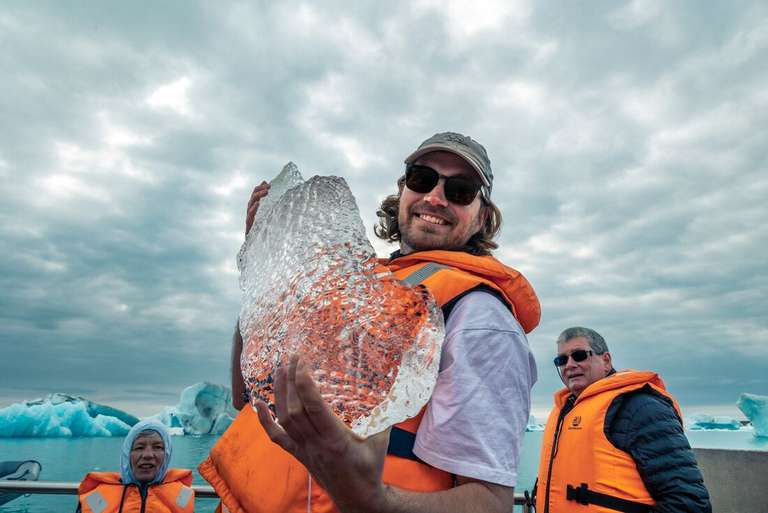
Lake Jokulsarlon: Spend time at Jökulsárlón, a glacier lagoon where ice breaks from Breiðamerkurjökull and drifts slowly towards the sea. The lagoon doubled as an Arctic setting in the James Bond film Die Another Day, chosen for its floating icebergs and stark contrasts.
Lake Myvatn: Spend time around Lake Mývatn, an area known for volcanic landforms and birdlife. You may explore the lava formations at Dimmuborgir, walk among pseudocraters or visit the sulphur fields and steaming vents at Námaskarð, gaining a sense of how recent volcanic activity has shaped this northern landscape.
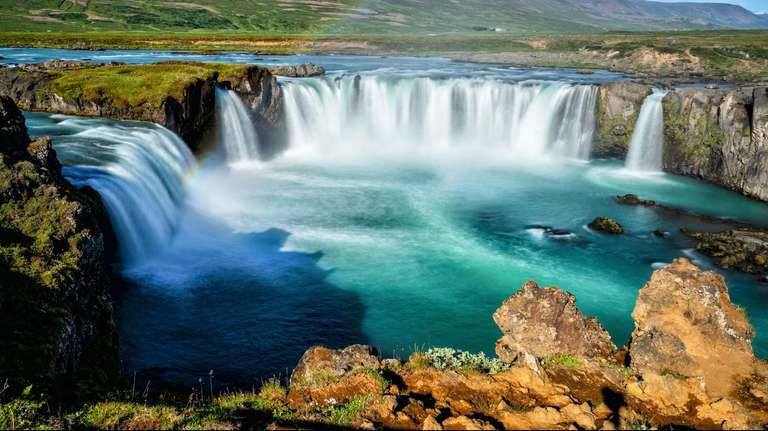
Goðafoss: Pause at Goðafoss, where the Skjálfandafljót River drops over a curved horseshoe of rock into a wide basin. The name, “waterfall of the gods”, refers to stories from the Christianisation of Iceland around the year 1000, and the site illustrates how glacial rivers cut through volcanic plateaux in the north.
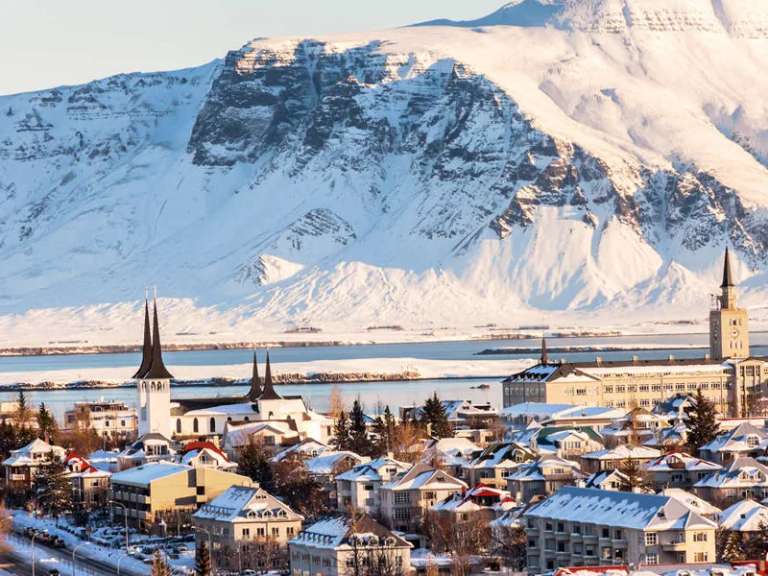
Akureyri: Join your Travel Director for an orientation of Akureyri, often referred to as the capital of north Iceland. See the harbourfront, Akureyri Church and key streets, and note how fishing, education, services and regional transport all centre on this town at the head of Eyjafjörður.
Hvammstangi: Visit the Kidka wool factory in Hvammstangi, where Icelandic wool is knitted into lopapeysa-style garments recognised worldwide as a symbol of the country. You’ll see how the dual-layer fleece is spun and knitted on modern machines, and how traditional patterns are adapted for export while keeping the character of Iceland’s best-known knitwear.
Hólabak: Visit Holabak dairy and equine farm to see how a small Icelandic farm combines milk production with Icelandic horse breeding. You’ll hear how herd size, milking and grazing are managed, and learn why Icelandic horses that leave the country can never return, a rule that helps keep the island’s only horse breed disease free.
Snaefellsjokull National Park: Visit Snæfellsjökull National Park at the tip of the Snæfellsnes Peninsula, where a glacier sits over a stratovolcano made widely known by Jules Verne’s Journey to the Centre of the Earth. Coastal lava fields, cliffs and views towards the ice cap give a clear impression of how volcanic activity and the sea have shaped this area.
Arnarstapi: Stop at Búðir and Arnarstapi to see two contrasting parts of the peninsula’s coastline. At Búðir, a black church stands on a lava field close to the shore, while Arnarstapi offers a walk along sea cliffs with basalt columns, rock arches and nesting seabirds showing how the Atlantic has cut into the lava.
Snæfellsnes Peninsula: Walk at Djúpalónssandur, a black-pebble bay backed by lava formations. Rusted remains from a British trawler wreck lie on the shore, and the traditional lifting stones used to test fishermen’s strength still sit above the beach, linking the site to earlier working life on this stretch of coast.
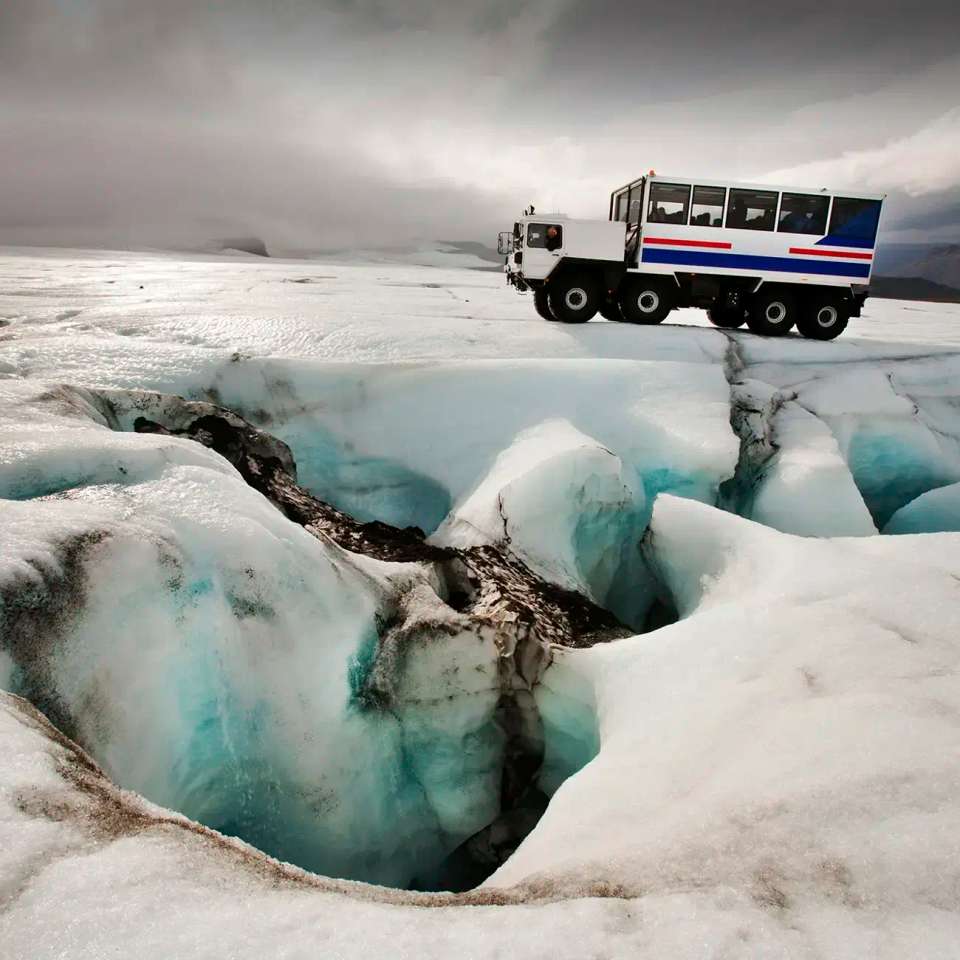
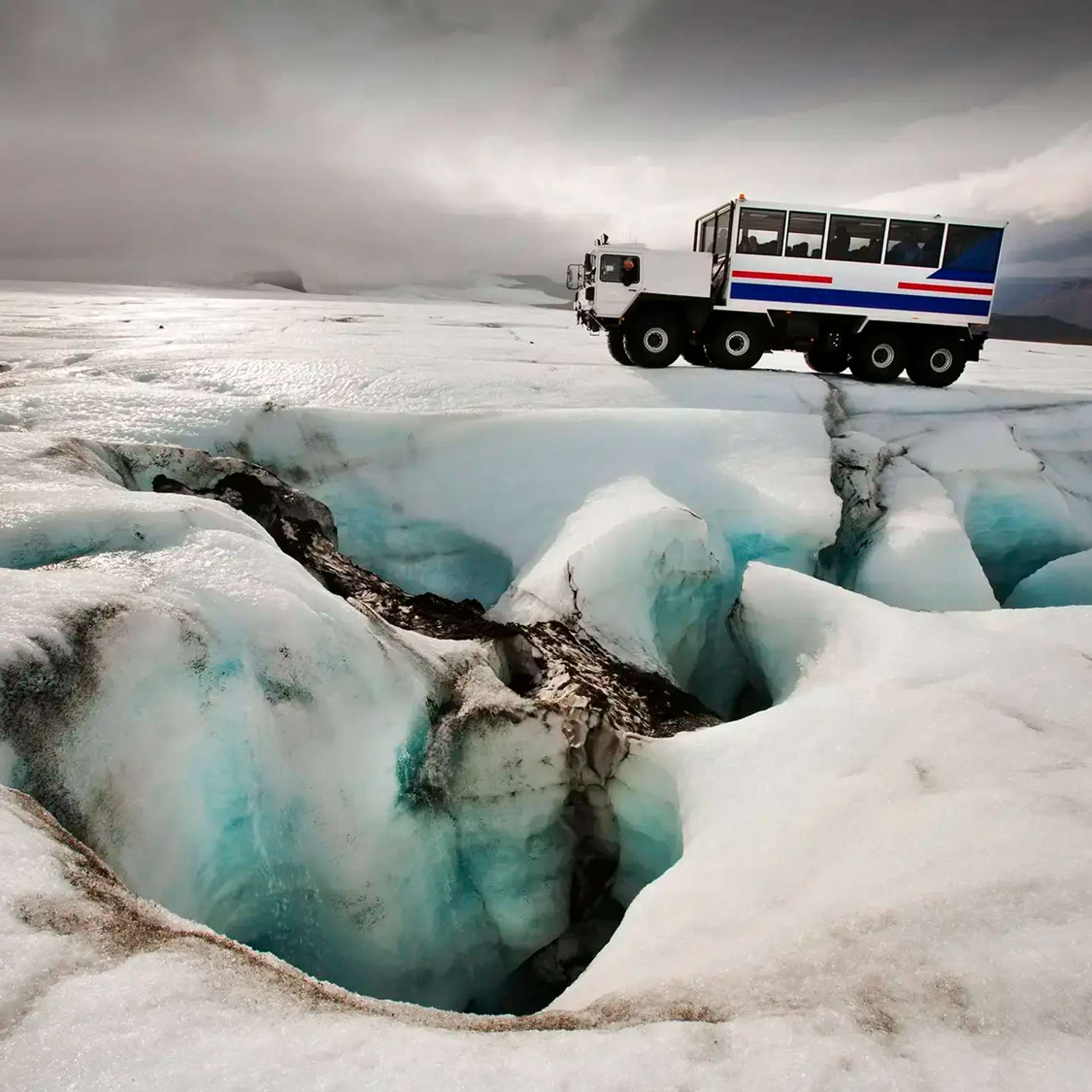
Husafell: Ride in modified glacier vehicles up onto Langjökull, one of Iceland’s largest ice caps. With a Local Expert, you’ll hear how the glacier is measured and how its meltwater feeds rivers, then walk inside a network of man-made ice tunnels to see compacted snow, ash layers and blue ice from within the glacier itself.
Reykholt: Visit Sturlureykir, a family-run horse-breeding farm. You’ll meet Icelandic horses and hear why the breed has remained isolated for over a thousand years, with five recognised gaits including the smooth tölt. A nearby hot spring is used to bake dense rye bread, which you’ll taste as part of the visit.
Lake Myvatn: Spend time around Lake Mývatn, an area known for volcanic landforms and birdlife. You may explore the lava formations at Dimmuborgir, walk among pseudocraters or visit the sulphur fields and steaming vents at Námaskarð, gaining a sense of how recent volcanic activity has shaped this northern landscape.
Goðafoss: Pause at Goðafoss, where the Skjálfandafljót River drops over a curved horseshoe of rock into a wide basin. The name, “waterfall of the gods”, refers to stories from the Christianisation of Iceland around the year 1000, and the site illustrates how glacial rivers cut through volcanic plateaux in the north.
Akureyri: Join your Travel Director for an orientation of Akureyri, often referred to as the capital of north Iceland. See the harbourfront, Akureyri Church and key streets, and note how fishing, education, services and regional transport all centre on this town at the head of Eyjafjörður.
Hvammstangi: Visit the Kidka wool factory in Hvammstangi, where Icelandic wool is knitted into lopapeysa-style garments recognised worldwide as a symbol of the country. You’ll see how the dual-layer fleece is spun and knitted on modern machines, and how traditional patterns are adapted for export while keeping the character of Iceland’s best-known knitwear.
Hólabak: Visit Holabak dairy and equine farm to see how a small Icelandic farm combines milk production with Icelandic horse breeding. You’ll hear how herd size, milking and grazing are managed, and learn why Icelandic horses that leave the country can never return, a rule that helps keep the island’s only horse breed disease free.
Snaefellsjokull National Park: Visit Snæfellsjökull National Park at the tip of the Snæfellsnes Peninsula, where a glacier sits over a stratovolcano made widely known by Jules Verne’s Journey to the Centre of the Earth. Coastal lava fields, cliffs and views towards the ice cap give a clear impression of how volcanic activity and the sea have shaped this area.
Arnarstapi: Stop at Búðir and Arnarstapi to see two contrasting parts of the peninsula’s coastline. At Búðir, a black church stands on a lava field close to the shore, while Arnarstapi offers a walk along sea cliffs with basalt columns, rock arches and nesting seabirds showing how the Atlantic has cut into the lava.
Snæfellsnes Peninsula: Walk at Djúpalónssandur, a black-pebble bay backed by lava formations. Rusted remains from a British trawler wreck lie on the shore, and the traditional lifting stones used to test fishermen’s strength still sit above the beach, linking the site to earlier working life on this stretch of coast.
Husafell: Ride in modified glacier vehicles up onto Langjökull, one of Iceland’s largest ice caps. With a Local Expert, you’ll hear how the glacier is measured and how its meltwater feeds rivers, then walk inside a network of man-made ice tunnels to see compacted snow, ash layers and blue ice from within the glacier itself.
Reykholt: Visit Sturlureykir, a family-run horse-breeding farm. You’ll meet Icelandic horses and hear why the breed has remained isolated for over a thousand years, with five recognised gaits including the smooth tölt. A nearby hot spring is used to bake dense rye bread, which you’ll taste as part of the visit.
Customer Reviews
This tour has not received any customer reviews yet. However, you can expect a  Premier tour and service level as the travel specialist who runs it has received 1664 reviews for other tours with an average 4.7rating.
Do you need help from our trip consultants?
If you have any question about this tour or need help with planning a trip, please do not hesitate to get in touch with us.
Our travel experts are ready to help.

Why Book with Bookmundi
No credit card or booking fees.
Best price guaranteed.
Carbon neutral tours.
25,000+ trip reviews, with an average rating of 4.8 out of 5.
What are customers saying about Bookmundi