Download a detailed PDF brochure and unlock an exclusive discount for this tour
Do you need help from our trip consultants?
If you have any question about this tour or need help with planning a trip, please do not hesitate to get in touch with us.
Our travel experts are ready to help.


Why Book with Bookmundi
Earn USD 265+ in travel credits.
Best price guaranteed.
No credit card or booking fees.
100% financial protection.Bookmundi is a member of the Danish Travel Fund which guarantees for any payment made via us. Our guarantee covers all travelers, irrespective of nationality.
Carbon neutral tours.Algorithms and machine learning enables Bookmundi to calculate the carbon footprint for each tour. We then subsequently offset carbon emissions for all tour bookings on Bookmundi via investments in carbon reduction projects to help combat climate change.
25,000+ trip reviews, with an average rating of 4.8 out of 5.
Buenos Aires To Manaus Inc. Guianas (13 Weeks) Tra
Best price guaranteed
No booking fees
E-ticket/Mobile-voucher
Carbon neutral
CO2 emissions resulting from all trips on Bookmundi will be offset via investments in carbon reduction projects.
What are customers saying about Bookmundi
4.67/5
Excellent based on 821 customer reviews from
CGB
Easy, secure booking process. Trip itinerary was laid out in detail and very specific. I’m a solo traveler and appreciated that it was clear to me exactly how much the single supplement was and not a problem for the tour.
3 hours ago
Highlights
Discover Buenos Aires
See Iguazu Falls from both sides
Explore the Pantanal wetlands
Enjoy Rio de Janeiro
Parque Nacional Monte Pascoal
Journey by riverboat along the Amazon River
Visit Europe's spaceport in French Guiana
Guyanese Amazon rainforest
The Amazon's largest city, Manaus
Journey by riverboat along the Amazon River
Visit Europe's spaceport in French Guiana
Guyanese Amazon rainforest
The Amazon's largest city, Manaus
Tour Availability
Select your preferred departure date and secure your spot
Loading availability...
What's Included
Accommodation
Camping and Cooking equipment
Meals
Meals - approx. 50%
Transport
All transport on Oasis Expedition Truck
Guide
Pedra Caidra Waterfall & walk - entrance & guide
Others
Services of Oasis Crew
What's Excluded
Why book with BookMundi
Best price guaranteedWe guarantee you're getting the best value for your trip
No booking feesBook directly with no hidden charges
E-ticket/Mobile-voucherInstant confirmation with mobile-friendly tickets
Free cancellationCancel up to 24 hours before departure for a full refund
Secure paymentYour payment information is always safe with us
3 other people are considering this tour right now.
Itinerary
Embark on a once in a life time journey from Buenos Aires to Manaus, passing through the Guianas. Dance the Tango in Buenos Aires before you witness some of the most striking landscapes that this part of the world has to offer as you pass by waterfalls and in to the Amazon Delta. Experience an abundance of wildlife in the Pantanal and the pristine coastlines and exciting cities as you get a real feel of the sights, sounds and flavours of the true South America.
Please note that the accommodation on this trip is predominantly camping, though there may be opportunities to upgrade this locally where rooms are available. Please see the trip inclusions for an approximate percentage of camping and room nights.
Note: From 2026 the route will be extended to 13 weeks and will include time travelling through both Uruguay and Paraguay as part of the set itinerary
day 1-7 - Buenos Aires To Uruguay
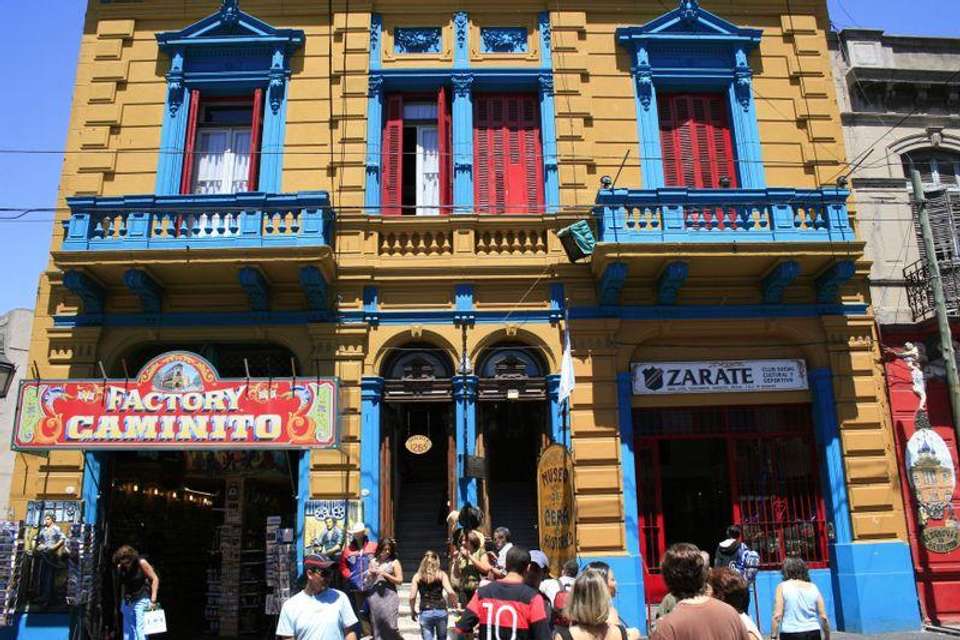
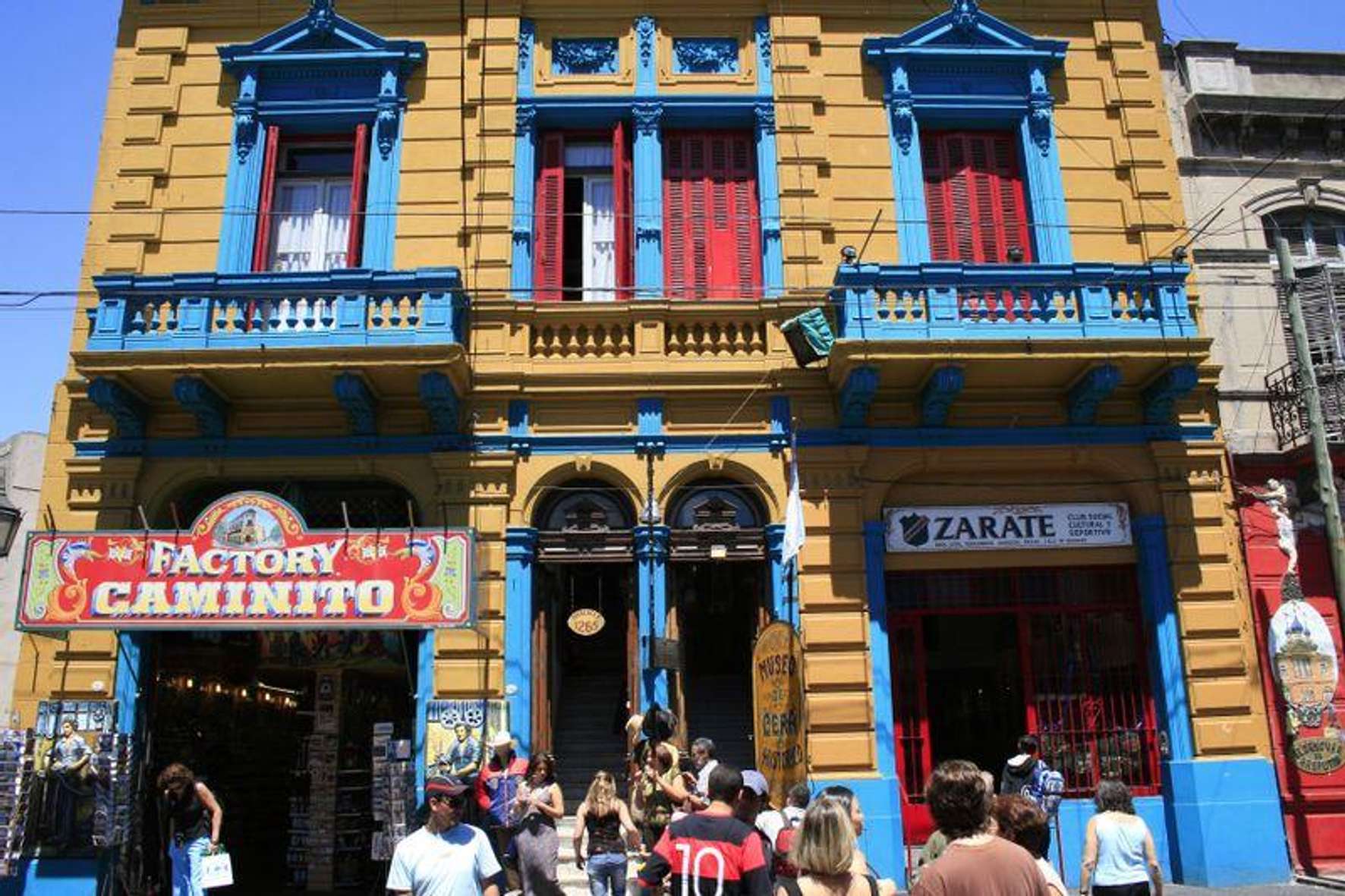
We leave Buenos Aires and cross the Rio Plata by ferry into Uruguay and the historic cobbled centre of Colonia del Sacramento. We’ll continue along the coast to the capital city of Montevideo which is a cosmopolitan city with some excellent museums, art galleries, music venues, and nightlife. The food and flea markets are also well worth exploring, along with the many restaurants and cafes.
Further along the coast we have time to enjoy the fine beaches of Punta del Este before turning north and heading back towards Argentina via the town of Salto, famous for its hot springs and indoor and outdoor geothermal pools.
day 8-13 - Esteros Del Ibera Wetlands And Paraguay
Back in Argentina, we visit the Esteros del Ibera wetlands where you can take a trip to try and spot some of the abundant wildlife, including capybara, caiman, howler monkeys and myriad birdlife.
We leave Argentina again and cross into Paraguay, where we can visit the impressive ruined Jesuit Mission near the village of Trinidad. A stop at the capital of Asuncion, one of the oldest cities in South America is next. Little visited by tourists, you’ll find you are met with a friendly curiosity unlike many other big cities in the region.
We cross another border now, entering Brazil, and also change from Spanish to Portuguese Spanish to Portuguese, and it is time to get our tongues around a new linguistic challenge!
day 14-22 - Iguazu Falls To The Pantanal
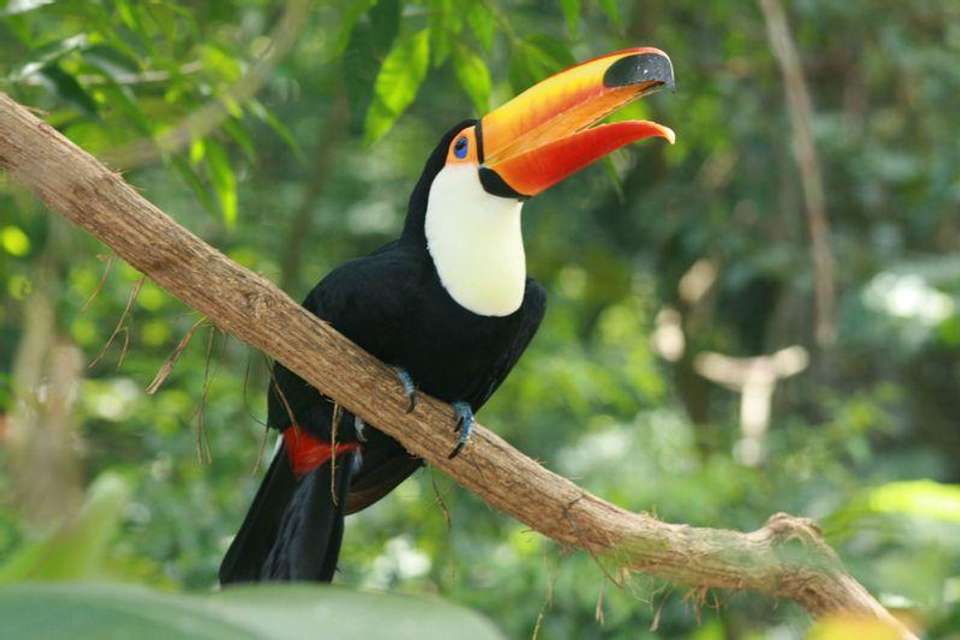
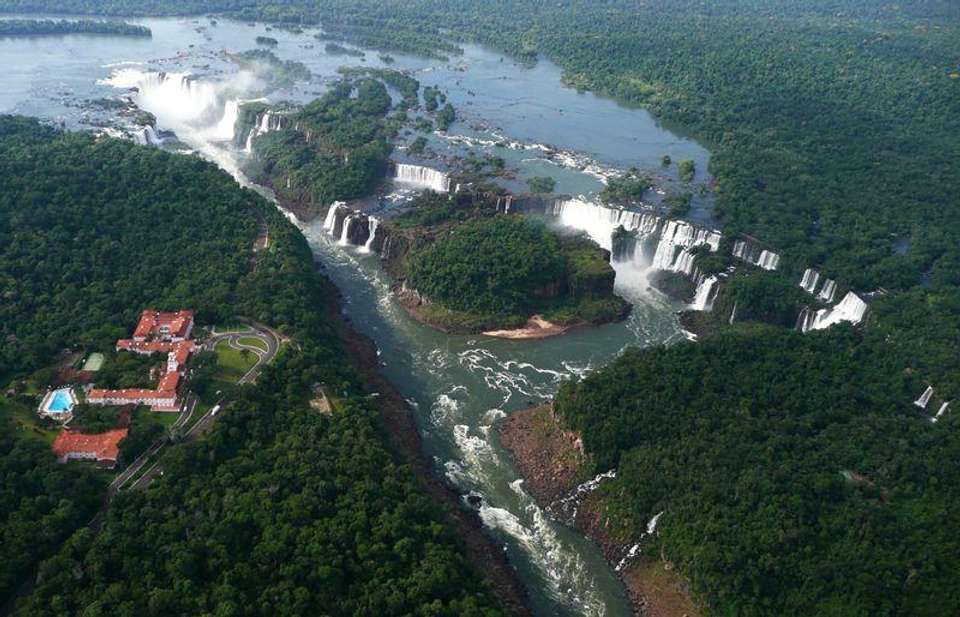
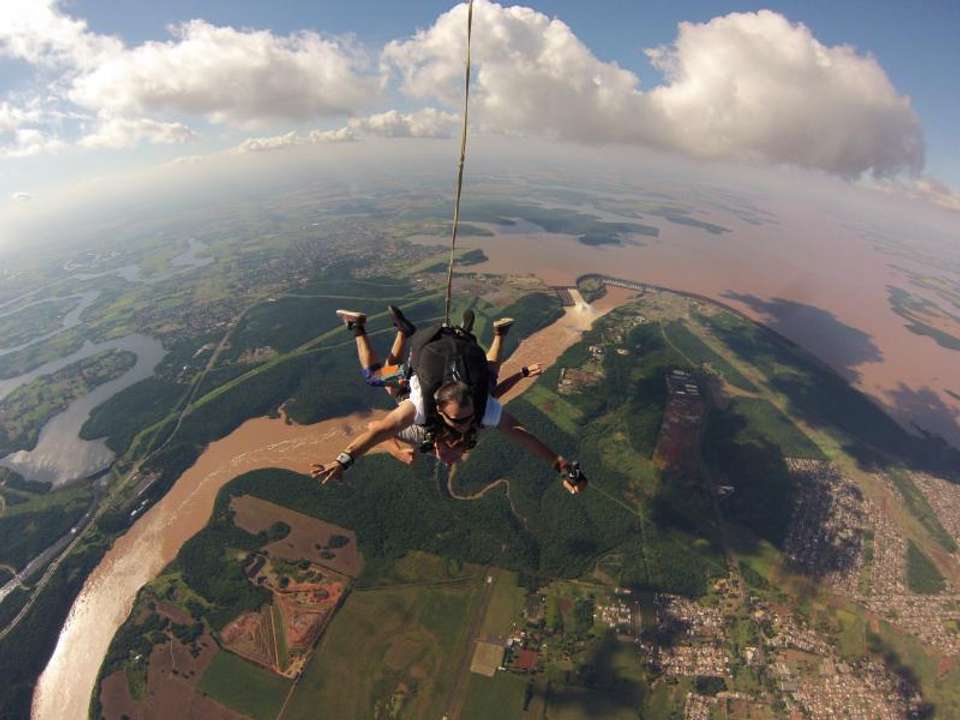
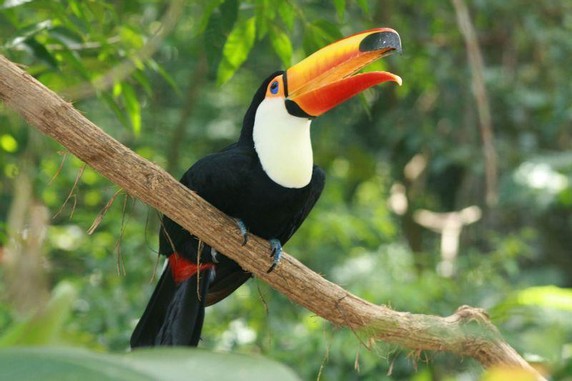
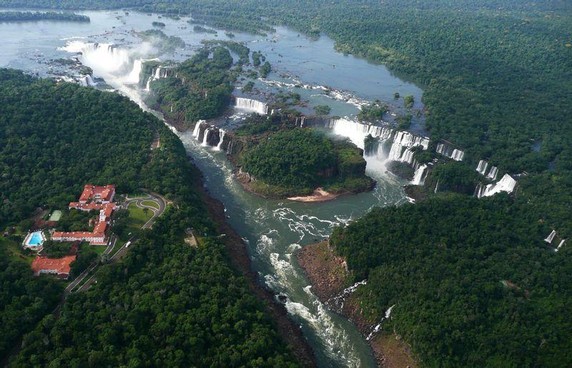
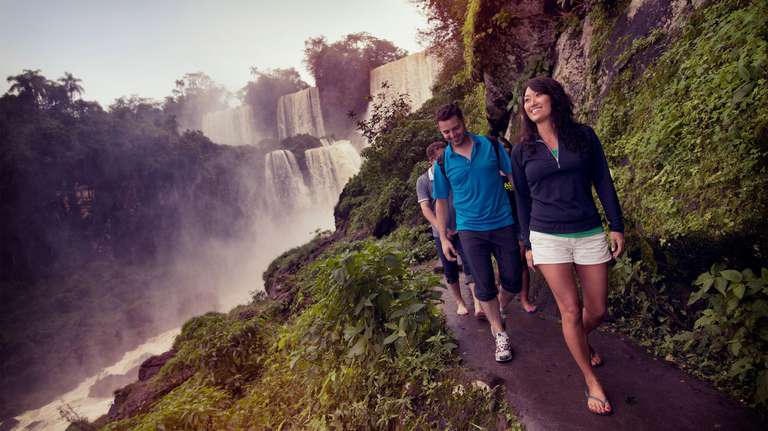
The Iguazu Falls form the natural border between Argentina, Paraguay and Brazil. Higher than Niagara and wider than Victoria Falls they are an awe-inspiring place to spend the next few days before we continue on with our travel through Brazil. The lush tropical forest surrounding the falls has many walking trails leading to smaller hidden falls, ideal to refresh from the steaming heat and abounding with parrots, toucans, woodpeckers and colourful plants. Here you can also undertake a number of optional activities such as rafting, helicopter flights and mountain bike riding.
Next stop is Bonito where we can swim and snorkel in some of the clearest rivers and lakes in the world, one of the best experiences in the whole of Brazil. Spectacular walks in the mountainous forests may reveal wildlife that includes monkeys, alligators and anaconda.
Our next highlight in Brazil is the Pantanal region where spend a couple of days and include some activities in the vast wetlands which are home to over 600 species of birds and 350 kinds of fish, piranha being common, as well as an abundance of reptiles and animals. Try your hand at Piranha fishing too!
day 23-27 - Pantanal To Rio
We now head to the coastal village of Parati. This unspoilt and picturesque town has remained fundamentally unaltered for three centuries. Cars have been banned from its cobbled streets that run down to the seashore, instead mountain bikes are used and are a good way to get around. Another great way to explore the secluded islands of this pristine coastline is taking a sailing trip in one of the traditional schooners.
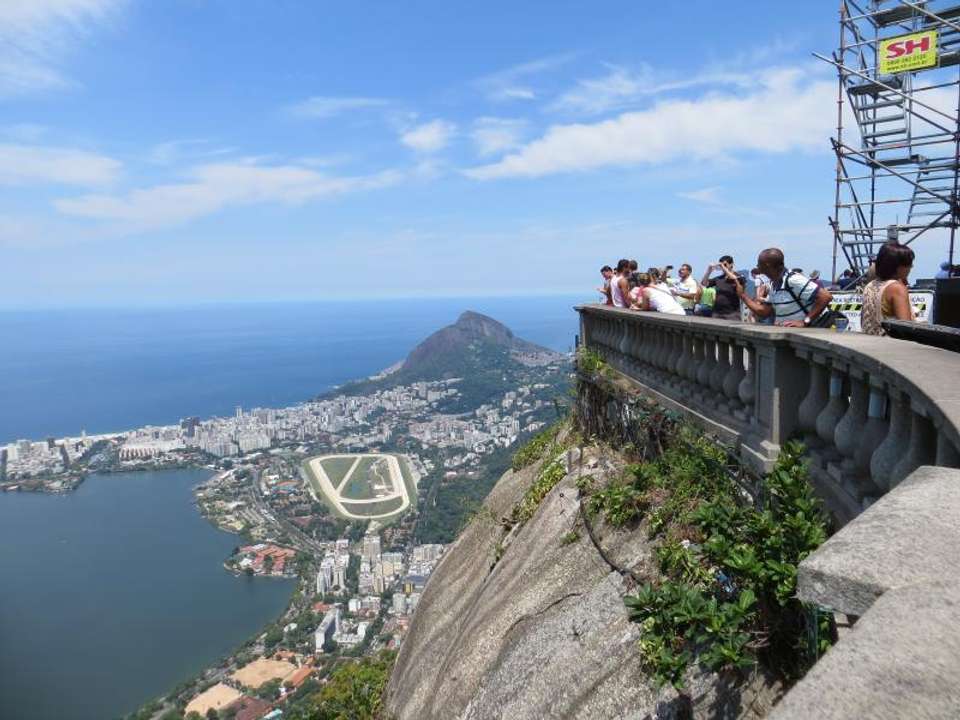
Our final drive takes us to the hedonistic playground of Rio de Janeiro, where people famously enjoy a party and live for the moment. Many people in the group will finish their trip on arrival into Rio. The Carnival and New Years Eve celebrations are always chaotic, crowded and fun and a must during any stint of travel to Brazil! We have Carnival and New Year accommodation packages available if you would like to extend your stay and remain with other people in the group for the celebrations. Those travellers continuing on beyond Rio will have a break in Rio and can either book the accommodation package with us, or make their own arrangements until we meet again to depart Rio and head further north.
day 28-31 - Rio Break
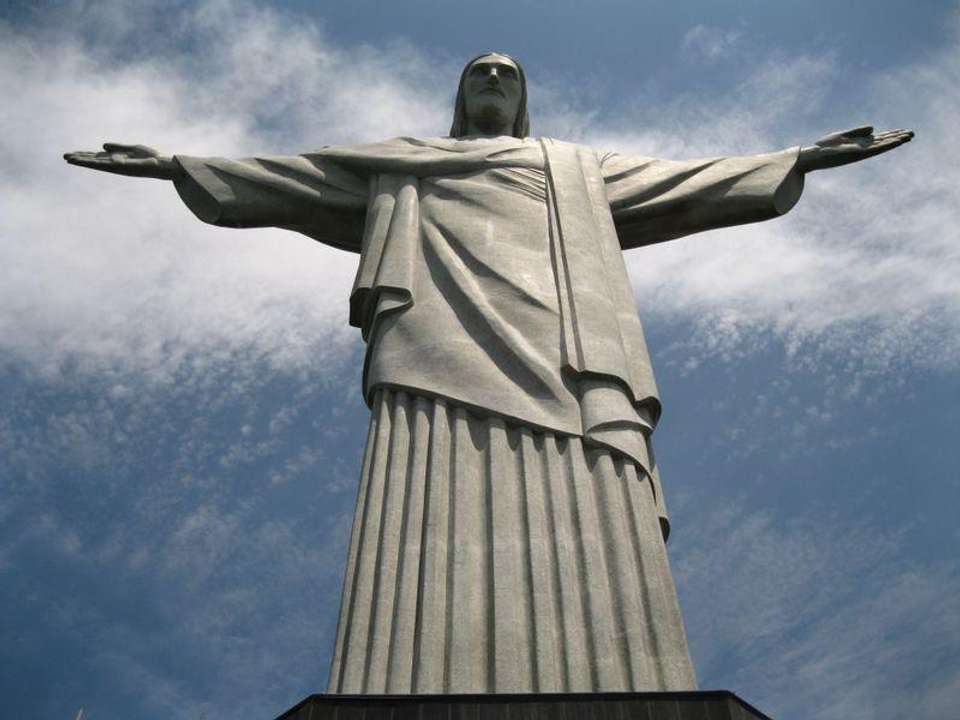
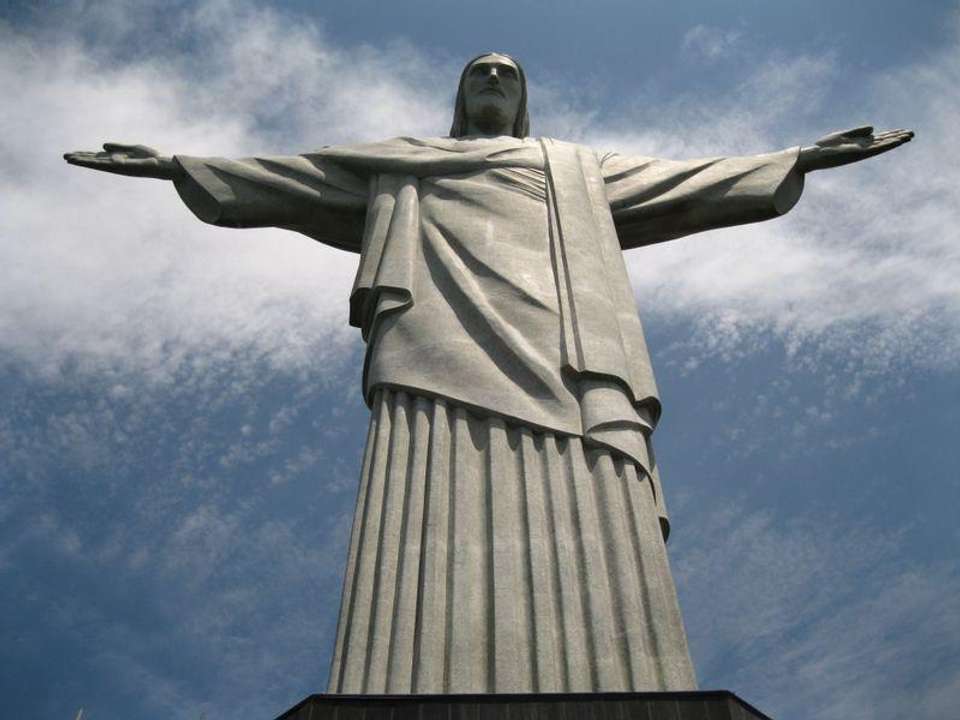
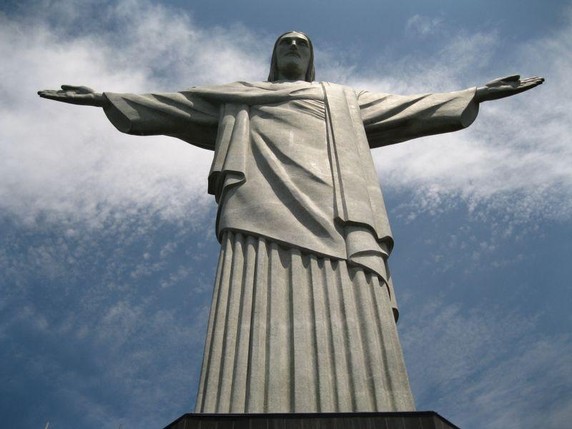
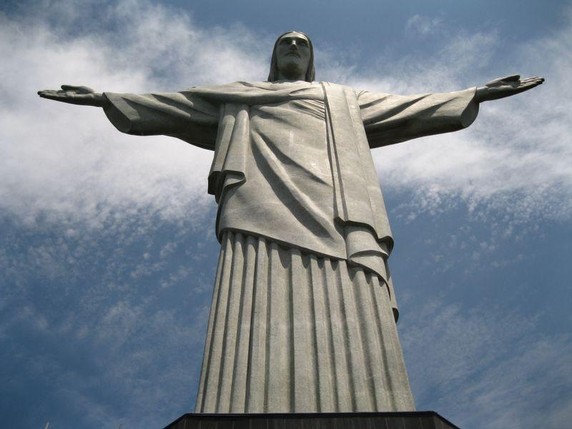
You have a few days free in Rio now to relax and catch up after the previous weeks’ busy travels. You can book an accommodation package with us, or make your own arrangements, as you prefer. Rio is a fantastic city, famous for its Copacabana and Ipanema Beaches, the huge Christ the Redeemer statue and Sugarloaf mountain which you can reach by cable car. In addition, the Rio Carnival is renowned the world over and is the world’s largest. If your trip coincides with the Carnival most of our departures are timed to), then we will offer options for tickets to visit the Sambadrome Parade together as a group on one of the evenings we are here. There are also various museum and an impressive botanic gardens to visit, and plenty of opportunities for trying some local food and drink.
day 32-35 - Rio To Ouro Preto
We leave the stunning views of Rio behind and head north to the mountain retreat of Teresopolis. The road winds up the hillside through jungle, with dramatic peaks towering overhead. We have a free day where we can visit the Parque Nacional Da Serra Dos Argaos and walk trails to waterfalls, with stunning views of obscurely shaped mountain tops.
Continuing north we make a short stop in Congonhas to see 12 lifelike Old Testament figures sculpted from soapstone, which stand proudly outside the Basilica do Bom Jesus de Matosinhos. Our journey takes us to quite possibly the most significant and beautiful colonial town of the area, Ouro Preto. Even vehicles are not able to navigate the narrow and winding cobbled streets. The biggest attraction is the Minas de Passagem Mine) - antique cable cars take you underground in to the mine which was originally opened in 1719.
day 36-40 - Ouro Preto To Caravelas
We explore the coastline, home of some of Brazil's best and least known beaches and far less populated with tourists than the resorts of Recife and Rio. We will either stay in locally owned Pousadas or camp under the stars, as we pass through Linhares to Itaunas. Time can be spent exploring this sleepy fishing village or wandering the dune trails and relaxing on the beach.
Cavavelas is our next destination, on the mangrove lined Rio Caravelas. We have the option to take a day trip to the nearby reefs in Parque Nacional Marinho de Abrolhos, where there is the chance to swim with sea turtles. Alternatively the day can be spent on the beach or wandering along the riverfront.
day 41-47 - Caravelas To Salvador
Venturing further north, we pass by some of the more remote beaches, and if time allows, we may also stop off in Parque Nacional Monte Pascoal which is controlled by the local Pataxo -sho) Indians. Here we can walk the trails to try to spot the endangered spider monkey, sloths, porcupines, capybara, deer, elusive jaguar and numerous species of bird.
Porto Seguro is our next stop and is the region where Portuguese sailors first landed in the New World over 500 years ago, and where you can still see relics from those early settlement days. A steep climb up to Cidade Historica will be rewarded with sweeping views, colourful old buildings and museums. Porto Seguro is also known for its nightlife and 'beach action!'
We then take the ferry across Brazil's largest bay, Baia de Todos os Santos, and arrive in the Afro-Brazilian city of Salvador. Around 40% of all African slaves transported to the new world, came to Salvador and this has left a very particular vibe - tropical, soulful and intoxicating, that is unique to this corner of Brazil. The centre is separated by a steep bluff, in to the Cidade Alta City) and Baixa City) and access is gained in the beautifully restored art-decoelevator - Elevado Lacerda. We have a few days to wander and take in the music, cuisine and religion of the region. You can also stop off in the Praca da Se and watch locals practicing the dance fighting known as Capoeira.
day 48-53 - Salvador To Palmas
Heading west, we come to the quaint town of Lencois. With its cobbled streets and brightly painted 19th Century buildings, it's the prettiest of the old diamond mining towns. The mighty Fumaca waterfalls, various caves and idyllic rivers and panoramic plateaus set the stage for some fantastic adventures. Or maybe just wander the streets, grab a coffee, take in the local life and enjoy some of the excellent cuisine.
After a night quite possibly spent under the stars, we continue into the interior where roads start to become more arduous, and we make a stop in Navidade, in the green and wooded valley of Serra Geral. More cobbled streets and prettily painted, tile roofed 18th and 19th Century houses await and we have time to explore the town before following the highway north and to reach the confusing layout of Palmas. The Tocantins state capital was only constructed in 1989 and has a sort of 'planned weirdness' about its streets.
day 54-60 - Palmas To Taquarucu And Belem
We move on to the cosy town of Taquarucu, some 30kms South East of Palmas, where we spend the next few nights.
The local tourism boards have worked together to try to create Taquarucuas an eco tourism mecca. In the area there are some 80 waterfalls, caves and pools, which we'll have time to explore. For those that want to go wildlife spotting, several optional tours are available to the nearby parks of Estadual do Jalapao and Ilha do Bananal. In the latter, there is a good chance to see dolphins, caiman, giant river turtles and lots of bird life. Although difficult and unpredictable, you may also catch a glimpse of a Tapir or Jaguar!
Next we start a long drive north towards Belem on the Atlantic coast. Upon its completion in the 1960s this road was heralded as a feat of engineering as it overcame the unforgiving Amazon to allow people and goods to be transported from the Brazilian interior to the ports of Belem for exportation. Now the rainforest has given way to further development and we pass through vast stretches of farmland, camping overnight in remote Postos before arriving in Belem. We have a couple of days here to enjoy the city and wander the riverside walkways of the mighty Amazon.
day 61-66 - Belem To Cayenne In French Guiana
Today we board a boat, and hang up our hammocks ready for the journey across the mighty Amazon delta. Nothing can prepare you for the sheer size of this area, as it will take us 24 hours to journey from Belem on the south bank to Macapa on the north.
Macapa is an overnight stop as we wait for our truck to arrive on a separate ferry from Belem. This gives us time to explore this commercial hub where gold, iron, timber, oil and tin ore pass through on its way to neighbouring Santana. The Equator also runs through the centre of the city, which has lead residents to call it ‘The capital of the middle of the world’.
We journey north on dirt roads, quite possibly having to use our sand mats to make it through the mud and to reconstruct wooden bridges!
Oiapoque is the gateway to French Guiana, and here so we pass through European immigration and customs before , we continue on to the Capital of Cayenne where we normally apply for our Suriname visas.
Cayenne is full of colonial architecture that just has to be explored. The two most impressive are the town hall, built by the Jesuits in 1890, and St. Saviours Roman Catholic Cathedral. The city’s botanical gardens are also worth a look, or just chill out on the mail square with a beer, watch the world go by and try some of the fantastic street food. Depending on the timing of our visa applications, and when we can collect our passports, the order of the following destinations may change around.
day 67-70 - Cayenne To St. Laurent Du Maroni
Kourou is a real highlight of our journey, as we visit the European Spaceport where we can take a tour of the site. A large percentage of the worlds satellites are launched from here aboard the famous Ariane rockets. More recently Russian Soyuz rockets have also used this facility and if we’re lucky we may even see a launch! Time allowing we will also visit Devil’s Island, prior home to one of France’s most notorious prisons.
We may then return to Cayenne to collect our passports and spend another night in the vibrant city, before journeying west to St Laurent. Along the way we will stop head to an area on the coast which is a nesting site for 4 of the world’s most famous turtle species. Nothing can compare coming up close and personal to a giant leatherback turtle. April is normally the start of nesting time, where turtles make the journey up the beach to deposit their eggs in the warm sand. We’ll keep our fingers crossed for sightings.
Founded in 1880, the penal town of St. Laurent du Maroni was inhabited almost entirely with guards or liberated prisoners from the nearby Transportation Camp. Here the famous writer Henri Charriere, who went on to write Papillon, spent some of his days before being moved to the ‘inescapable’ Iles du Salut prison. An informative optional tour takes us in to the camp and gives us a snap shot of quite how hard life would have been here.
day 71-75 - Paramaribo & Jungle Excursions
Leaving French Guyana behind we take another ferry and cross into Suriname, where we feel the atmosphere and culture palpably change from French to Dutch. Suriname was a colonial outpost of the Netherlands from the seventeenth century until it achieved full independence in 1975; the country retains much of its Dutch character, while also having the distinctly Caribbean and African feel that permeates the whole region. Throw in some indigenous cultures and you have a unique and intoxicating mix!
We follow the road west and cross the Suriname River on the Jules Wijdenboschbrug and arrive in Suriname’s capital, Paramaribo. Positioned where the Surname river meets the Atlantic Ocean, Paramaribo is a typically relaxed Caribbean city, with a long waterfront ideal for sitting back and relaxing in the cooling winds while watching local life go by.
The historic inner city of Paramaribo is a UNESCO World Heritage site, and walking the streets here the fusion between colonial, Caribbean and local architecture is pronounced as European styles were combined with local materials to produce a style of construction that is only found in this city.
Throughout the city there are many signs hinting at Paramaribo’s multicultural history and present day, and it is possible to visit the Suriname Mosque, Neveh Shalom Synagogue, St Peter and St Paul Cathedral and Arya Dawaker Hindu Temple, as well as the grand presidential palace. In the evenings head for the river, and join a river cruise to hopefully spot rare freshwater dolphins.
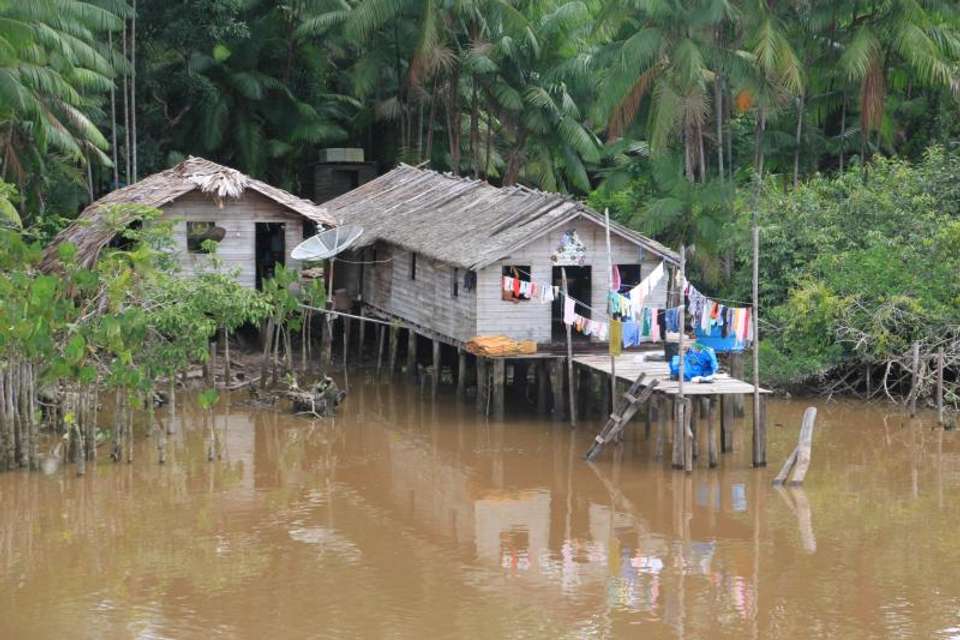
After a couple of nights in Paramaribo to relax and recharge our batteries we now include a jungle excursion before we continue our adventure. We’ll drive inland for a couple of hours and then travel by motorised canoe to our resort near the foot of the Felullasifalls. We’ll have a a couple of nights here to explore the surrounding Amazon rainforest and several Maroon villages. from Pokigron to an island on the Suriname River. Here we spend a couple of nights exploring the surrounding Amazon rainforest, learning about the Saramaccan culture and visiting local villages. You could also go looking for caimans on a nocturnal cruise, and swim from a sandy beach or enjoy a natural jacuzzi in the rapids.
day 76-80 - Paramaribo To Georgetown
After returning to Paramiaribo we take to the truck again and following the coastal road west we reach the banks of the Courantyn River, which forms the border between Surname and Guyana. We cross by ferry and continue to travel along the coast towards Georgetown, Guyana's capital. On the way there is an optional overnight visit to Bigi Pan, the largest lagoon in Suriname. This area has received international recognition because of the hundreds of thousands of migratory birds including flamingos and the striking scarlet ibis that use the lagoon as their feeding area. As well as the birdlife the area hosts many reptiles, snakes and extensive mangrove swamps.
As a former British colony, Guyana offers something different again to the previous countries we have visited so far, but still has a distinctly Afro-Caribbean feel; strolling around Georgetown you could be forgiven at times for thinking you were in one of the many other past British territories in the region, such as Jamaica or even Barbados!
Guyana, which was granted independence in 1966, is the only English-speaking country in South America, and is to many an unknown entity, relatively untouched by mass tourism. For a small and often forgotten country, however, it punches well above its weight, offering some of the most pristine and ecologically diverse and plentiful rainforest found anywhere, the world's highest single drop waterfall, and a rich and established cultural history, with many noted poets, musicians and literary figures coming from its small population. Rhianna is half-Guyanese, too, should that be of any interest.
We will spend a few nights in Georgetown, from where it is possible to take an optional flight and short hike to visit Kaieteur Falls in Kaieteur National Park in the Amazon rainforest. At 221 metres, Kaieteur Falls is the world's highest single drop waterfall. Set in a stunning location, the falls and surrounding area are for many visitors to Guyana the highlight of their travels, as their remoteness and obscurity make you feel that you are really seeing a part of the world that very few people have ever been to.
day 81-86 - Georgetown To Boa Vista
After our time in Georgetown, we then head south, away from the coast, and into the dense rainforest of Guyana. The main road has been massively improved in recent years following investment provided by the Brazilian government, but we will allow several days to fully explore the area, getting onto much rougher roads and heaging into the jungle to camp on the riverfront of a forest resort. From here you can visit a high canopy walkway in the Kkokrama forest to view the rainforest from an elevated perspective and come eye-to-eye with some of the plentiful tropical bird life. You can also take boat tours looking for wildlife including toucans and red howler monkeys. This region has a reputation for being one of the best places to spot the elusive jaguar, so if we keep our eyes peeled we may be lucky!
Continuing south we leave the jungle and enter more open savannah regions near Rupupnuni where there are canoeing, horse riding and wildlife viewing opportunities on the Panorama Nature Trail.
After an unforgettable few days travelling through the Guyanese Amazon we reach the border and re-enter Brazil and drive to Boa Vista, where we can take a well earned shower and enjoy some locally caught fish in one of the riverside restaurants.
day 87-93 - Boa Vista To Manaus
We drive southwards from Boa Vista through an Indigeneous Wairmiri Reserve to rejoin the Amazon River at Manaus. You can finish your trip after a night here, or take a final included expedition into the Amazon jungle in search of more wildlife and to discover more of the different indigenous people who live in the area. There are chances to learn about different plant species that are used for medications, fish for piranhas, and take guided walks in the forest.
Finally the trip finishes with a final night back in Manaus. The open air markets are well worth visiting here, with great souvenirs and local crafts available. The famous Amazonas Opera House is also good to see before you leave the city
1 other person is considering this tour right now.
Dreaming of conquering one of the world’s most iconic treks? The "Inca Trail Express" invites adventurous souls to journey through the heart of Peru’s Sacred Valley, culminating at the legendary Machu Picchu. This 7-day guided trip, starting and ending in Cusco, caters to a variety of abilities—offering the classic Inca Trail hike, the alternative Quarry Trail, or a comfortable train journey for those who prefer a less strenuous route. Experience the majesty of ancient Incan civilization with visits to Ollantaytambo’s impressive ruins and the bustling markets of Cusco. The highlight is, of course, standing in awe at Machu Picchu, a true wonder of the world. With a challenging physical activity rating, this tour is ideal for fit travelers eager to immerse themselves in breathtaking landscapes and living history, all while enjoying the camaraderie of a small group. The unique selling point: ultimate flexibility, allowing everyone to witness Peru’s highlights their way.
Coffee lovers and culture seekers alike will be enchanted by "Cafe Colombia," a nine-day tour package that journeys from bustling Bogotá to the romantic streets of Cartagena. Along the way, you’ll immerse yourself in Colombia’s highland coffee region, exploring Salento’s tranquil hills and learning the art of coffee roasting on a working plantation.
With a moderate activity pace, this trip is well-suited for travelers eager to balance exploration with relaxation. Discover Medellin’s vibrant nightlife, wander through colorful market towns, and soak up the Caribbean charm of Cartagena, a UNESCO World Heritage Site.
What makes this tour truly memorable is the hands-on experience of Colombia’s coffee culture—tasting, learning, and living the rhythms of daily life in the heart of the coffee triangle. It’s the perfect itinerary for anyone seeking both the urban delights and natural beauty that define Colombia’s renaissance.
Sun, samba, and spectacular scenery—"Best of Brazil" is an eight-day city sightseeing tour that delivers Brazil’s top highlights in one vibrant package. From Rio de Janeiro’s iconic beaches and Christ the Redeemer to Paraty’s colonial charm and the lush paradise of Ilha Grande, each day offers a new slice of Brazil’s sunny spirit.
With an easy activity level, this trip welcomes travelers of all backgrounds seeking a laid-back yet immersive adventure. Local guides share insider tips, while flexible free time lets you relax, explore, or hit the beach at your leisure.
A key USP is the perfect balance between guided sightseeing and independent discovery, making this tour package ideal for those who want to experience Brazil’s lively culture and breathtaking coastlines their own way.
Looking for a well-rounded introduction to Colombia? This eight-day adventure delivers it all. Be captivated by Cartagena’s Old Town, laze on palm-fringed Caribbean beaches and meet the locals who make Colombia one of the world's friendliest countries. Hike jungle trails in Tayrona National Park, learn about Indigenous reforestation initiatives and dive into the bold flavours of Afro-Colombian cuisine on a tasting tour in Cartagena. If you’re looking for an offbeat experience full of nature, authentic food and local connection, Explore Colombia is right up there with the best of them.
The Inca Trail to Machu Picchu is widely regarded as one of the best hikes in the world. It is also one of the most approachable, as no special skills are required to complete it – although good health and fitness will certainly help you make the journey from the trailhead to Machu Picchu.
Compared to other famous treks, this trail is relatively short, making it perfect for those with limited time. Despite its length, the route is incredibly diverse and captivating: along the way you will encounter fascinating ruins, snow-capped peaks, beautiful waterfalls, and lush jungle. At the end of the trail, you will pass through the Sun Gate for your first glimpse of Machu Picchu – an unforgettable view of the ruins from above at their most breathtaking.
The government has preserved a portion of the thousands of miles of original Inca trails for this classic hike. This popular route covers 26 miles and takes four days to complete. Travel and book with confidence through the #1 local Inca Trail tour operator in Cusco.
We are already taking bookings for 2024 – choose the date that suits you best, and secure your spot now so you don’t miss out. Feel free to contact us for special rates.
Longing for a trekking adventure in Peru beyond the classic Inca Trail? The "Salkantay Trek & Machu Picchu" offers a thrilling four-day journey through the Andes, ideal for families and adventurous travelers eager to explore off the beaten path. Traverse a dramatic landscape, from snowcapped peaks to lush forests and vibrant highland villages, all en route to the legendary citadel of Machu Picchu.
Highlights include crossing the formidable Salkantay Pass (4,650m), marveling at the tranquil beauty of Humantay Lake (4,200m), and visiting significant Inca sites. This trekking trip is designed for those who seek variety—each day brings new scenery, wildlife, and cultural encounters.
The unique selling point lies in its rich tapestry of landscapes and authentic village life, offering a more secluded, nature-immersed alternative to the traditional route. Accommodation, transport, meals, and expert guidance are all provided, making this tour package a seamless way to experience Peru’s wild beauty and ancient wonders.
From mountain peaks to bustling markets, "Classic Peru" is a nine-day sightseeing adventure that starts and ends in Lima, weaving through Puno, Cusco, and beyond. This easy-paced small group tour captures Peru’s natural grandeur and rich history, from the awe-inspiring citadel of Machu Picchu—one of the Seven Wonders of the World—to the vibrant life of colonial cities.
With a knowledgeable local guide by your side, retrace the steps of the Incas, explore colorful markets, and meet welcoming communities along the way. This trip’s unique selling point is its seamless combination of iconic highlights and authentic local experiences. Accommodation, transport, meals, and expert guidance are all included, making this tour package a perfect introduction to Peru’s diverse landscapes and cultures.