Highlights
Tiananmen Square, Forbidden City and Summer Palace visits in Beijing
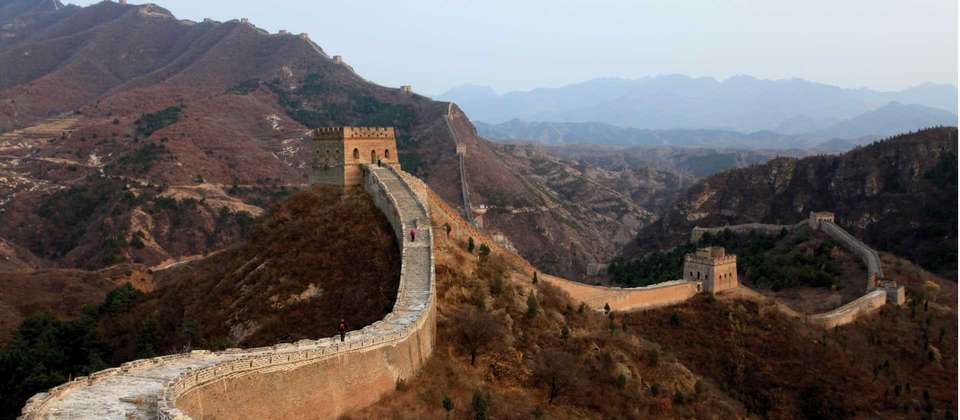
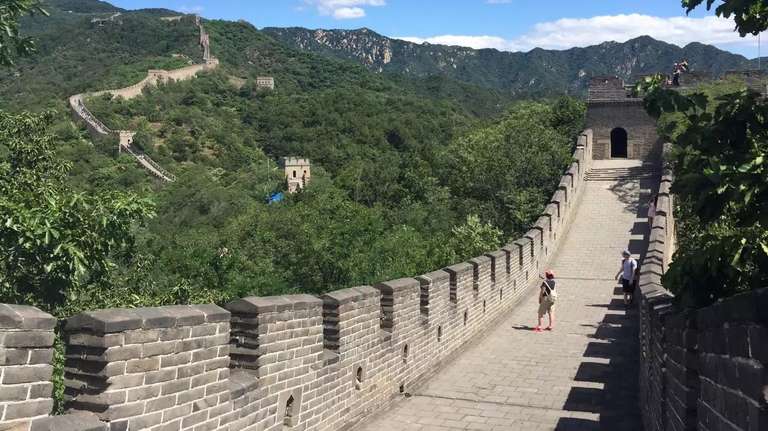
Visit a less busy section of The Great Wall at Mutianyu
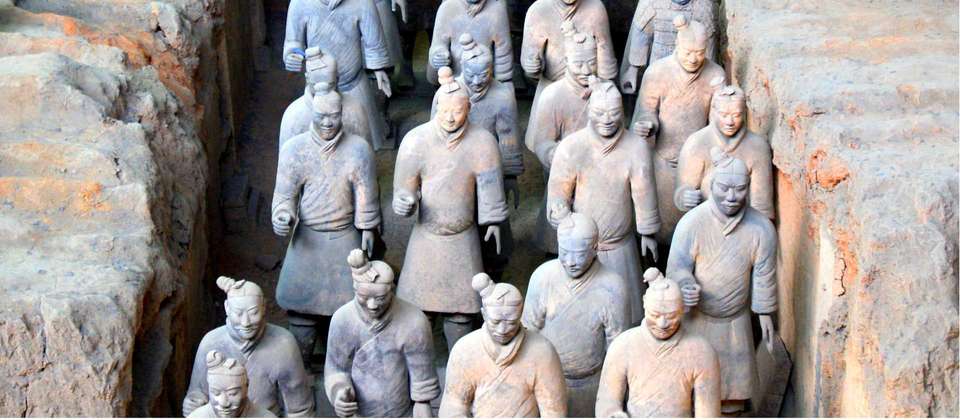
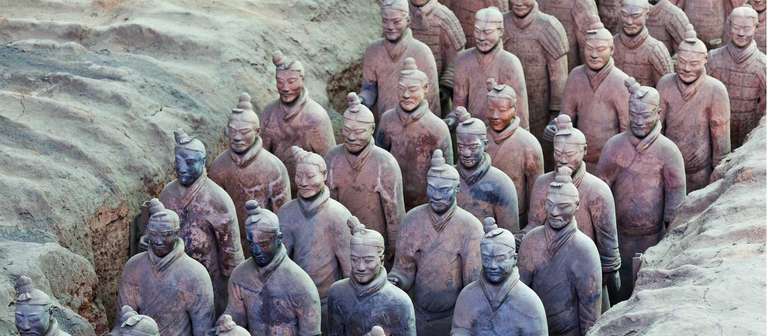
Visit Xian and witness the mighty Terracotta Warriors
Be immersed in the hustle & bustle of the markets in Kashgar
Experience Urumqi, the capital of the Xinjiang Uygur Autonomous Region
Marvel at Heaven's Lake and the Tian Shan Mountains
Explore Labrang Monastery
See the Mogao Caves & Dunhuang
Marvel at Heaven's Lake and the Tian Shan Mountains
Explore Labrang Monastery
See the Mogao Caves & Dunhuang
Itinerary
The China Silk Road tour invites you to retrace the ancient trade routes of the East, journeying 17 days from Beijing to Kashgar. Perfect for culturally curious travelers and seniors, this easy-paced adventure encompasses the Great Wall, the archaeological marvel of Xian’s Terracotta Warriors, the spiritual grandeur of Xiahe’s Buddhist monastery, and the intricate Buddhist art of the Dunhuang grottos. Skirt the austere beauty of the Gobi Desert before reaching the oasis town of Turpan and the bustling markets of Kashgar. The trip’s standout feature is its unique blend of historical depth and varied landscapes, offering a window into the vibrant cultures, religions, and commerce that shaped China’s Silk Road. Guided by local experts and supported by thoughtfully arranged logistics, this tour package ensures a seamless, educational, and visually stunning journey across northern China’s legendary corridor.
day 1 - Arrive Beijing
If you are arriving into Beijing today you will be collected from the airport and transferred to the group hotel. This evening you will meet with the rest of the group in the hotel lobby for a trip briefing (your guide will advise you of the meeting time) before you head out for a group welcome dinner.
Overnight: Dong Fang Hotel or similar
day 2 - Visit to The Forbidden City & Summer Palace
This morning we visit the beautiful Forbidden City, which is a masterpiece of 5000 years of Chinese civilisation and still vividly displays the power and prestige of the former dynasties. Sprawling over acres, the City is a magnificent group of palaces, pavilions, courtyards and deep terracotta walls. Ornately furnished palace rooms, priceless artworks and treasures are all now open to the public after 500 years of seclusion. In the afternoon we’ll visit the Summer Palace. First built in 1750, largely destroyed in the war of 1860 and restored on its original foundations in 1886, the Summer Palace in Beijing is a masterpiece of Chinese landscape garden design. The natural landscape of hills and open water is combined with artificial features such as pavilions, halls, palaces, temples and bridges to form a harmonious ensemble of outstanding aesthetic value. In the evening there is an option to see an acrobatic show.
Overnight: Dong Fang Hotel or similar
day 3 - The Great Wall
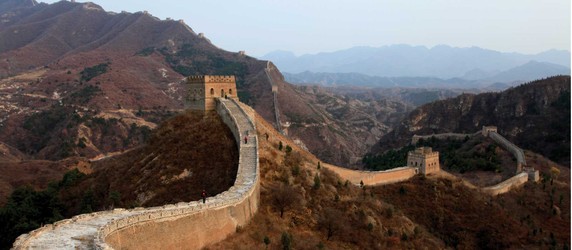
We will make an early start this morning and head north out of the city to explore the Great Wall at the Mutianyu. Whilst this section is a slightly longer drive, at around 1½hrs, than the Badaling Gate section, it is significantly less busy and therefore worth the drive. One of the Seven Wonders of the World, the Great Wall of China was built as a defence line to keep out marauding invaders, nomadic groups of the steppe from the north. The first sections were completed as far back as the 7th century BC. Since then, many successive dynasties built and maintained multiple stretches of border walls. The most currently well-known of the walls were built by the Ming dynasty (1368–1644). The Mutianyu section of the Great Wall is a masterpiece of restoration, with 23 original-style Ming Dynasty watchtowers. This is the longest fully-restored Great Wall section open to visitors. On arrival, you have the option for either a gentle walk with optional cable car assistance or for those feeling more active, we can complete a 2 -3hr walk along this beautiful section of the wall.
In the evening we will be treated to a traditional Peking Duck dinner.
Overnight: Dong Fang Hotel or similar
Please note Days 2 & 3 may be swapped around depending on availability of tickets to visit the Forbidden City.
day 4 - In Beijing, evening train to Xi'an
This morning has been set aside for leisure time to rest or catch up on shopping. Our local guides will be happy to make suggestions and organise arrangements as required. In the afternoon, we transfer to the train station for our overnight journey to Xi’an.
Overnight: Sleeper train - 4 berth cabin
day 5 - Arrive Xi'an - city tour
Xi'an is the traditional starting point of the Silk Road, the point from where traders departed on their long cross continental voyages. The walled city of Xi'an, the capital of Shaanxi Province, is a vivid example of old meets new China. The modernised new city bustles around the quaint, winding lanes of the Old Quarter, where retired men spend their days smoking pipes playing mahjong and chess while butchers pull their carcass-laden carts and hawkers sell all manner of wares.
Today, we will take in a city tour, starting on the old city wall which is the most complete ancient city wall in China. At 12m high and 15m wide, the 14km long wall is one of the largest ancient military defensive systems in the world and safeguarded the capital city of13 Chinese dynasties. A walk along the wall provides us with a glimpse into the ancient and modern life of the city and its inhabitants. In the evening, there is an option to dine at a special dumpling restaurant, which is highly recommended and very unique (additional cost).
Overnight: Grand Noble Hotel or similar
day 6 - Terracotta Warriors & Big Goose Pagoda
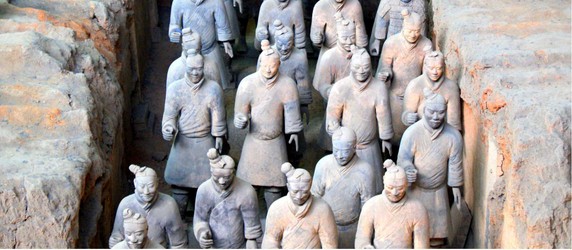
The thousands of Terracotta Warriors who stand outside the tomb of Qin Shihuang, were uncovered in 1974 by peasants digging a well. Each warrior stands over six feet tall and has individual features and characteristics. Some stand in a vanguard with crossbow and longbow bearers, others hold spears, daggers and axes at the ready. They are accompanied by dozens of horse-drawn carriages and enormous terracotta horses. In the afternoon we’ll visit the Big Goose Pagoda which is a classic example of Chinese temple architecture. Originally built in 652AD during the Tang dynasty, it was rebuilt in 704 during the reign of Empress Wu Zetian, and its exterior brick facade was renovated during the Ming dynasty. One of the pagoda's many functions was to hold sutras and figurines of the Buddha that were brought to China from India by the Buddhist translator and traveler Xuanzang. Today, the interior walls of the pagoda feature engraved statues of Buddha by the renowned artist Yan Liben. The sight of the warriors arising from their muddy grave, some intact, others still submerged in the ground, is truly an extraordinary one. This evening we have the option to attend a Tang Dynasty Dance Show.
Overnight: Grand Noble Hotel or similar
day 7 - Train to Lanzhou, transfer to Linxia
This morning we transfer to the station to catch the high speed train to Lanzhou. Camel caravans traversed the rugged and barren Province of Gansu, as they threaded their way along the Silk Road. The capital Lanzhou is one of the oasis towns the caravans stopped in along the way. It has since become an industrialised city and remains a hub for travellers to this day. From Lanzhou we ascend out of the city smog and into the clean mountain air, passing through beautiful, mountainous scenery and fascinating microcosms of minority life in China as we head towards Linxia, one of the main religious, cultural and commercial centers of China's Muslim community.
Overnight: Linxia Baishun Zhongtian Hotel or similar
day 8 - Boat trip to Bing Ling Temple, transfer to Xiahe
This morning we transfer by bus and boat to Bingling Temple which are a series of grottoes filled with Buddhist sculpture carved into natural caves and caverns in a canyon along the Yellow River. After visiting these fascinating grottoes we transfer on to the remote town of Xiahe (pronounced Shar-her), which takes approximately 1.5 hours. As we ascend further into the mountains we pass stupas identifying the beginning of the Gannan Tibetan Autonomous Prefecture. On arrival in Xiahe you will likely notice the increase of altitude as the town is located at 2,900m.
Overnight: Xiahe Jiusheng International Hotel or similar
day 9 - Labrang Monastery, return to Lanzhou and overnight train to Jiayuguan.
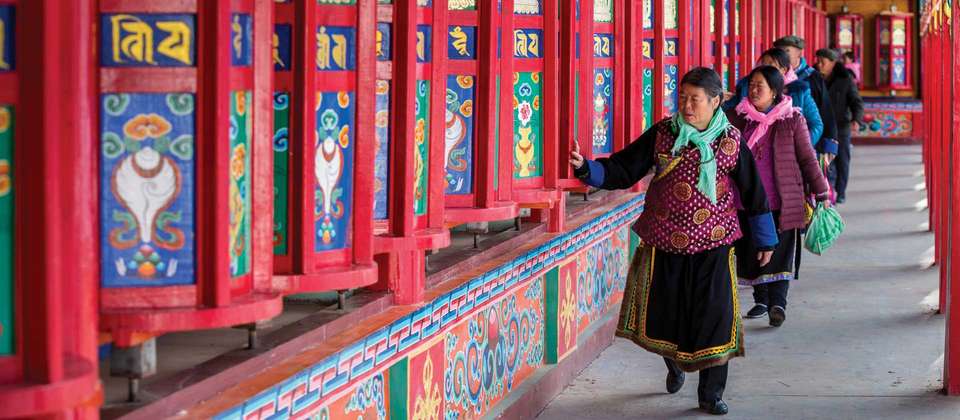
Within Xiahe is the enormous Tibetan Monastery of Labrang, an important place of pilgrimage for Buddhist monks and is second only in size to the Potala Palace in Lhasa. Tibetan nomads dressed in their finest traditional clothing mingle with monks in bright pink robes and lamas in deep burnished saffron robes. Monks can be seen debating and deep in preparations for religious ceremonies, practicing ritual music and meditation. The Lamasery, built in 1709, has more than 10,000 rooms, where over 3,000 lamas were once accommodated. It has a collection of books exceeding 65,000 volumes. Watch out for the huge pot in the Lamasery yard in which four oxen can be cooked together.
This afternoon we transfer back to Lanzhou and visit the Gansu Provincial Museum, home to the "Cultural Relics of the Silk Road" exhibition, it has some beautiful artifacts and a skeleton of a giant mammoth. before we catch the overnight train to Jiayuguan. Our return journey is just as impressive as mountains give way to fields of wheat and orchards bursting with fruit. Depending on the season, we may stop at one of the many roadside stalls selling local fruit and nuts.
Overnight: Sleeper train - 4 berth cabin
day 10 - In Jiayuguan
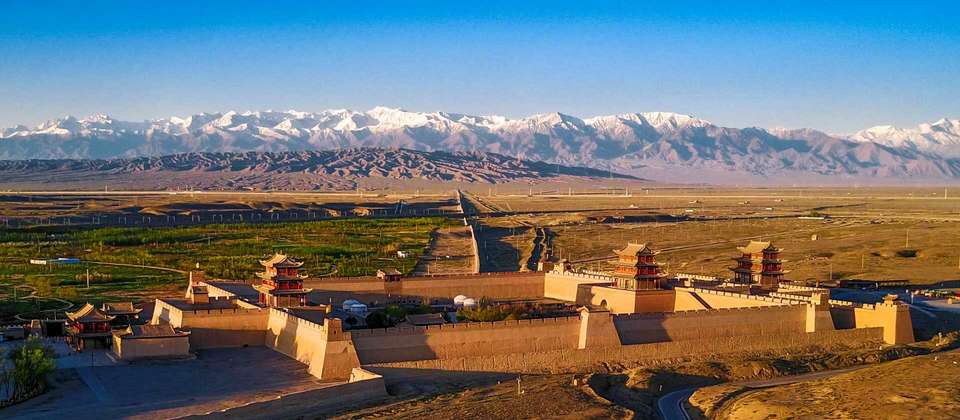
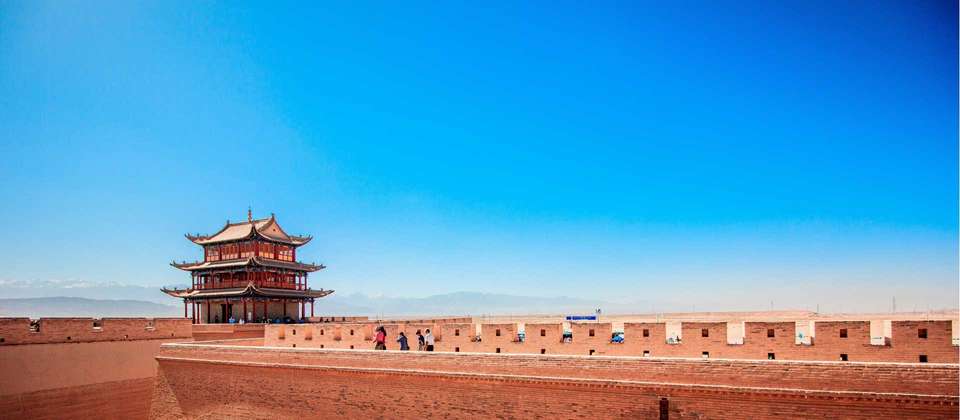
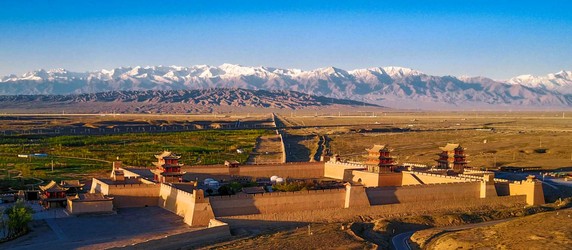
Jiayuguan is the western most point of the Great Wall. Built during the Ming dynasty, the wall is guarded by the famous Jaiyu Fort, known as “the most Impregnable Pass Under Heaven”. It was the last major stronghold of the empire to the west and remains an impressive and formidable sight. Then we're on to the Black Mountain to climb a restored section of the wall.
Overnight: Resen Hotel or similar
day 11 - To Dunhuang
You leave the Great Wall behind and follow the ancient Silk Road into the desert, travelling through the Hexi Corridor (pronounced "Her-shee"). This historic route sits between the Gobi Desert to the north and the Qilian Mountains to the south and once served as a vital passage for traders and explorers heading west.
The drive from Jiayuguan to Dunhuang takes around five hours. Along the way, you pass several old beacon towers that were used to send signals along the Silk Road.
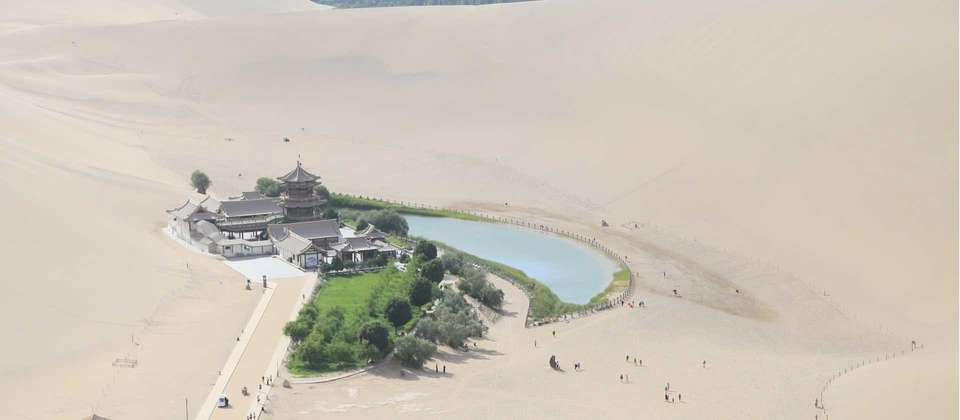
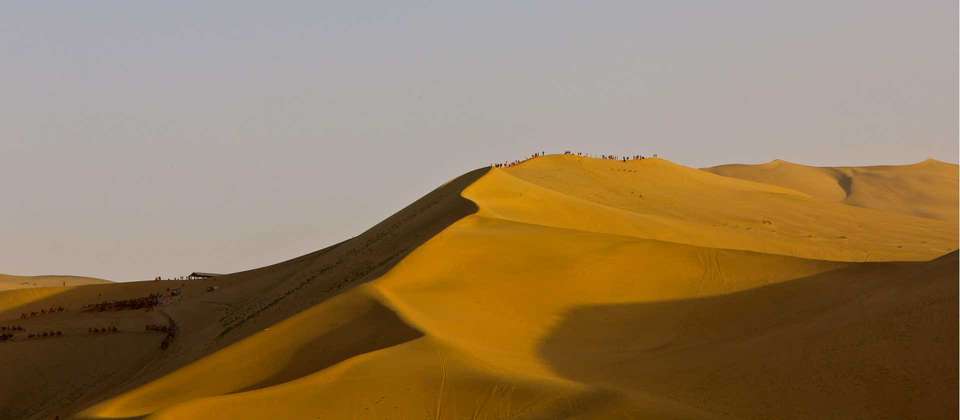
Later in the day, you visit the famous Crescent Moon Spring, a peaceful lake tucked among the sands of the Singing Sand Mountains. Despite the shifting dunes, this 100-metre-long spring has never been buried. Climbing the dunes rewards you with stunning views over the desert, and if conditions are right, you may even catch the sunset over the Mingsha dunes. The tallest dune, Mingsha Mountain, reaches 250 metres and forms a striking backdrop to the oasis town of Dunhuang.
Overnight: Dunhuang Yuntian International Hotel or similar
day 12 - Mogao Caves & train to Turpan
Dunhuang is home to some of China’s most impressive Buddhist grottos, set against the backdrop of towering desert dunes. You visit the Mogao Caves, also known as the Thousand Buddhist Grottos, which stretch for over 1,000 metres and contain exceptional Buddhist art dating back to 366 AD. Inside nearly 500 caves, over 45,000 square metres of murals depict the life and teachings of the Buddha. These sites are considered among the cultural highlights of China.
You also stop at the excellent Dunhuang Museum, which displays a rich collection of ancient artefacts in a striking building designed by Cu Kai, a renowned architect from the China Architectural Design Institute.
In the afternoon, you transfer to Liuyuan to board the bullet train to Turpan, a journey of around four hours. On arrival, you are met at the station and transferred to your hotel.
Overnight: Kanerjing Folk Garden Hotel or similar
day 13 - In Turpan
Xinjiang Province lies at the heart of the Eurasian continent. Skirting the edge of the Gobi Desert, it is a land of vast grasslands, the Taklamakan Desert, snow-capped mountains, lakes, and untouched forests. You enter the Turpan Basin, home to the Uighur people (pronounced “Wee-ger”). The town of Turpan is broad and flat, with low-slung mudbrick houses and open water channels still used by locals today. The relaxed pace and wide desert skies make Turpan an ideal place to unwind.
You visit Grape Valley, a small oasis of vineyards nestled in the desert. Stroll through its maze of grapevines and traditional mudbrick drying houses before heading to the ruins of Jiaohe, one of the oldest and best-preserved earthen cities in the world.
A visit to the Karez Underground Irrigation Channels is also included. Built over 2,000 years ago, the Karez system is considered one of China’s greatest ancient engineering feats. It consists of around 1,000 wells that collect groundwater from melting snow in the Bogdashan Mountains. The water then flows through underground channels, powered solely by gravity, to irrigate farmland across the valley.
Overnight: Kanerjing Folk Garden Hotel or similar
day 14 - Drive to Urumqi
After breakfast, you drive to Urumqi, a journey of approximately three hours. On the way, you stop to visit the Bezeklik Thousand Buddha Caves, which are beautifully set into a cliff face overlooking a river valley.
Urumqi sits at the foot of the Tian Shan Mountains and is the capital of the Xinjiang Uygur Autonomous Region. With the rise of the Silk Road, it became an important centre for cultural exchange between East and West.
Later, you head out for your first look at the city, known for its bold Communist-era architecture and broad city streets.
Overnight: New Travel Golden Valley Hotel or similar
day 15 - Heaven's Lake. Evening flight to Kashgar
From Urumqi, you drive to one of the most impressive natural sights in China, Tianchi, or Heaven’s Lake. Set in the Tian Shan Mountains below the towering Bogda Peak (5,445m), the deep blue lake is surrounded by fir trees and dramatic mountain peaks. In summer, you may also see yurts and Kazak nomad camps dotted around the lake.
Today will also include a visit to the Xinjiang Uyghur Autonomous Region Museum, also known as the Xinjiang Museum. It is considered the best museum along the Silk Road and features some of the region’s most remarkable and debated artefacts, including the famous Xinjiang mummies.
In the late afternoon, you return to Urumqi and take an evening flight to Kashgar.
Overnight: Resen Seman Hotel or similar
day 16 - Kashgar
Kashgar is a lively trading town that has long played a key role on the Silk Road. Sitting at the crossroads of two major north-south routes, it draws traders from across the region. With over 90% of the population being Uighur, it can feel as though you’ve stepped into a different country altogether. That impression quickly shifts when you see the towering statue of Mao near Id Kah Square, a reminder of Kashgar’s place within modern China.
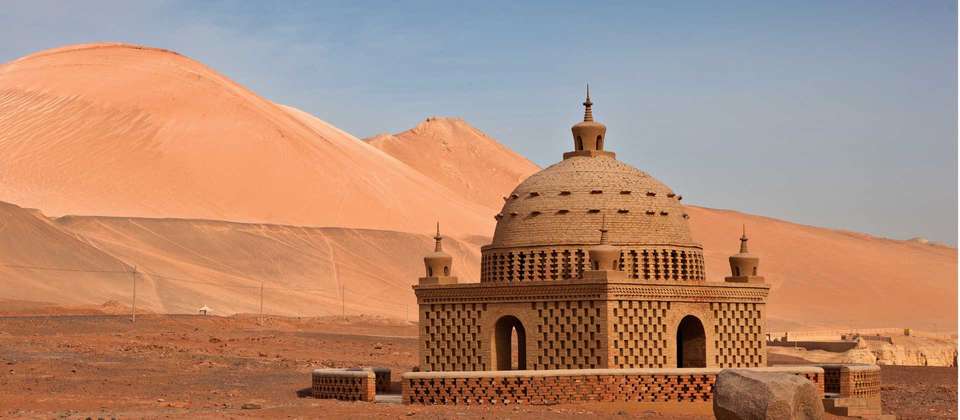
So today, you visit the Gaotai Ancient Residential Houses, a fascinating neighbourhood of traditional adobe homes built on raised earthen platforms. With more than 600 years of history, this area is full of narrow alleys and authentic Uighur architecture, offering a glimpse into local life and heritage.
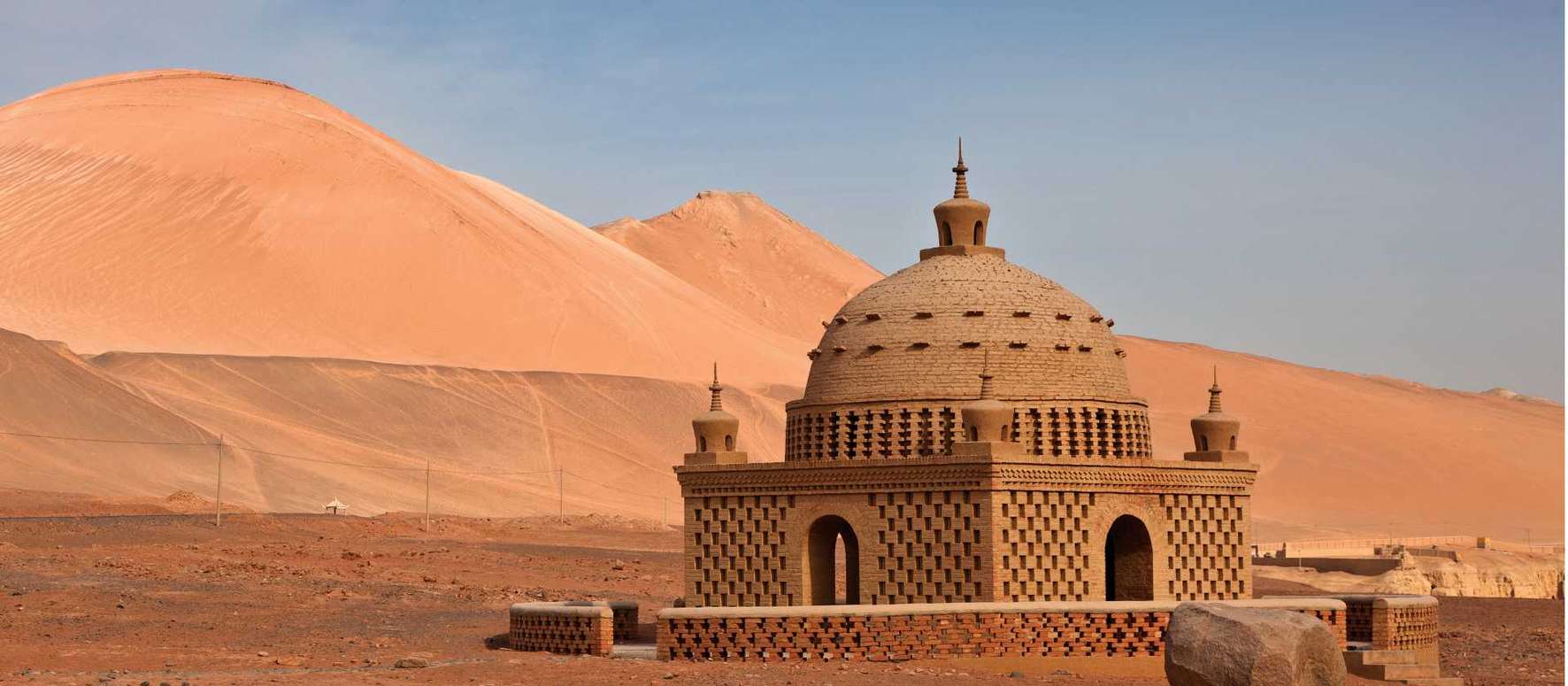
You also explore the Fragrant Concubine’s Tomb, said to be the resting place of a legendary Uighur woman from the Qing Dynasty, and visit the Id Kah Mosque, one of the largest and most important mosques in China.
Later in the day, you experience the famous Animal Bazaar, where locals trade livestock in a lively and authentic setting, offering an insight into the traditional rhythms of rural life.
You will also visit a local family in their traditional home to learn more about daily life in this remote part of China and enjoy genuine Uighur hospitality.Overnight: Kashi Tianyuan International Hotel or similar
day 17 - In Kashgar, trip concludes
What a wonderful adventure we've had! Our trip concludes today in Kashgar.

Get Trip Brochure & Exclusive Discount
Download a detailed PDF brochure and unlock an exclusive discount for this tour
What's Included
What's Excluded
Tour Availability
Select your preferred departure date and secure your spot
Loading availability...
Monthly Price Comparison
Good to Know
Do you need help from our trip consultants?
If you have any question about this tour or need help with planning a trip, please do not hesitate to get in touch with us.
Our travel experts are ready to help.



Why Book with Bookmundi
Earn USD 147+ in travel credits.
Best price guaranteed.
No credit card or booking fees.
100% financial protection.
Carbon neutral tours.
25,000+ trip reviews, with an average rating of 4.8 out of 5.