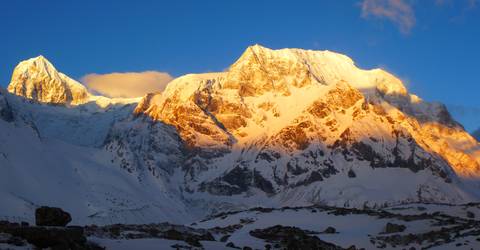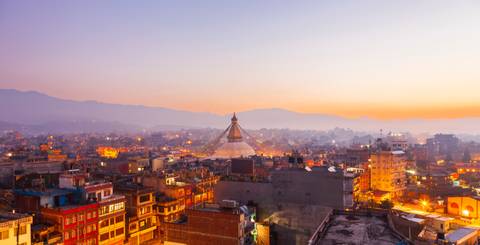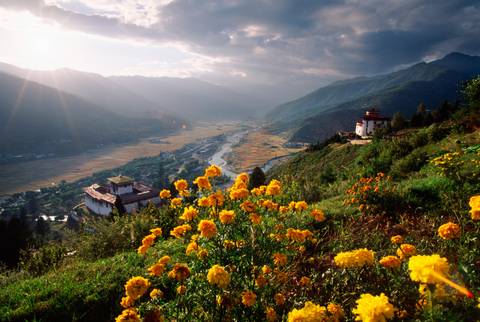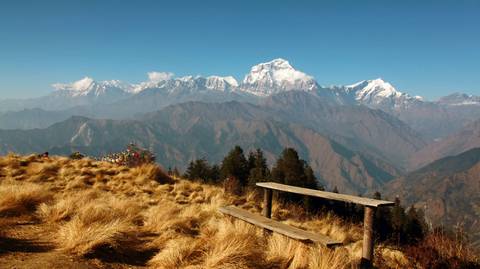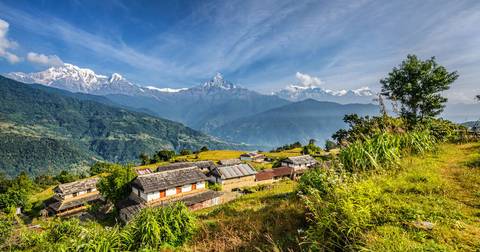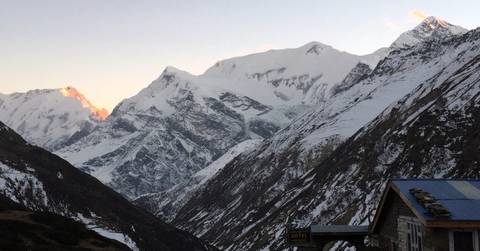
We took Jeep to Dharapani then walk. Our Guide try to skip the road but still we had to walk some part along the road. via Upper Pisang to Ghyaru and Ghyaru to Ngawal to Manang was nice .
Our tour company provided us perfect Guide, arrange nice tea house.
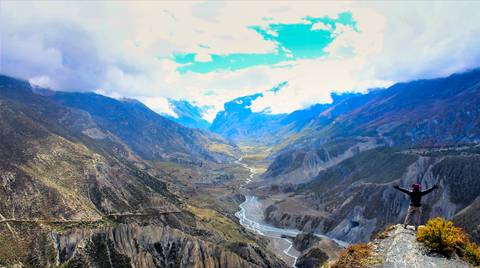
We had a great experience with Khum and this company. The transport to and from the trek was smooth. The trek holds breath-taking views with mostly straightforward days for a fit walker with a few challenging days. I highly recommend the trek for any nature lover and enthusiastic trekker. It is, however, the guide and porter that absolutely make the trek! They really do become like family on the trek. Raju has mastered the art of being a guide. He knows well when to give space and when to engage with encouragement or knowledge. We met many guides on the trek and, whilst they were all lovely, we felt especially fortunate to have Raju with his uplifting energy, enthusiastic knowledge and witty humour. Raju made the experience perfect. He acquired the best rooms he could to look after us as one of had a stomach infection. The rooms were better than expected all the way round as Raju managed to get us private rooms at every tea house and always offered extra blankets and pillows! He was patient and kind and remained positive towards achieving our goal despite the difficult illness. He also supplied the medicine which cured us and allowed us to complete the trek. It’s safe to say this would not have happened without Raju! We played cards every night and we shared different games with each other, this was a real highlight! Nima was also a lovely and caring porter who with his limited English communicated largely in kindness and respect. He was always there to help and support and several times returned from dropping the heavy bag to help! Despite the illness, the trip ran smoothly because of Raju and Nima and it has perpetuated our deep love for Nepal and a desperation to return and complete more treks. We can’t thank Raju and Nima enough for their excellency and for making our trip so special!
We had an excellent trek around Manaslu. It was an amazing experience to climb from the jungle to 5000 meters above sea level. Our guides helped us with everything. We received a lot of advice about food. During the trek, we also got a glimpse of the local culture through our conversations. This trek will remain an unforgettable experience for me.
From the autumn 2016 season the Mera Peak trek/climb by this tour operator changed from a camping based itinerary of previous years to lodge or tea house based accommodation. I/we departed in October 2016. Before commencing the trek Id convinced myself that the trek in to Mera would be broadly similar to the Everest Base Camp trek, I was very wrong. There is no gentle start and long days requiring sustained effort are the theme pretty much throughout. The route taken for the first few days is very quiet and had a feel of "going around the houses" for me. That quieter route also makes for much more basic lodges than those found on EBC for example but they were all adequate. The longer approach route does however allow for excellent acclimatisation, a major key to success. All the approach routes converge in Kote and it is then a straight shot up the now rocky Hinku valley. I didnt find the approach trek in to be very scenic and that wasnt helped by day after day of cloud cover. I wonder if a November departure would be worthwhile for clearer skies. Khare, which I thought of as base camp village, was a surprsingly busy place with climbers from all over the world either preparing for or returning from Mera. Stories of six groups having been beaten back by high winds the previous day brought about a realisation that nature could quite easily scupper our plans. Having left Khare and reached the snow line, those of us that brought our own mountain boots and crampons were reunited with them by virtue of some porters that had gone ahead of us. I was now using mountain boots and crampons on snow for the first time, I found I tired far quicker than I cared to admit at the time. After a short but steep climb things level out and then it was a relatively short walk to Mera La camp for the night. The sunset and night time stars were very nice. We were now in tents for the first time. I wish I hadn't binned off my Thermarest mattress as a weight saving effort for the Lukla flight. Foam mattresses were provided but I could still feel the cold coming up from the ground. The next day was a short one from Mera La to High Camp. It however is one of those sections where the destination never seems to get any closer despite feeling you're working like a steam train at full speed. The amusement of high camp's precarious position soon passes as you try to concentrate on getting some sleep for the upcoming 0030 wake up call. I got no real sleep. We then started our torch lit climb through the night in deeply sub zero temperatures. It was hard going, really hard going, there was little talking amongst us. It was just heads down and endure it. The group were imposing more rest stops on the guides than they wanted but I don't think there were any negative consequences when all said and done. My fingers were numb with cold. The sun slowly rose and Mera central summit could now be seen ahead. We left our rucksacks at the foot of the summit and using our Jumars went up the surprisingly short roped section fixed by our guides, it was easy and I was on the summit in a minute. It had taken around 7 hours from leaving High Camp with no sleep (for me) since Mera La the previous day. It was bitterly cold on the summit and very windy, there wasn't any open celebration. There now followed an extremely long walk all the way back down to Khare village with only a short pitstop at High Camp along the way. It was exhausting. Availability of water was a problem too since much if not all of our water was still frozen despite the now blazing morning sun. I was gasping for a drink. Ngima our leader had some warm water in a flask and I will definitely take a small flask when I find myself back on a high mountain again. What now remained was the trek "home" to Lukla. The third day of decent involved far more steep climbing than we were in the mood for but we gt where we were going. Conditions on the Zatrwa pass werent as bad as they could be. During our trek trail crampons or shoe grips weren't necessary. There were only a couple sections of ice a few paces long. The decent from the pass is long and steep, thankfully the national park authority have been building a stone staircase which makes things a little easier but you still have to watch your step. There is the potential for an overnight stay a few hours short of Lukla but depending on progress it can be skipped and we pressed on for Lukla and some comfort... relatively speaking
The AP mini circuit has to be considered as a viable alternative to the full circuit(which I have not done) - if you have a fortnight and are confident of your trekking abilities, you will get all the thrill of the trek up the Valley and over the 5416m pass , a descent through the incredible Mustang valley on the other side followed by a memorable flight past the AP range back to Pokhara .
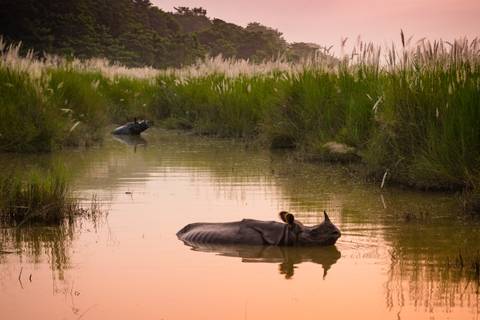
Walking, wildlife, food and culture: this tour ticked a lot of boxes for me. It is true that the poor visibility at this time of year (March) meant that the Annupurna mountains weren't visible during much of the trek, but the landscape with its flora, fauna and small farms still made the walking interesting and enjoyable. A special highlight was seeing the one-horned rhinoceros at the Chitwan National Park, and the cultural events staged at the Green Chwadi Retreat at Chitwan were an unexpected bonus. There was a wealth of birds to see throughout the tour, and our tour leader, Su, was very knowledgeable in identifying them. As someone who is unable to eat gluten, I had been worried about how I would cope with the food; and I am extremely grateful to Su for helping me to navigate this, as well as ensuring that there were always things available for me to eat.