Small Group TourUsually 8-12 participants, maximum 18 travelers
8 peopleMaximum group size
1 - 79 yearsAge range for participants
EnglishGuide language
Easy
Light physical activity suitable for most people with average fitness levels.
Starts
Paro, Bhutan
Ends
Paro, Bhutan
Get Trip Brochure & Exclusive Discount
Download a detailed PDF brochure and unlock an exclusive discount for this tour
Request a Private, Customizable Departure
By design, this is a group tour. You can however request a private, customized version of this tour for yourself or your private group of people. Private departures are usually more expensive, but come with these benefits:
Itinerary can be tweaked and customized.
Access our Travel Specialists' insider knowledge.
Enjoy a tour focused solely on you or your travel group.
To design a private tour, we'll ask you some more information in the following steps.
Do you need help from our trip consultants?
If you have any question about this tour or need help with planning a trip, please do not hesitate to get in touch with us.
Our travel experts are ready to help.


Why Book with Bookmundi
Earn USD 45+ in travel credits.
Best price guaranteed.
No credit card or booking fees.
100% financial protection.Bookmundi is a member of the Danish Travel Fund which guarantees for any payment made via us. Our guarantee covers all travelers, irrespective of nationality.
Carbon neutral tours.Algorithms and machine learning enables Bookmundi to calculate the carbon footprint for each tour. We then subsequently offset carbon emissions for all tour bookings on Bookmundi via investments in carbon reduction projects to help combat climate change.
25,000+ trip reviews, with an average rating of 4.8 out of 5.
6-Day Best of Bhutan Group Tour
5.0Based on
Carbon neutral
CO2 emissions resulting from all trips on Bookmundi will be offset via investments in carbon reduction projects.
What are customers saying about Bookmundi
4.67/5
Excellent based on 808 customer reviews from
Anonymous
Sistema di prenotazione semplice e intuibile. In caso di necessità le istruzioni presenti sul sito sono risultate utili e chiare. Nessun problema riscontrato
3 days ago
Tour Availability
Select your preferred departure date and secure your spot
Loading availability...
Customer Reviews
Read what other travelers have to say about 6-Day Best of Bhutan Group Tour
5.0
based on 3 reviews
3
0
0
0
0
Highlights
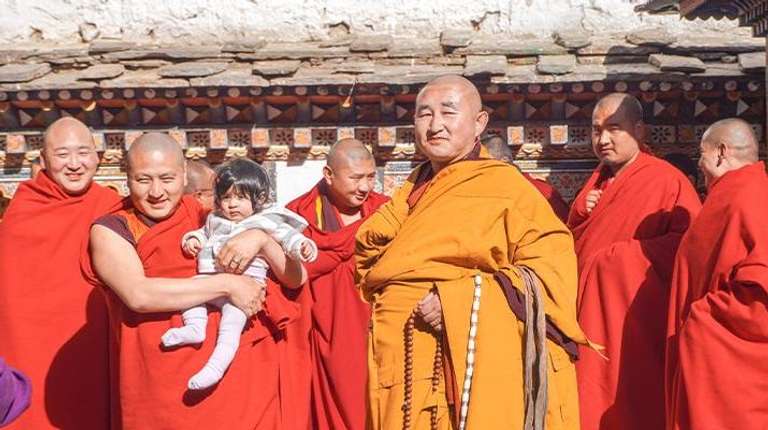
Learn about Buddhist culture and tradition
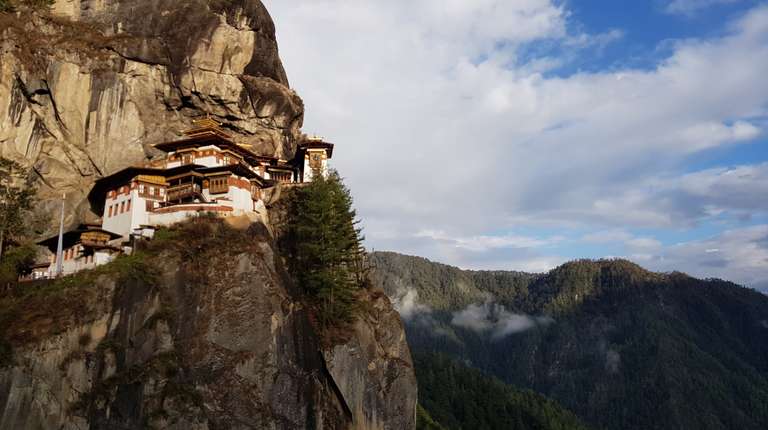
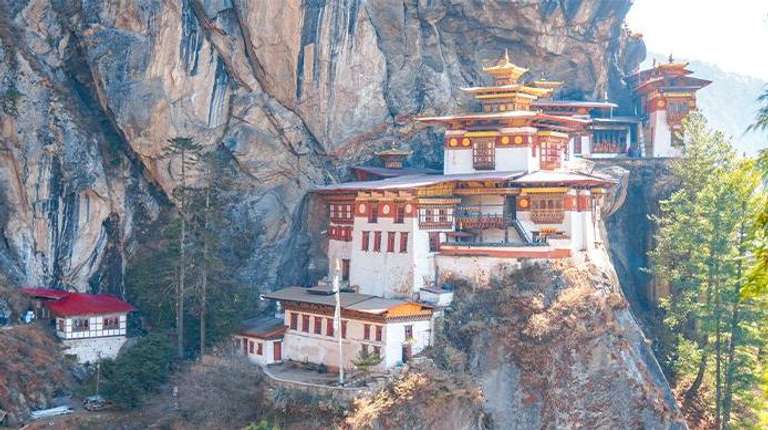
Visit the iconic Tiger's Nest Monastery
Take in the panoramic view of Thimphu Valley
Traverse the Himalayas Dochula Pass (3,120m)
Similar Tours You Might Like
Discover our top tours similar to 6-Day Best of Bhutan Group Tour that you might like.
5 Breakfasts, 4 Lunches and 5 DinnersBhutan Visa: The Bhutan visa fee is USD 40 per person, and there is also a Government Sustainable Development Fee (SDF) of USD 100 per person per night.Accommodation: Throughout the trip, stay in three hotels as listed in the itinerary. Single rooms are not provided.Meals: All meals are included in Bhutan. Please refer to the itinerary for the details of the meals provided.Guide Service: English-speaking guides provided throughout the trip.Attraction Tickets: Entrance tickets for all listed attractions are included, guaranteeing full visits. In case of unexpected circumstances, alternative arrangements will be discussed with the touristTransportation Arrangement: air-conditioned vehicles.Transfer Service: Complimentary airport pick-up and drop-off at Paro Airport.Complimentary Cultural Experience: Traditional costume experience.Our service from tour planning, handling, operational and finishing your trip.
The travel specialist has been very patient with all my queries and gave me a reliable assurance that all be well. He arranged everything perfectly making me feel safe and confident in the trip. Another guy named, Colins is also wonderful tour guide. Going out with him for my tour feels like he's been my long time friend. Very comfortable to talk to and he takes good pictures too. And the hotel room is warm and it's been a long time not sleeping well due to work. But at the hotel, I have rested perfectly. The buffet breakfast at hotel is so yummy too. Overall, my trip was very memorable . Definitely, will come back to Bhutan through this tour company.
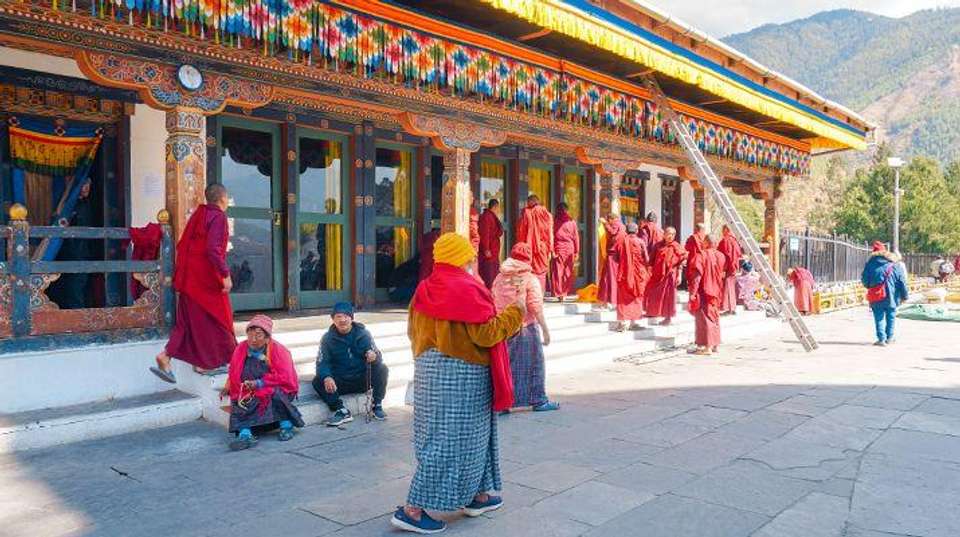
Discover the enchanting kingdom of Bhutan, the world’s only carbon-negative nation, on this 6-day small group tour crafted for curious young adults and experienced explorers. Travel through Paro, Thimphu, and Punakha, where forested mountains and ancient monasteries set the stage for a truly unique trip. Hike up to the breathtaking Tiger’s Nest Monastery, a must-see for any visitor to Bhutan, and explore the revered Kyichu Lhakhang—one of the oldest temples in the country.
In Thimphu, experience the city’s distinct charm—no traffic lights, but plenty of cultural treasures, including the Thimphu Dzong and the National Memorial Chorten. Gain panoramic views from the Buddha Dordenma Statue, visit the Takin Preserve to spot Bhutan’s national animal, and savor local cuisine for a taste of daily life. Journey to Punakha via the scenic Dochula Pass, where Himalayan peaks like Mt. Gangkar Puensum dazzle against the sky. Admire the beauty of Punakha Dzong, famous for hosting the royal wedding, and explore the whimsical Chimi Lhakhang, learning about the “Divine Madman” and Bhutan’s unique spiritual symbols.
What sets this tour package apart is its deep dive into Bhutanese culture—offering encounters with locals, insights into Buddhist traditions, and a firsthand look at the nation’s guiding philosophy of Gross National Happiness. This is more than a trip; it’s an invitation to embrace Bhutan’s joyful spirit and stunning landscapes.
day 1 - Paro, Bhutan Arrival | Airport Pick-up & Hotel Check-in
Tashi Delek! Welcome to Bhutan, the Last Shangri La in Pristine Himalayan Kingdom. Take a deep breath and enjoy the refreshing breeze in the happy country where 71 percent of the land is covered with forests. Your guide will greet you at Paro International Airport, Bhutan's only international airport.
Paro (2,270m) is the first city for most guests to reach Bhutan. It is known for Tiger's Nest which makes Paro a must-visit destination in Bhutan. For nature and culture lovers, Paro is a picturesque place that combines spirituality, natural beauty, and cultural heritage. You may have the chance to attend the colorful annual Paro Tshechu Festival if you visit Paro in early to mid-March. The festival falls on the 10th day of the second lunar month of the Bhutanese calendar. In some years, the festival might start slightly earlier, around March 10th or 15th. The festival celebrates the birthday of Guru Rinpoche, a revered figure in Bhutanese Buddhism.
You will not miss a stop at the Paro Airport Birds Eye View Point on the way to you hotel, which is a great spot to enjoy a panorama view of Paro Airport, Rinpung Dzong (Paro Dzong), National Museum (Ta Dzong), Paro Chu River, and the stunning Paro Valley itself. Don't forget to ask your guide for more fascinating information about this remarkable airport. Afterward, you can check in at your cozy hotel, where you can rest and acclimate yourself to any time difference.
Accommodation:3 Star Hotel at Comfort hotel in Paro
Meals:Dinner
day 2 - Paro Tour | Tiger's Nest Monastery Hiking, Kyichu Lhakh
This morning, you will get ready to start the exciting Hiking Tour to Tiger's Nest, the landmark of Bhutan and the most famous holy monastery in the country. It is about a 12km drive (over 0.5 hour) from Paro City to the start point of the Tiger's Nest hike route.
Usually, it may takes about 2.5 hours to reach Tiger's Nest Monastery (Paro Taktsang) on foot. The entire Tiger's Nest Hike takes around 5 to 6 hours, with about 4.8 km of uphill trekking and about 4.8 km of downhill walking. Riding a horse (Optional: Self-payment required), it takes about 1.5 hours to reach the halfway point on the mountainside.
From there, you need to say goodbye to your horse and hike for another 1.5 hours to reach the Tiger's Nest Monastery. At the halfway point, there is a Taktsang Cafeteria where you can have a buffet lunch and enjoy coffee and tea. What is more it is the first viewpoint where you can look up at Tiger's Nest Monastery, the incredible religious site of Buddhists. As the viewing position ascends, the outline of Tiger's Nest Monastery becomes increasingly clear.
On the journey ahead, you can enjoy the hike in Bhutan’s forest and will see more and more prayer flags and prayer wheels, left behind by the Bhutanese people who come here to worship. You will also have a panoramic view of the beautiful Paro Valley below. If you visit in April, you will have the opportunity to see the high-altitude rhododendrons blooming, creating a stunning display of red clouds amidst the mountains.
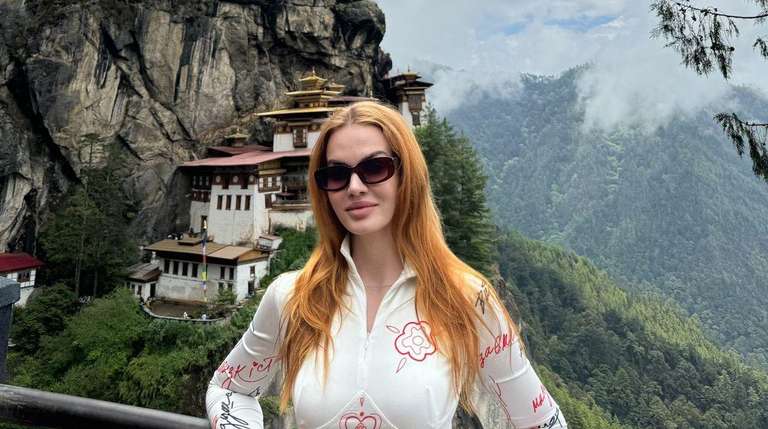
Then, you will stand right opposite the Taktsang Goemba (Tiger's Nest Monastery) and admire Bhutan's most iconic cultural landmark, which is renown as one of the world's top ten super monasteries. The Tiger's Nest (3,120m) is sited on the side of a cliff at a height of 900m above the Paro Valley (2,270m). According to legend, the Indian sage Guru Padmasambhava (Guru Rimpoche, the founder of the Nyingma school of Tibetan Buddhism and the builder of the first monastery in Tibet - Samye Monastery) arrived at the location of Tiger's Nest Monastery in the 8th century.
It is said that he rode a tigress and subdued demons before spending 3 months meditating in the mountain caves here. This eventually led to the formation of the present-day Tiger's Nest Monastery. Throughout history, this place has been considered a sacred site by Buddhist luminaries. However, it wasn't until 1692 that the current structure of Tiger's Nest Monastery took shape. In 1998, a devastating fire caused significant damage, but it was reconstructed in 2005, closely resembling the original architectural design. You can also hike into the monastery to explore more (no photo inside).
Today, Tiger's Nest Monastery, one of the most visited tourist attractions in Bhutan, is revered as the holiest pilgrimage site for Bhutanese people to visit at least once in a lifetime. (It takes pilgrims 5 days to complete their kora, performing one long kowtow/full body prostrations at each step of their journey from the Tamchog Lhakhang Iron Bridge to Tiger's Nest Monastery).
After the Tiger's Nest Hike, it is time to visit Kyichu Lhakhang, also known as the Temple of the Thousand-armed and Thousand-eyed Avalokiteshvara. It is one of the 108 Buddhist temples built by King Songtsen Gampo in the 7th century (around 659 AD), and it is believed to have been constructed to subdue the left leg of the Tibetan witch. Kyichu Lhakhang is also one of the oldest Tibetan Buddhist temples in Bhutan and serves as a venue for important celebrations of the Bhutanese royal family.
In the main hall of Kyichu Lhakhang, you can see the revered statue of an eight-year-old Shakyamuni Buddha, believed to have been created during the same period as the Jowo statue in the Ramoche Temple in Lhasa, Tibet. It is considered a national treasure of the Kingdom of Bhutan. Apart from housing many precious historical artifacts and Buddhist scriptures, the temple also enshrines the relic stupa of Dilgo Khyentse Rinpoche (1910-1991), a renowned master of the Nyingma tradition.
Additionally, there is a piece of iron chain forged by Tangtong Gyalpo, who was the former head of the four major Tibetan Buddhist schools and is known as the Iron Bridge Living Buddha and the father of Tibetan opera.
At last, head back to Paro for overnight.
Kind Reminder:
1. The best time to visit Tiger's Nest is from March to May and from October to December. After noon, the monastery will be hidden in the shadow of the cliffs, so it's recommended to depart early if you want to capture good photos.
2. Tiger's Nest offers horse riding services to go uphill, but the horse ride is only available up to a designated point. From there, you still need to hike to reach the monastery. When descending, you must walk the entire way as horse riding services are not provided.
3. Mobile phones and backpacks are not allowed inside Tiger's Nest Monastery. Personal belongings can be stored at the entrance. If you wish to light butter lamps, make sure to have some cash ready before storing your belongings.
4. Along the way, you may encounter stray dogs. Please be mindful, give them space, and avoid disturbing them.
Duration:8 hours
Accommodation:3 Star Hotel at Comfort hotel in Paro
Meals:Breakfast, Lunch, Dinner
day 3 - Paro to Thimphu Tour
Today, we will head to Thimphu, the capital city of Bhutan, which is about 50km away and takes about 1.5 hours to reach. On the way, we will make a stop at Tamchog Lhakhang Iron Bridge for a visit. Once in Thimphu (altitude 2,340m), you will have a full day of sightseeing. You can explore its rich cultural heritage such as the Buddha Dordenma Statue, National Memorial Chorten, Motithang Takin Preserve, and Tashichho Dzong.
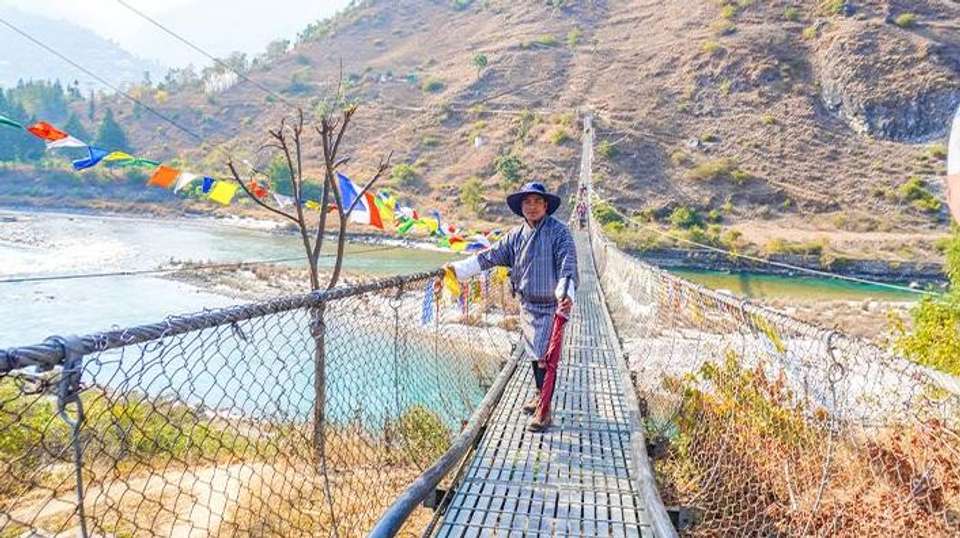
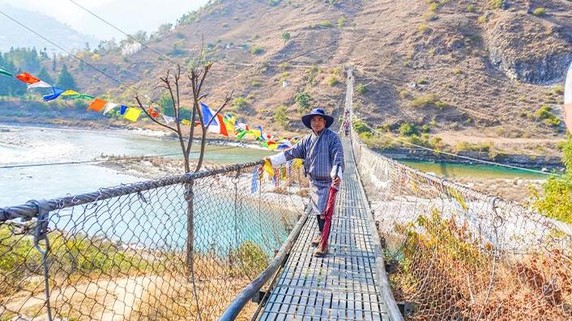
From Paro to Thimphu, you won't want to miss visiting the famous Tamchog Lhakhang Iron Bridge (view the Tachog Lhakhang from outside only), situated by the Paro river. There, you will have the opportunity to walk across a unique iron chain bridge adorned with colorful fluttering prayer flags. Both the Lhakhang and the iron bridge were constructed by the revered saint Thangthong Gyalpo (1385 - 1464), who was renowned as the Iron Bridge Maker.
Take delight in exploring his historic architectural creations that have stood the test of time. Then, you will visit the iconic landmark of Thimphu City - the Buddha Dordenma Statue (Buddha Point), which is the largest sitting Shakyamuni statue in the world. Completed in 2015, the statue embodies an ancient prophecy of radiating happiness and peace throughout the world. In addition to admiring its impressive height of 51.5 meters, constructed of bronze and gilded in gold, you will also be able to see 125,000 smaller Buddha statues placed within it.
During the festival period, visiting here provides the opportunity to witness Buddhist rituals, such as the Vajra Dance Ceremony. Moreover, from this vantage point, you can enjoy a magnificent view of the Thimphu Valley & the red/green roof of Thimphu Buildings.
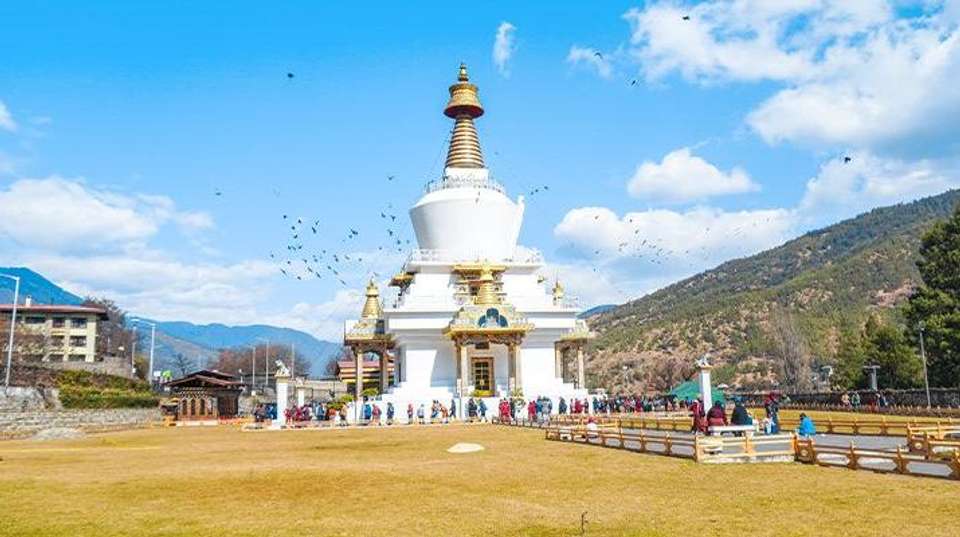
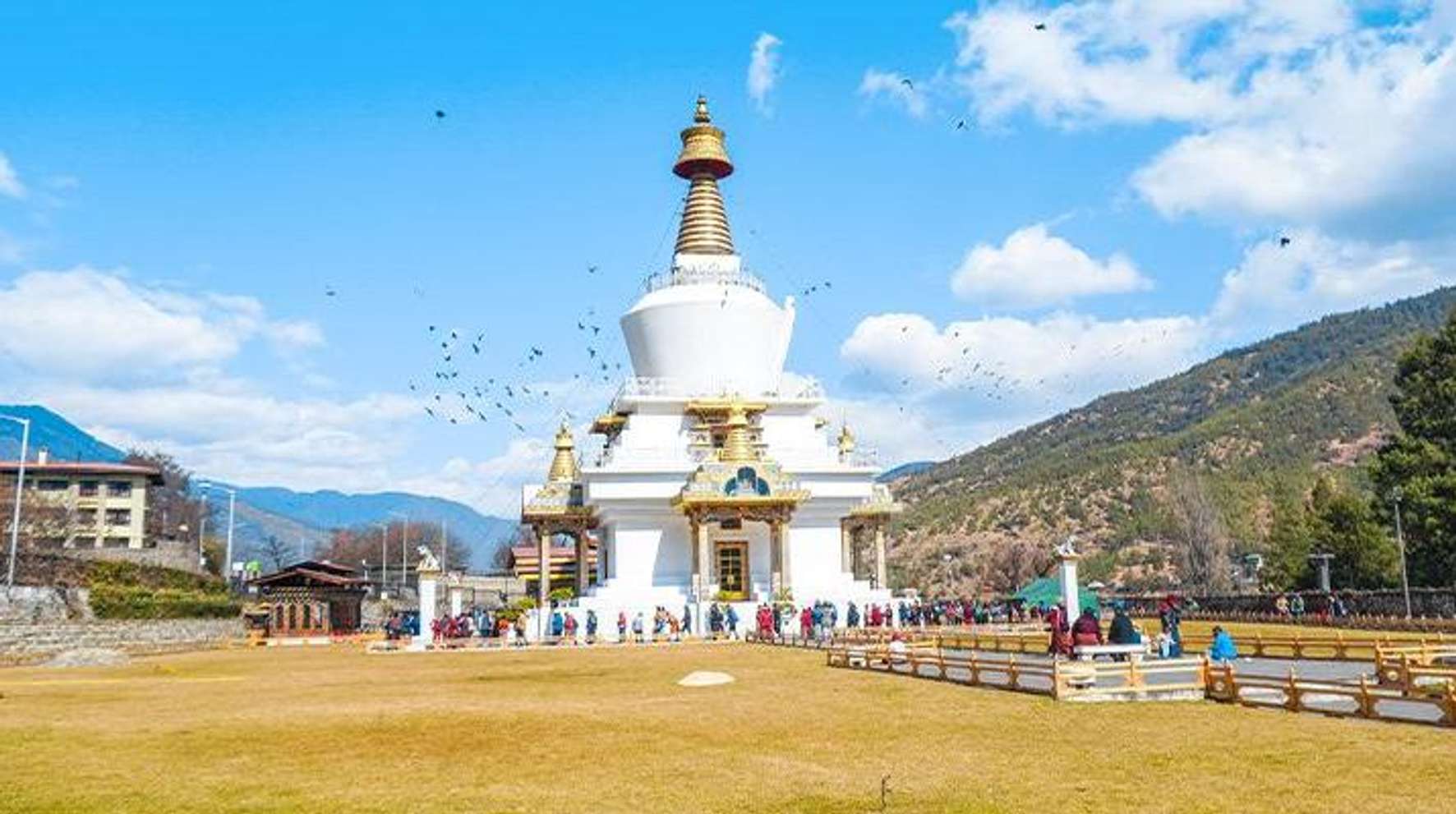
As the largest city in Bhutan, Thimphu lacks traffic lights and a railway system. When you enter the city, you can visit the National Memorial Chorten and experience it as the locals do. It is customary to follow the footsteps of the Bhutanese people and perform a clockwise kora (circumambulation) around the Chorten while offering prayers. This will provide you with numerous opportunities to engage with the locals and learn about their daily lives, as well as their philosophy on happiness.
The National Memorial Chorten is the most visited landmark in Thimphu. Constructed in 1974 in memory of the Third King, His Majesty Jigme Dorji Wangchuk (known as the Father of Modern Bhutan), by his mother, it reflects the late king's vision of promoting world peace and prosperity. The Chorten follows a Tibetan-style architecture and is adorned with remarkable paintings and intricate sculptures.
You can observe the traditional stupa design, featuring a pyramidal pillar topped with a crescent moon and sun. Nature lovers will love to visit the Motithang Takin Preserve to see Bhutan's national animal. There, you can observe the unique creature that is said to have been created by the legendary Drukpa Kunley (Divine Madman). According to legend, Drukpa Kunley fashioned the takin with the head of a goat and the body of a cow.
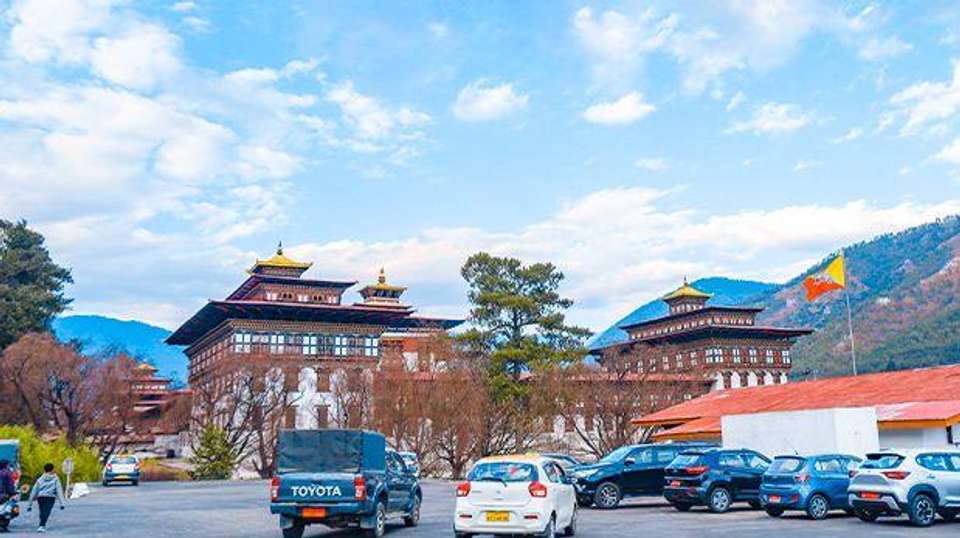
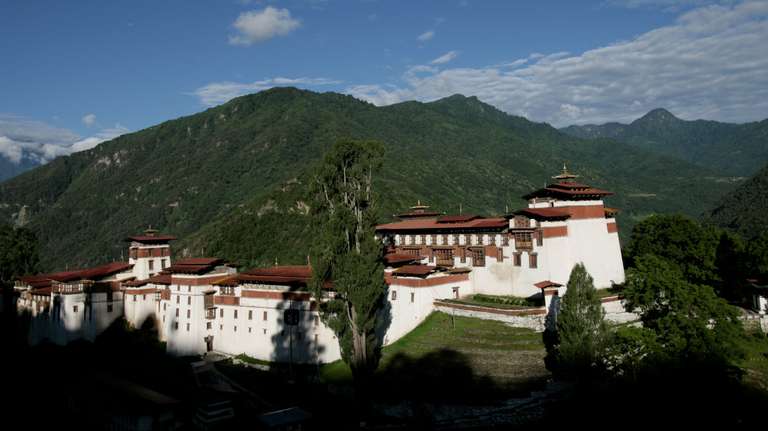
Sure, you should not miss the visit to Tashichho Dzong (Thimphu Dzong), which has served as the seat of the government since 1952. This magnificent fortress-like structure is located on the western bank of the Wang Chu River. It seamlessly integrates with the entire valley and stands as the ultimate center of power in Bhutan. It houses the offices of the current reigning monarch, the Fifth King (Jigme Khesar Namgyel Wangchuck), as well as the ministries of internal affairs and finance. Additionally, it serves as the residence of the spiritual leader of Bhutan, the Je Khenpo, and hosts the central religious institutions of the country. During the summer season, the Je Khenpo resides in the Thimphu Dzong, while in the winter season, they relocate to Punakha Dzong.
Walking around the Dzong, you will discover that it is an impressively large structure surrounded by well-kept lawns and beautiful gardens. Tashichho Dzong has two main entrances. One entrance leads to the administrative section in the south (officials only), while the other, situated in the north, grants access to the monastic quarter where the Thimphu Tshechu Festival (held around Sept. or Oct. yearly) and masked dances are performed.
Note: The tourist opening hours of Thimphu Dzong are from 5 PM to 6:30PM on weekdays and from 10 AM to 4 PM on weekends. It is required to have a tour guide accompany you for a visit to the Dzongs. Before entering for a visit, security checks are conducted. If you visit there at the right time (lucky enough), you may have the chance to see the flag descending ceremony.
Finally, it's time for dinner. You can enjoy a traditional meal at the Folk Heritage Museum Restaurant. Opened as a passion project to promote Bhutanese culinary arts (traditional Bhutan dishes), the restaurant was established by the Queen Mother of Bhutan, Her Majesty Ashi Dorji Wangmo Wangchuck. After dinner, you will spend the night in Thimphu and have a restful sleep.
Duration:9 hours
Accommodation:3 Star Hotel at Comfort hotel in Thimphu
Meals:Breakfast, Lunch, Dinner
day 4 - Thimphu to Punakha Tour
Today, you will travel from Thimphu to Punakha via Dochula Pass (74km, about 2.5 hours). This trip is more than just a drive; it is a voyage through changing altitudes and diverse landscapes, offering a visual spectacle. Starting from the higher altitude and cooler climate of Thimphu (2,300m), the drive takes you along the national highway, ascending through the majestic Dochula Pass (3,120m). Upon crossing the pass, you'll descend into the warm and verdant Punakha Valley (1,330m).
En route, you will stop at Dochula Pass (Dochu La Pass), renowned as one of the most beautiful mountain passes in Bhutan. If weather permits, you will be treated to a breathtaking panoramic view of the Himalayas, including Bhutan’s highest mountain peak, Mt. Gangkar Puensum (7,570m). You will have the delightful option to savor the view while enjoying a cup of coffee in the picturesque cafeteria.
At the Dochu La Pass summit, you will encounter the 108 memorial chortens (Buddhist shrines) and clusters of prayer flags fluttering in the wind, creating an ambiance of tranquility and spirituality. These chortens (stupas), known as Druk Wangyal Khang Zhang Chortens, were constructed as a memorial to honor the Bhutanese soldiers who lost their lives in the battle against Assamese insurgents from India, and also as an offering for global peace.
Then, your journey continues towards Punakha. Along the way, you will take a hike to Chimi Lhakhang (Chime Lhakhang), which is highly recommended as a culture shock tour. As you stroll through rice paddies and a charming settlement adorned with painted houses and numerous craft shops, you will eventually reach Chimi Lhakhang (Fertility Temple).
Constructed by the cousin of Drukpa Kunley, the temple was built to commemorate the victory of Drukpa Kunley (Mad Saint & Divine Madman) over the demon of Dochu La using his "magic thunderbolt of wisdom "(phallus). That is why you can see the symbol of the phallus scattered throughout. Lama Drukpa Kunley was adored by the local people due to his unconventional teaching methods of Buddhism, which involved singing, humor, and an exaggerated manner often intertwined with sexual overtones. Chime Lhakhang is renowned as a sanctuary of fertility, and many childless women sought blessings from the lamas at the monastery. It is believed that these couples often find success in conceiving soon after their visit.
If you are lucky, you may encounter the monks there blessing pilgrims or women who wish to conceive by tapping their heads with a 25cm wooden phallus. In Bhutan, it is common for local people to utilize the phallus symbol to ward off the evil eye and deter malicious gossip.
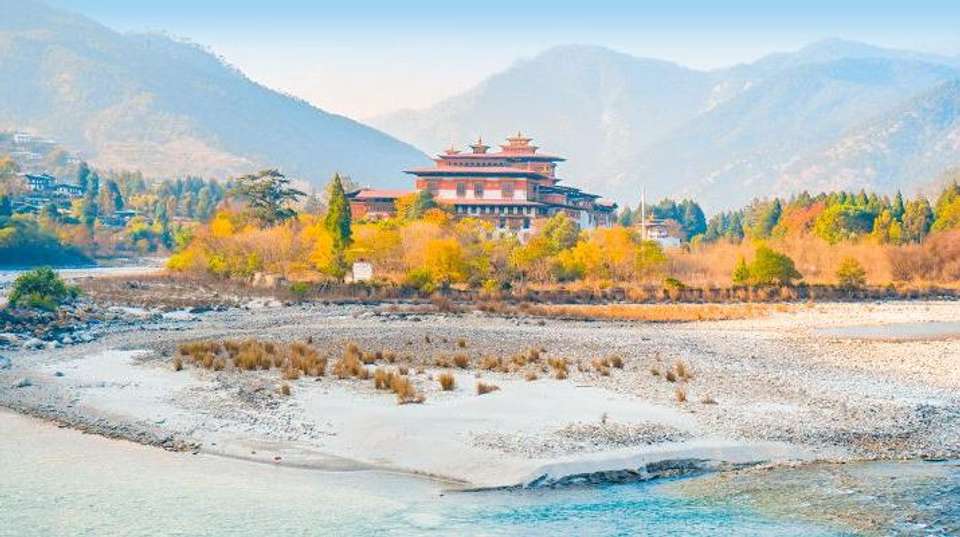
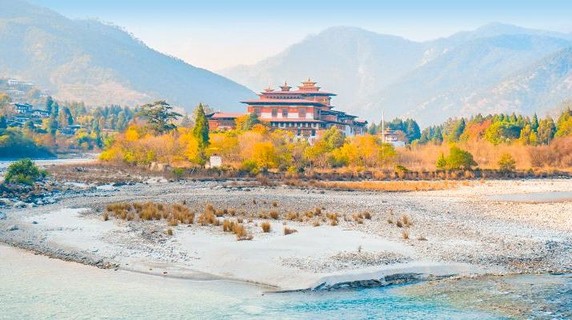
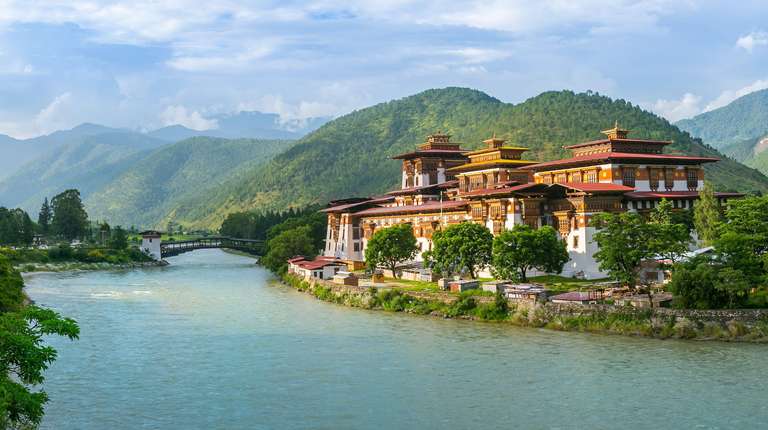
After that, drive to Punakha city, the old capital of Bhutan before 1955. It is located at the confluence of the Mo Chhu (Mother River) and Pho Chhu (Father River). Dominating the river junction is the magnificent Punakha Dzong, the winter residence of Je Khenpo (head abbot of Bhutan) and about 1,000 monks. Occasionally, you'll spot monks draped in red robes passing by, their rhythmic chanting and prayers echoing in the air.
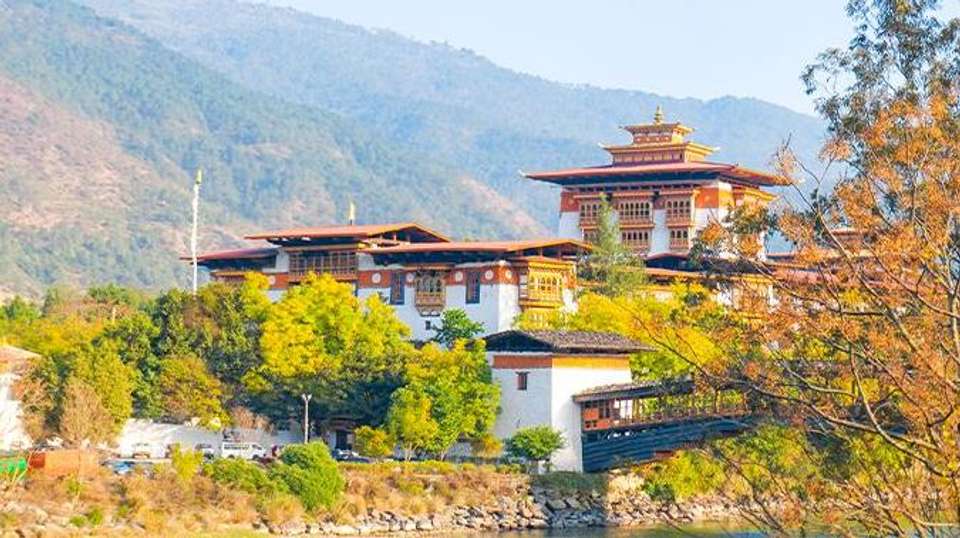
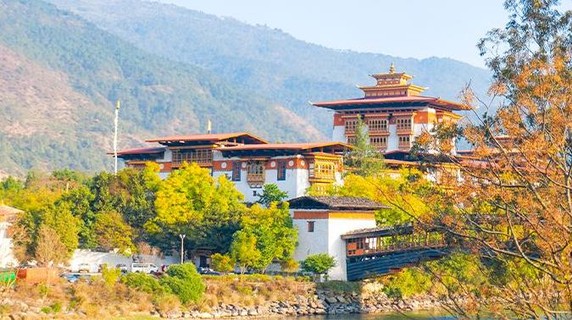
Punakha Dzong, the second oldest and second largest Dzong in Bhutan serving administrative and monastic functions holds a legendary tale. It is said that Guru Rinpoche (Padmasambhava) prophesied the arrival of a person named Namgyal built a Dzong on a hill resembling an elephant. In 1637, Shabdrung Ngawang Namgyel, the unifier of Bhutan, received a divine vision guiding him to construct a Dzong at this site. All of Bhutan’s kings have been crowned here and In 2011, the Dzong bore witness to the royal wedding ceremony of His Majesty Jigme Namgyel Wangchuck, the 5th King of Bhutan, as he married Queen Jetsun Pema.
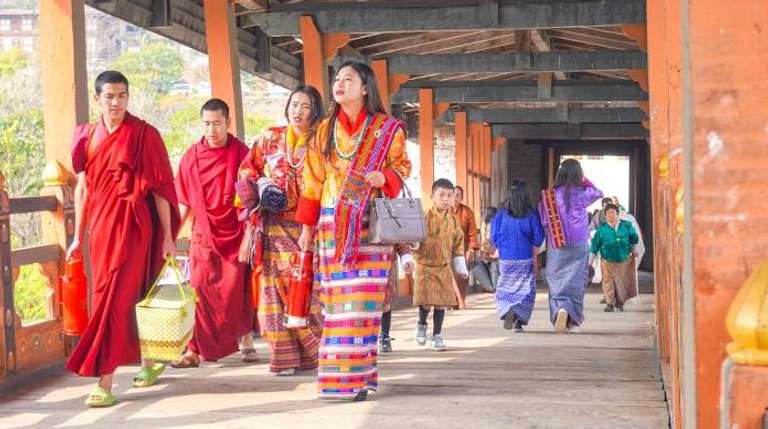
As the most beautiful Dzong in Bhutan, if you visit in April, you won’t miss the stunning violet blossoms of the jacaranda tree outside Punakha Dzong. The jacaranda typically blooms from late March to early May, during this time, the grounds of Punakha Dzong transform into a magical carpet of purple under the clear blue skies, creating a truly breathtaking sight. If you visit during the Punakha Tshechu Festival, you can enjoy the mesmerizing masked dances and witness the exhibition of a large thangka depicting the Zhabdrung (Shabdrung, the father of Bhutan) once a year. You can have fun with locals who flood here dressed in Bhutan’s national attire, with men wearing Gho and women wearing Kira.
After crossing the Bazam Bridge, you can walk inside the Punakha Dzong and take your time to admire this stunning example of Bhutanese Dzong architecture which was built of stone, pounded mud, and a considerable amount of timber (without nails, written plans, or designs). There is a six-story central tower called utse standing in the yard of the Punakha Dzong. As the highest architecture within the Dzong, utse houses the most sacred temples and shrines and contains important religious artifacts, thangkas, statues, and texts. This Dzong has three docheys (courtyards) instead of the usual two. The first (northern) courtyard is for administrative functions and houses a huge white Victory Chorten and Bodhi tree.
The second courtyard houses the monastic quarters and is separated from the first by the utse. In this courtyard, there are two halls; one of Ugyen Wangchuck (the King of Bhutan) and another hall where the King was decorated in 1905 with the Order of the Knight Commander of the Indian Empire by John Claude White. In the third (southernmost) courtyard is the temple where the remains of the Pema Lingpa (a treasure revealer, Five Terton Kings) and Shabdrung (founder of Tshechu Festival and Bhutan National Dress) are preserved. At the south end, there is the kunrey, or "hundred-pillar" assembly hall with exceptional murals that depict the life of Buddha.
Note: The tourist opening hours of Punakha Dzong are from 9 AM to 5 PM on weekdays and from 10 AM to 4 PM on weekends. It is required to have a tour guide accompany you for a visit to the Dzongs. Before entering for a visit, security checks are conducted.
Overnight in Punakha and get ready for your next day's trip.
Duration:8 hours
Accommodation:3 Star Hotel at Comfort hotel in Punakha
Meals:Breakfast, Lunch, Dinner
day 5 - Punakha to Paro Tour | Khamsum Yulley Namgyal Chorten
This morning, you will walk alongside terraced rice paddies and follow a trail to Khamsum Yulley Namgyal Chorten (hike 1 hour or less). Along the way, you may encounter farmers working in the fields, either manually or with the help of an ox and plow.
The Khamsum Yulley Namgyal Chorten (Stupa) was built in 1990 by the Queen Mother, Ashi Tsering Yangdon Wangchuck, who is the mother of the 5th King Jigme Khesar Namgyel Wangchuck. The purpose of its construction was to ward off evil forces and bring peace to Bhutan and the world. Unlike typical stupas, the Khamsum Yulley Namgyal Chorten is dedicated to the protective deities in Bhutanese culture. Each floor of the chorten pays tribute to different protective deities. This chorten exemplifies a harmonious blend of Bhutanese art, architecture, and traditions. It took Bhutanese carpenters, painters, and sculptors 9 years to complete this distinctive Bhutan-style pagoda.
Inside Khamsum Yulley, you can admire the sculptures, and as you continue climbing the steep stairs, you will reach the top level. From there, you can venture onto the roof of Khamsum Yulley Namgyal Chorten and enjoy expansive views of the Punakha. The landscape undergoes a dramatic transformation with the changing seasons, with lush green rice paddies in the summer transforming into captivating golden fields in the autumn.
Then, make your way back to Paro with a visit to Sangchhen Dorji Lhuendrup Nunnery. Situated on the summit of a 1,550-meter hilltop, the nunnery offers a breathtaking view of the Punakha valley and Wangduephodrang valley. Surrounded by lush green pine forests, this nunnery complex provides an opportunity to immerse yourself in the monastic way of life and participate in spiritual retreats. Initially established as a Buddhist college for nuns, the nunnery currently houses around 120 nuns. The complex also includes a meditation center dedicated to the nuns. In addition to religious education, the center focuses on teaching practical skills such as tailoring, embroidery, sculpting, and Buddhist Thangka painting.
Here, you will have the chance to closely observe and learn about the spiritual lives practiced by the nuns. Within the complex, there is a temple that showcases a magnificent 14-feet bronze statue of Avalokiteshvara, also known as Chenrezig, featuring 1,000 hands and 1,000 eyes. The statue, claimed to be the largest in the country, was meticulously handcrafted by local Bhutanese artisans.
Alongside this remarkable statue, the temple also houses other significant statues, including Guru Padmasambhava (Guru Rinpoche), Buddha, Zhabdrung Ngawang Namgyal, the 21 Taras, and the Buddha of longevity.
After that, drive back to Paro (110km, about 3.5h) and overnight in Paro.
Duration:8 hours
Accommodation:3 Star Hotel at Comfort hotel in Paro
Meals:Breakfast, Lunch, Dinner
day 6 - Paro Departure | Hotel Check-out and Airport See-off
Happiness is a place, wish you had gotten your happiness philosophy from the beautiful Himalayan country with us. It is time to end your 6-day Bhutan Group Tour. Your guide will escort you to Paro International Airport for your flight to your next destination.