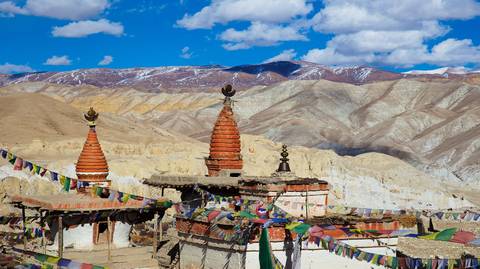
Step into a hidden world on the Upper Mustang Trekking journey, where you’ll explore Nepal’s mysterious 'forbidden kingdom.' Upper Mustang, once closed to outsiders, sits near the Tibetan border and retains a unique, ancient culture. The trek traverses remote valleys, arid landscapes, and centuries-old settlements, culminating in a visit to the walled city of Lo-Manthang, famous for its monasteries and cave complexes. The region’s nickname, ‘Little Tibet,’ hints at the strong Buddhist influences and timeless atmosphere. The tour’s unique appeal lies in its access to one of the Himalayas’ most culturally rich and secluded areas, offering a rare glimpse into a world preserved by geography and tradition.
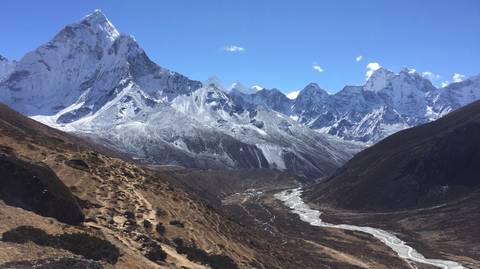
This is an epic journey to one of Nepal’s most famous treks that will take you over some of the highest mountain passes in the world. We will be crossing three mountain passes between 5000m and 5535m. Magnificent landscapes, imposing and prestigious peaks, tapering ridges and colorful villages contribute to turning this trek into an unforgettable experience.
It is possible to walk this trek in either direction, but acclimatisation is easier if you travel from east to west per our itinerary. This means that from Lukla, the entrance point of the Everest region, we will hike to to Dingboche, then Chhukung, crossing the 5,535m Kongma La Pass (the hardest of the 3 passes) to Lobuche. From Lobuche we will trek to Everest Base Camp, Kala Patthar, crossing the 5,420m Cho La Pass to Gokyo, and finally from Gokyo hike over the 5,345m Renjo La Pass down to Thame, Namche Bazar and finally reach back Lukla, from where we will fly back. This trek offers so many stunning views and great experiences; undoubtedly giving you many fond memories. It will be a circuit trek meaning that you will not have to walk on the same trek up and down.
This trek is rather hard, but people in a reasonably fit shape can do it. If you are in doubt as to your physical ability we recommend adding a porter (you can book such via check-out on this site).
We are looking forward to taking you on an adventure of a lifetime.
Challenge yourself and experience true mountain trekking on this ultimate 17-day trekking experience. Cross three high-altitude mountain passes: Kongma La (5535m) Cho La (5420m) and Renjo La (5340m). Savor 360-degree panoramic views from the top of Gokyo Ri, hike to the fifth lake in Gokyo for an incredible view of Ngozumpa Glacier, and savor the magnificence of turquoise highland lakes.
Experience the colorful landscapes, encounter ancient highland monasteries nestled in lofty peaks, and catch a glimpse of typical Sherpa culture. Summit Kongma La Pass and witness the dramatic view of Khumbu Icefall cascading down. Snap a photo at the famous Everest Base Camp and enjoy the views of Everest from Kalapattar’s viewpoint at 5545m.
This Everest Base Camp 3 passes trek is designed only for experienced trekkers who can endure extreme alpine conditions and high altitude.
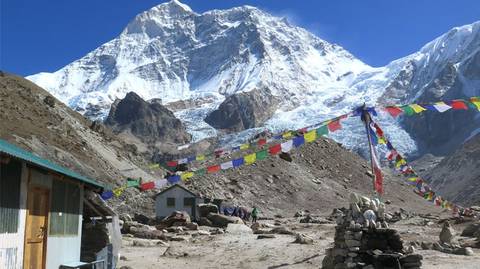
For trekkers eager to experience Nepal’s remote wilderness, the Makalu Base Camp Trek offers a 17-day journey into one of the country’s most untouched regions. Starting from Tumlingtar, this adventure ascends the Arun river valley, crosses the challenging Shipton La Pass, and ventures into the upper Barun river valley—culminating at Makalu Base Camp, nestled at 5,250 meters beneath the world’s fifth-highest peak. This trek is renowned for its pristine beauty, abundant wildlife, and the sense of isolation rarely found elsewhere in the Himalayas. With visits to Makalu Barun National Park and the chance to spot peaks like Kangchungtse and Chomo Lonzo, this trek stands out for its authentic wilderness experience, appealing to seasoned trekkers yearning for adventure off the beaten path.
Trekking and HikingMountains
Tour Type
Private Tour
Accommodation
Guest House, Hotel, Resort
Age Range
1-79 yrs
Operated in
english
Destinations
Makalu Base Camp trek, Num, Maka
Makalu Base Camp trek, Num, Makalu Base Camp, Yangri Kharka, Dobate, Khongma Dada, Seduwa, Tumlingtar, Kathmandu, Tashi Gaun, Langmale Kharka