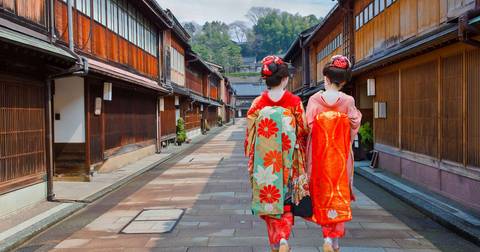
Time your adventure perfectly with 3,100 tours departing in April 2026 in Asia. Seasonal highlights and optimal conditions await, backed by 16,300 verified experiences.
Simple stays with essential amenities. Typically guesthouses, hostels or hotels rated below 3 stars — clean, no-frills, and great for value-conscious travelers.
Comfortable and reliable 3-star stays. Expect private rooms, en-suite bathrooms, and solid amenities — a great balance between comfort and cost.
Upscale 4-5 star hotels and lodges. Enjoy high-end service, refined comfort, and premium locations — ideal for travelers seeking extra indulgence.
Yes, but first I forgot to mention about the first boat trip!! One of the guys suggested people could swim, and there were only two of us that really could swim, and there were people that had to be dragged back to the boat in their life, vest!!! Not really sure why someone didn’t stop them and give them a clear picture of what the swim would be like!!! So maybe next time on that first one it could be a kayak or a swim for strong swimmers!? Joseph was great, and the snorkeling and cave experiences are one of a kind!! Palawan is worth the adventure!!! Thank you for providing us the opportunity to explore new cultures & waters!!
Explorer
Tour Type
Small Group TourSmall group tours usually have 8-12 participants and maximum up to 18 travelers
This tour was a wonderful combination of culture, nature, and calming moments on the water. The regional cuisine was excellent. Our trip advisor was attentive and conversational, entertaining all questions with knowledge and patience. It was my first solo tour as an elder tourist and the value and length was a good experience to get my feet wet. The region and people were great and the facilities and transportation were excellent.
My partner and I recently completed the Everest Base Camp trek and I am 100% confident they are the best company available. From start to finish they were there for our every need.
During our time in Kathmandu, the agency representative was always at the hotel in person, greeting us with a warm welcome and a friendly smile. Before our arrival he was always on hand by email and replied almost instantly to every single question or query I sent him, even with the significant time difference between UK and Nepal. I really don't know how he does it.
Our guide during the trek was an absolute pro and was always on hand to answer questions or organize meals, permits or any other need we might have. His knowledge of the Everest region and how to navigate it physically was second to none and it was apparent by the many other guides and porters who stopped to greet him that he is a very experienced and well respected member of the trekking community.
A special thanks to the porters in our team, who powered up the trail every day carrying close to 40kg each. Never complaining and never without a smile or a fist bump. They arranged our meals in the evening and came along on acclimatization days.
Our group of 3 made it to Everest Base Camp. Many did not. I am certain this came down to the expert guidance and support given by the team. Should I ever return to undertake another adventure, it will be with this team.
Trekking and Hiking
Tour Type
Small Group TourSmall group tours usually have 8-12 participants and maximum up to 18 travelers
The tour guide was great. I enjoyed the rural aspects of the tour. There wasn't enough of it, though. Shiretoku NP is a gem. There wasn't enough of it, though. Six nights in cities was five nights too many. I'm done. You get my drift.
Explorer
Tour Type
Small Group TourSmall group tours usually have 8-12 participants and maximum up to 18 travelers
Accommodation
Hotel
Age Range
12-100 yrs
Operated in
english
Destinations
Tokyo, Sapporo, Shiretoko Nation
Tokyo, Sapporo, Shiretoko National Park, Shiretoko Peninsula, Akanko Onsen, Asahikawa
From the autumn 2016 season the Mera Peak trek/climb by this tour operator changed from a camping based itinerary of previous years to lodge or tea house based accommodation. I/we departed in October 2016. Before commencing the trek Id convinced myself that the trek in to Mera would be broadly similar to the Everest Base Camp trek, I was very wrong. There is no gentle start and long days requiring sustained effort are the theme pretty much throughout. The route taken for the first few days is very quiet and had a feel of "going around the houses" for me. That quieter route also makes for much more basic lodges than those found on EBC for example but they were all adequate. The longer approach route does however allow for excellent acclimatisation, a major key to success. All the approach routes converge in Kote and it is then a straight shot up the now rocky Hinku valley. I didnt find the approach trek in to be very scenic and that wasnt helped by day after day of cloud cover. I wonder if a November departure would be worthwhile for clearer skies. Khare, which I thought of as base camp village, was a surprsingly busy place with climbers from all over the world either preparing for or returning from Mera. Stories of six groups having been beaten back by high winds the previous day brought about a realisation that nature could quite easily scupper our plans. Having left Khare and reached the snow line, those of us that brought our own mountain boots and crampons were reunited with them by virtue of some porters that had gone ahead of us. I was now using mountain boots and crampons on snow for the first time, I found I tired far quicker than I cared to admit at the time. After a short but steep climb things level out and then it was a relatively short walk to Mera La camp for the night. The sunset and night time stars were very nice. We were now in tents for the first time. I wish I hadn't binned off my Thermarest mattress as a weight saving effort for the Lukla flight. Foam mattresses were provided but I could still feel the cold coming up from the ground. The next day was a short one from Mera La to High Camp. It however is one of those sections where the destination never seems to get any closer despite feeling you're working like a steam train at full speed. The amusement of high camp's precarious position soon passes as you try to concentrate on getting some sleep for the upcoming 0030 wake up call. I got no real sleep. We then started our torch lit climb through the night in deeply sub zero temperatures. It was hard going, really hard going, there was little talking amongst us. It was just heads down and endure it. The group were imposing more rest stops on the guides than they wanted but I don't think there were any negative consequences when all said and done. My fingers were numb with cold. The sun slowly rose and Mera central summit could now be seen ahead. We left our rucksacks at the foot of the summit and using our Jumars went up the surprisingly short roped section fixed by our guides, it was easy and I was on the summit in a minute. It had taken around 7 hours from leaving High Camp with no sleep (for me) since Mera La the previous day. It was bitterly cold on the summit and very windy, there wasn't any open celebration. There now followed an extremely long walk all the way back down to Khare village with only a short pitstop at High Camp along the way. It was exhausting. Availability of water was a problem too since much if not all of our water was still frozen despite the now blazing morning sun. I was gasping for a drink. Ngima our leader had some warm water in a flask and I will definitely take a small flask when I find myself back on a high mountain again. What now remained was the trek "home" to Lukla. The third day of decent involved far more steep climbing than we were in the mood for but we gt where we were going. Conditions on the Zatrwa pass werent as bad as they could be. During our trek trail crampons or shoe grips weren't necessary. There were only a couple sections of ice a few paces long. The decent from the pass is long and steep, thankfully the national park authority have been building a stone staircase which makes things a little easier but you still have to watch your step. There is the potential for an overnight stay a few hours short of Lukla but depending on progress it can be skipped and we pressed on for Lukla and some comfort... relatively speaking
ClimbingTrekking and Hiking
Tour Type
Small Group TourSmall group tours usually have 8-12 participants and maximum up to 18 travelers
Accommodation
Hotel, Camping, Lodge, Tent
Age Range
18-99 yrs
Operated in
english
Destinations
Kathmandu, Tangnag, Mera Peak Ba
Kathmandu, Tangnag, Mera Peak Base Camp, Mera La, Mera Peak High Camp, Mera Peak, Zatrwa La Pass, Lukla, Piuyan, Pangkongma, Nashing Dingma, Chholem, Sukye La, Kothe
Very informative and fast paced. I believe following the tour we had a much better understanding of the Japanese including some of their customs and their way of life. Having an excellent tour guide like we had made the entire tour worthwhile.
This was a top notch company and the climbing was great. The guide was completely safe and with high winds (too dangerous to climb) we worked together to amend the plans. This made me feel safe. (Note that these are high altitude climbs and one needs to have some climbing experience.) (Also in this time of the year it was cold and at times windy.) I cannot say enough about the Sherpa and the guide. An excellent time and a grand adventure.
ClimbingTrekking and Hiking
Tour Type
Private and Group Tour Private Tour with a few fixed group departures available.
Accommodation
Camping, Hotel, Eco Lodge, Guest House
Age Range
17-78 yrs
Operated in
english
Destinations
Island Peak, Mera Peak, Lobuche
Island Peak, Mera Peak, Lobuche East Peak, Kathmandu, Kathmandu, Seto Pokhari, Amphu Labtsa pass, Island Peak Base Camp, Dingboche, Lobuche, Everest Base Camp, Kala Patthar, Lobuche Peak Base Camp, Lobuche High Camp, Lobuche Peak, Pangboche, Lukla, Chhuthang, Tuli Kharka, Kothe, Thanngnak, Mera Peak Base Camp, Mera Peak High Camp