Tour packages to Europe offered by World Expeditions. Backed by 190+ reviews and Great Prices, explore Europe on great multiday tour packages
Duration
7 days17 days
Departures
Tour Types
Countries
Activities
Physical Rating
Accommodations
Simple stays with essential amenities. Typically guesthouses, hostels or hotels rated below 3 stars — clean, no-frills, and great for value-conscious travelers.
Comfortable and reliable 3-star stays. Expect private rooms, en-suite bathrooms, and solid amenities — a great balance between comfort and cost.
Upscale 4-5 star hotels and lodges. Enjoy high-end service, refined comfort, and premium locations — ideal for travelers seeking extra indulgence.
Cycle through the spectacular landscapes of the Southern Caucasus. This captivating cycling journey traces an inspiring route through the Southern Caucasus, from the high-altitude lakes and ancient monasteries of Armenia to the dramatic canyons, alpine valleys and historic fortresses of Georgia. With expert guides and full vehicle support throughout, you’ll cycle up to 500km on a mix of paved roads, gravel tracks and scenic mountain terrain—featuring steady climbs, rewarding descents and a rich blend of history and culture at every turn.
Begin in Yerevan, exploring medieval cave monasteries, pre-Christian temples and the cultural foundations of Armenia before cycling along the shores of Lake Sevan and through the lush forests of Dilijan National Park. Continue north via Vanadzor and cross the border into Georgia, where the journey shifts into a new landscape and character.
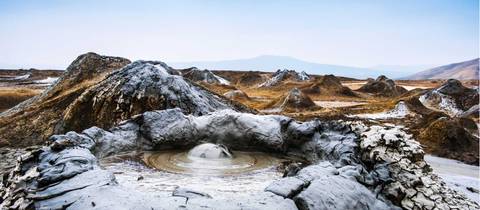
In Georgia, experience a carefully designed itinerary that blends culture and moderate cycling. Wander the atmospheric streets of Old Tbilisi before riding through the forested highlands and meadows above Algeti National Park, the archaeological ruins of Samshvilde, and the volcanic plateaus surrounding Dashbashi Canyon. Explore the scenic Georgian Military Highway en route to the mountain resort of Gudauri.
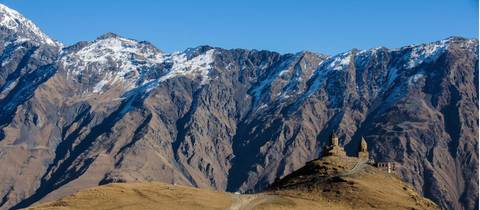
Further north, cycle through the alpine villages of Sno Valley, ascend to the iconic Gergeti Trinity Church beneath towering Mount Kazbegi, and trace the cliffs of the Dariali Gorge. Conclude your riding in the sweeping Truso Valley, a remote landscape of mineral springs, ancient fortifications and wide-open Caucasus scenery, before visiting the UNESCO-listed cathedral of Mtskheta and returning to Tbilisi for a final farewell.
With warm hospitality, distinctive regional cuisine, and some of the most striking landscapes in the Caucasus, this itinerary offers the ultimate guided cycling adventure through Armenia and Georgia.
AdventureBicycle tours
Tour Type
Small Group TourSmall group tours usually have 8-12 participants and maximum up to 18 travelers
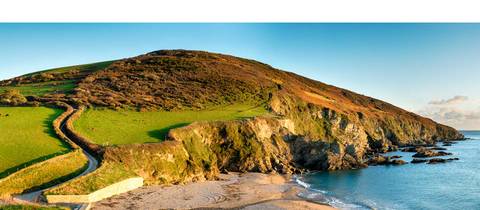
Follow the rugged Cornish Coastal Path from Padstow to Penzance in Cornwall. From Padstow to Penzance, this South West Coast Path adventure offers a rich blend of natural beauty and Cornish heritage in a 13-day itinerary. Follow the Camel Estuary and cliff-top paths past hidden coves and golden beaches to the surfing hub of Newquay. Explore ancient Iron Age forts at Trevelgue Head and spot remnants of Cornwall’s tin mining past near Perranporth and Portreath. Highlights include the dramatic cliffs at Hell’s Mouth, seal sightings near Godrevy Point, and a scenic walk through the Hayle dunes into charming St Ives. Beyond the cobbled streets and art galleries of St Ives, the trail continues past shipwreck sites like the Carracks, inland to Zennor, and along the rugged Penwith coastline. Visit iconic Land’s End, the cliffside Minack Theatre at Porthcurno, and the old smuggler’s pub , the “Lamorna Wink”. Pass through the picture-postcard fishing village of Mousehole (pronounced “Mowzl) and end your journey in the bustling coastal town of Penzance with sea views of striking St Michael’s Mount.
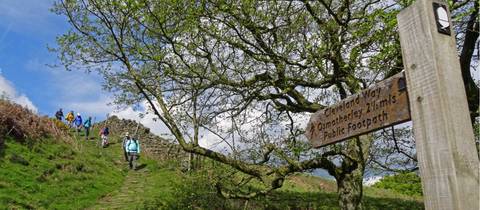
A mixture of coastal and moorland walking The Cleveland Way. Walkers familiar with Wainwright’s Coast to Coast path will already be well acquainted with a couple of spots along the rolling Cleveland Way such as The Wainstones, Urra Moor and Robin Hood Bay. In fact it shares about 10 miles of routing with the ‘C to C’. Maybe they will be intrigued enough by their flirtation with the trail to don their boots once again and take up the challenge of the 110 mile Cleveland Way route from Helmsley to Filey in its entirety. What stands out is the experience of half a walk over hill and scarp edges and half along the hilly coastline of the Yorkshire seaside. There is much to enjoy for those interested in history, those ‘collecting’ National Trails and for aficionados who wish to enjoy arguably the best Fish ‘n’ Chips in England at Whitby Bay! This is the second of the ‘National Trails’, dating from 1969 and is rooted in the North York Moors National Park / Yorkshire Heritage Coast. Along its length there are contrasts in walking between field - quilted farmlands, forest patches, dramatic sandstone rock scarps, bleak moorlands and the highly eroded coastline, punctuated by beautiful little fishing villages, clinging to the cliffs. It is an area that has been threatened by the expansion of the Tyne – Tees Conurbation on the one side and by the encroaching North Sea on the other. However apart from busy coastal towns such as Scarborough, it remains a tranquil area, bolstered and protected by the presence of the National Park of which about 80% of the walk occupies. Highlights of the Cleveland Way include, the remains of the Norman Rievaulx Abbey, and 13th century Whitby Abbey (but dating from the 7th century!), the Captain Cook Monument and Robin Hoods Bay with it's cliff-hanging cottages. Most of the route follows well sign-posted footpaths, which generally have good surfaces and are easy to follow. The exception to this is along the coastal path, which, in some places, is overgrown and uneven underfoot. The amount of daily ascent and descent is moderate, with much of the walk being on level or gently sloping ground. There are a number of steep ascents along the section from Osmotherley to Urra Moor and at some places along the coast, but these are generally of no more than one or two hundred metres at a time.
Trekking and Hiking
Tour Type
Group Tour
Accommodation
Guest House, Hotel, Resort, Villa
Age Range
18-99 yrs
Operated in
english
Destinations
Filey, Helmsley, Scarborough, Os
Filey, Helmsley, Scarborough, Osmotherley, Clay Bank Top, Great Ayton, Saltburn, Whitby Bay, Robin Hood’s Bay
Mount Ararat’s snow-capped summit beckons experienced trekkers and seniors seeking a true adventure. This 8-day expedition, led by licensed mountain guides, challenges you to ascend Turkey’s highest peak—long believed to be the resting place of Noah’s Ark. With stunning views stretching into Armenia and Georgia, and full logistical support throughout, the journey promises both physical achievement and spectacular natural beauty. The unique highlight is the opportunity to summit the 5,137-meter glacier-capped mountain, offering a rewarding trekking experience for seasoned walkers.
Trekking and HikingClimbing
Tour Type
Small Group TourSmall group tours usually have 8-12 participants and maximum up to 18 travelers
Experience superb walking through the spectacular Irish countryside near Dublin. The Wicklow Way is Ireland's oldest waymarked trail, pioneered by a famous hill walker, J.B Malone over 40 years ago and reveals some of Irelands finest views. Think Powerscourt Waterfall, Luggala, Loch Dan, Glenmalure Valley and historical Glendalough. The trail extends from Marlay Park in Dublin to Clonegal on the borders of Wicklow and Carlow covering a distance of approx 127 kilometres (79 miles). This 9-day trip covers the full Wicklow Way. The advantage of walking south to north means you will finish your walk in Dublin. For those a little shorter on time, there is a 7-day option that starts in Tinahely and takes you to Dublin.
The way winds through the Wicklow Mountains, one of Ireland's most spectacular upland areas. The Wicklow Way explores unspoilt trails, remote scenery, lakes, glacial valleys, forests and gentle farmland. Starting in southwest County Wicklow, the route passes through rural communities, old market towns and grand estates on its way to the bright lights of Dublin. Hiking near Dublin means a straightforward connection to the start of your trip, which is the small typical 'one street' village of Clonegal. An apt starting place for this walk into the remote and beautiful Wicklow Mountains. It is a route that remains mainly in the countryside making the short detours necessary to find a comfortable bed for the night.
A couple of fairly long but gentle days introduce you to the Newry Forest and over high points of Moylisha and Stookeen Hill to the 17th century village of Shillelagh and then on to the beautiful village of Tinahely. Quiet roads, forest trails and open mountainsides, with views back towards Clonegal and across the neighbouring counties of Carlow and Wexford, lead to Moyne and on to the most dramatic stages of the walk. A magnificent day's walk includes the spectacular Ow valley that passes below Wicklow's highest mountain, Lugnaquilla (925m), and along the 16km long glaciated Glenmalure Valley. This walk ends at the scattering of houses and splendid inn that make up Glenmalure hamlet. If climbing out of the Glenmalure Valley doesn't literally take your breath away then the fantastic views and the Glenmalure Waterfall probably will. Cross Mullacor Mountain and walk into Glendalough, 'the valley of two lakes' and site of a monastic settlement (from the 6th to the 13th century) for a little sightseeing. A short vehicle transfer gets you on the road to Oldbridge near Roundwood, which claims to be Ireland's highest village. The Penultimate day's walk is to the charming area around the village of Enniskerry. It is a mini classic with views of Lough Dan and Lough Tay. At the head of the valley is the Guinness family estate and later in the day enjoy views of Powerscourt Waterfall, the longest in the country. The last walk goes over Prince William's Seat for views across the city of Dublin, now in striking distance for some afternoon sightseeing and a lively evening in the city centre or one of its many fine restaurants.
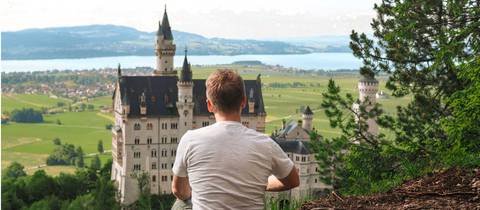
Walk in the footsteps of Bavaria's eccentric King Ludwig to Neuschwanstein Castle. Also known as the Koenig Ludwig Weg or King Ludwig’s Way. The eccentric Ludwig II succeeded to the throne of the then independent kingdom of Bavaria in 1864, as a youth of 18. On 13 June 1886 he and his physician Dr Godden were found dead in the water of the Starnbergersee (Lake Starnberg); the question still remains - Did Ludwig fall or was he pushed? He was a strong swimmer and a post-mortem established that he did not drown. But no one has succeeded in unraveling the mystery. The Koenig Ludwig Weg starts at the Votivkapelle (shrine), which marks the actual spot on the lakeshore ( near the hamlet of Berg) where the bodies were found. The route ends 60 miles away near Ludwig's own fairy tale castle at Neuschwanstein. This walk, which is one of the favourite longer walks in Germany, links places particularly dear to King Ludwig who was himself a keen walker. It is not a mountain walk and much of the route is on farm tracks and country lanes, but the surroundings are delightful, with a host of splendid buildings to admire in magnificent settings and plentiful opportunities to stop for refreshments! The plains surrounding Munich give way to gentle rolling hills that become ever higher as one approaches the great wall of limestone that marks the start of the Alps proper. The route passes two of Bavaria's most scenic lakes and through charming villages of geranium bedecked chalets with typical onion shaped church spires. There are masterpieces of baroque architecture, the Andechs monastery, the wonderful cathedral of Diessen on the Ammersee Lake; the monasteries of Wessobrunn and Rottenbuch, as well as the Wies or 'Meadow' church are on the route. The highest point (988m) on the walk is the summit of Hohenpeissenberg hill, considered by many to be the finest viewpoint in Bavaria. We end our tour at King Ludwig II’s most famous architectural masterpiece- the castle Neuschwanstein and at the nearby castle Hohenschwangau, both in Allgau on the Austrian border, where Ludwig spent most of his childhood. To celebrate the 150th anniversary of King Ludwig II (in 1995), the route was extended to begin at the Votivkapelle in Berg. It is a popular walk so early booking is recommended.
Walk part of the Coast to Coast Walk through the Yorkshire Dales and North York Moors at your own pace. Embark on the eastern half of Alfred Wainwright’s legendary Coast to Coast walk, tracing the route from the rugged Pennines through the Yorkshire Dales and across the heather-covered North York Moors to the dramatic cliffs of the North Sea.
Your hike begins near the halfway point of the trail in the Pennines Area of Outstanding Natural Beauty. Cross into the Yorkshire Dales National Park and climb the mystical Nine Standards Rigg. From there, you will follow the scenic River Swale past timeless villages and rolling farmland before arriving in the historic market town of Richmond. The journey continues into the North York Moors National Park, where panoramic vistas and sweeping moorland paths guide you towards the coast.
The final stretch leads to Robin Hood’s Bay, where tradition calls for dipping your boots in the North Sea and marking your achievement with a pint, a glass of champagne, or an ice cream on the beach. Along the way, you’ll enjoy the charm of classic northern England; fields of sheep, rolling hills, dry stone walls, friendly local communities, and hearty full English breakfasts. Accommodation is in cosy country hotels, welcoming guesthouses, and traditional pubs—each reflecting the warm hospitality of rural England.
For a gentler pace, our 11-day itinerary (trip code WCO) breaks up the final two long stages between Richmond and Blakey Ridge, giving you more time to savour the scenery. Scroll down to explore all our Coast to Coast walking holiday options.
Trekking and Hiking
Tour Type
Group Tour
Accommodation
Guest House, Hotel, Camping
Age Range
18-99 yrs
Operated in
english
Destinations
Robin Hoods Bay, Kirkby Stephen
Robin Hoods Bay, Kirkby Stephen, Keld, Reeth, Richmond, Osmotherley, Blakey, Egton Bridge, Robin Hood’s Bay
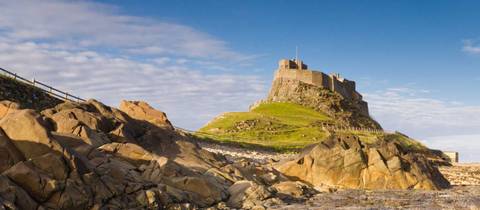
Walk through the Cheviot Hills from Scotland to England en-route to Britain's very own Galapagos. The St Cuthbert’s Way is a long-distance path that was established in 1996. The route reflects the life of this 7th century monk, extending from Melrose Abbey in the Scottish borders, where he became bishop to the island of Lindisfarne just off the coast of Northumberland in northeast England, where he was buried. So the ‘Way’ links places associated with his life. It includes a variety of delightfully unspoilt countryside: the Tweed Valley (origin of the famous woollen cloth), the Eildon Hills, the Cheviot Hills (origin of one of the most famous breeds of sheep), and the Northumberland coast with its broad horizons, sandy beaches and dramatic contrasts between high and low tide. The small historic towns en route - Melrose, Kirk Yetholm and Wooler - are equally unspoilt and offer a pleasant contrast with the thinly populated countryside. There is an abundance of historical features, including ruined abbeys at Melrose and Lindisfarne, the battle site at Harestanes Moor and old castles. The standard route is intended to be walked in 4 long days, but we have made several modifications to make the day stages slightly shorter and perhaps more interesting. The tour ends on Lindisfarne, but we recommend that if you have time, you opt for the extended tour which takes you back to the mainland and the beautiful village of Bamburgh overlooked by its grand castle and further down the coast, past the magnificent ruins of Dunstanburgh Castle to near the ancient kipper producing village of Craster.