
Highlights
Follow the footsteps of ancient traders on a journey along the Silk Road
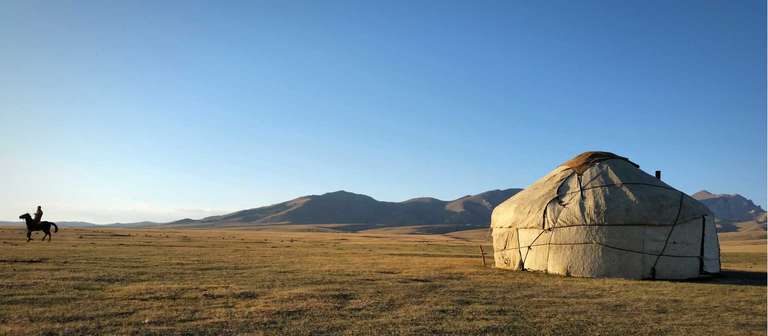
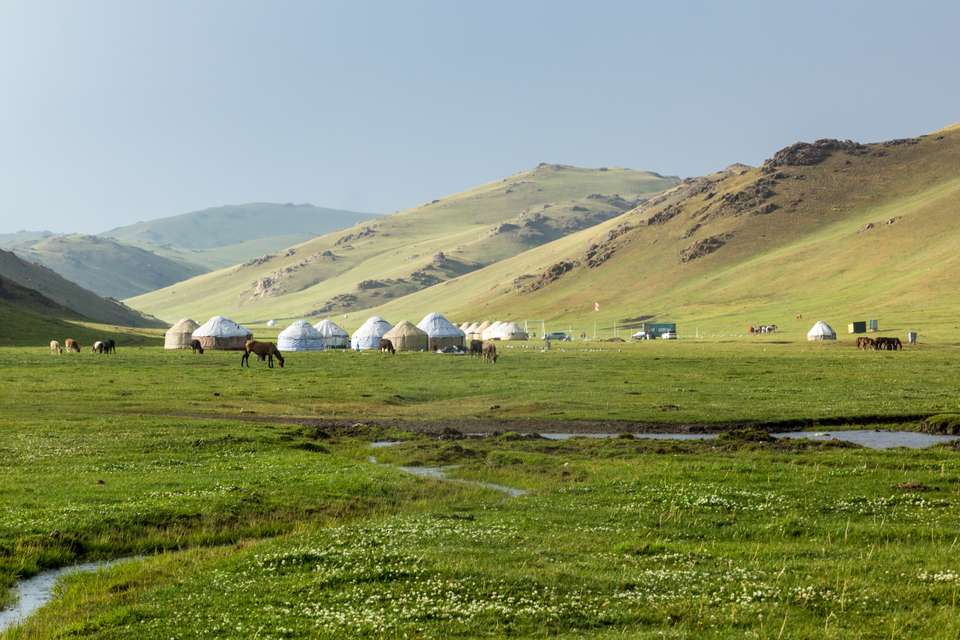
Experience the life of a nomadic shepherd with two nights in a yurt camp
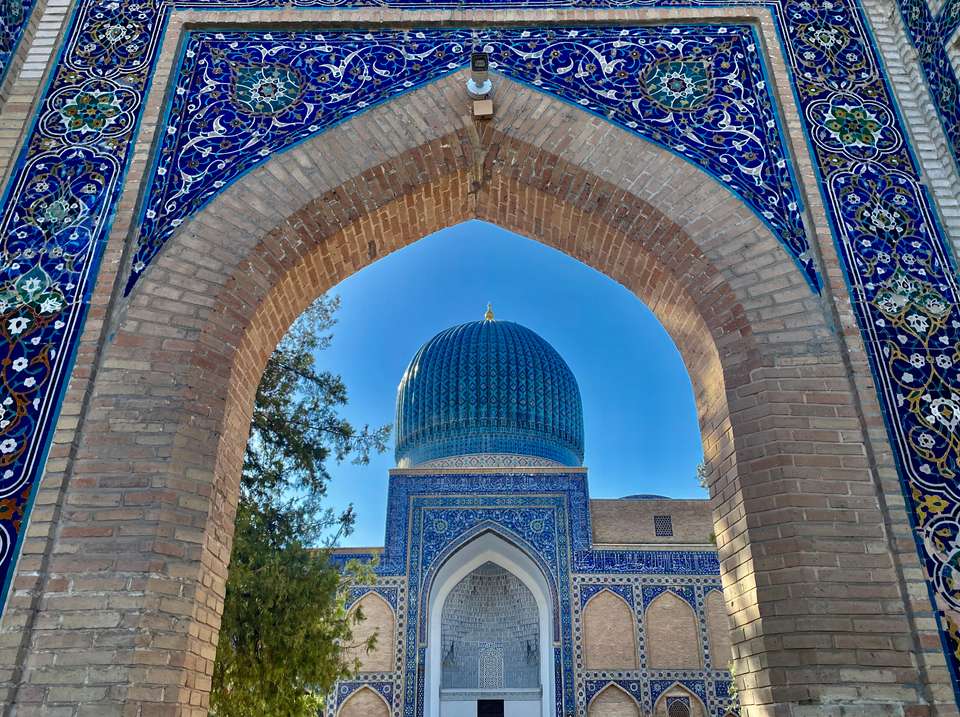
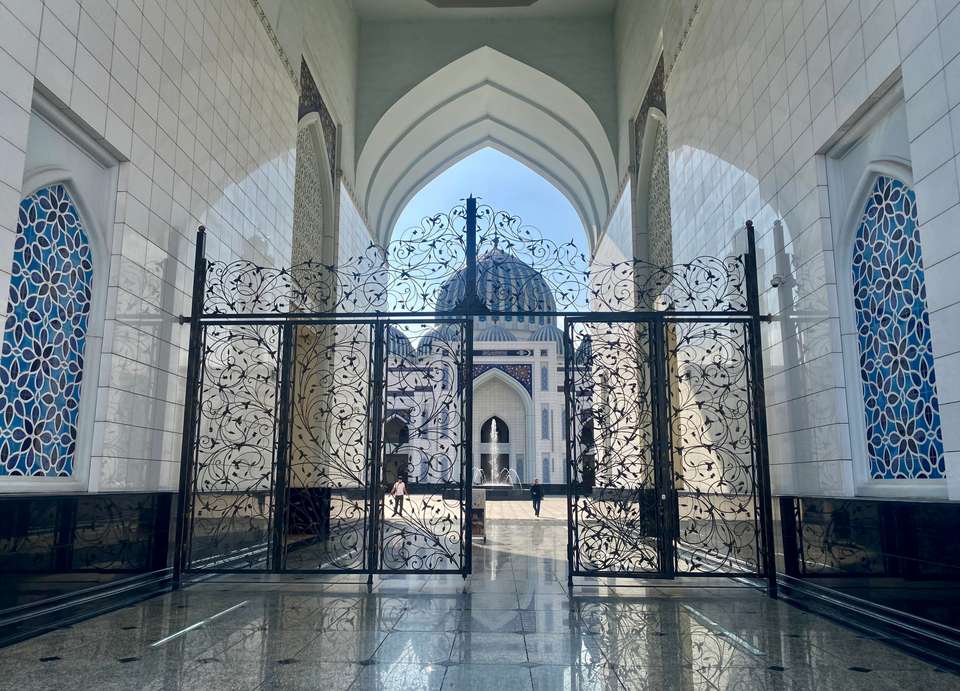
Discover the great Islamic architecture and ruins of five different countries
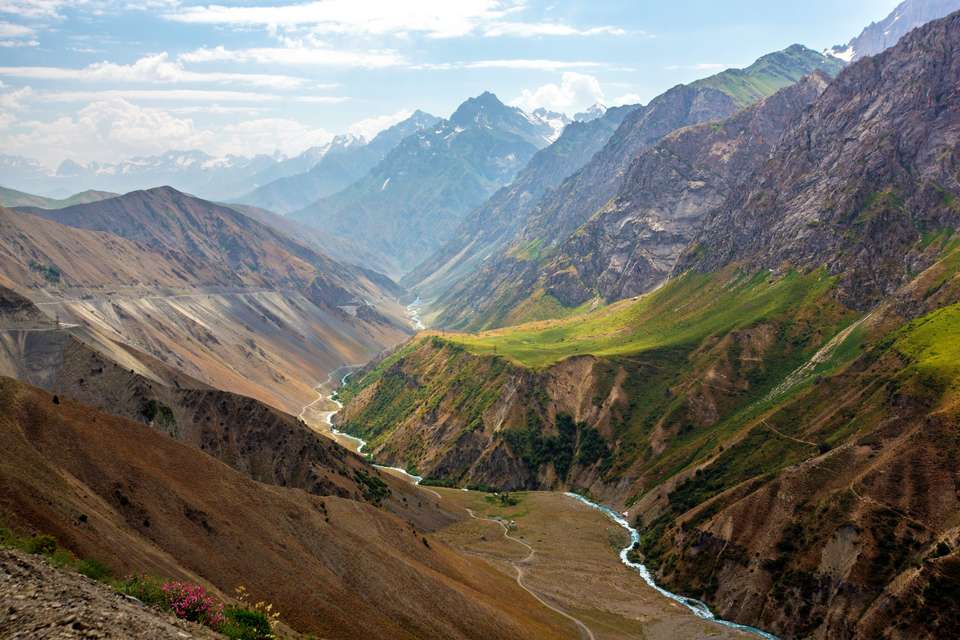
Explore the villages and lakes of the Fann and Tien Shan mountains
Itinerary
Vast deserts, open steppe, fertile valleys and striking mountain ranges shape the landscapes of the Five Stans, the five former Soviet republics of Central Asia. Their towns and cities reveal the movement of armies, traders, and scholars over millennia: Greek and Persian campaigns, Mongol expansion, Silk Road exchange, ambitious astronomers, and Soviet-era experiments. Encounter traditional villages, intricately tiled madrassas, alpine lakes, lively markets and wide boulevards − a vivid portrait of a region where histories overlap and contemporary Central Asian culture continues to evolve in fascinating ways.
About this trip: We have two versions of this trip. One starts in Ashgabat, Turkmenistan, and ends in Almaty, Kazakhstan, and the other runs in reverse. Apart from the direction of travel, the two itineraries are similar – the main difference is the route taken through Kyrgyzstan and the accommodation there. This itinerary runs from Turkmenistan to Kazakhstan, includes Son Kul Lake, and has two nights staying in yurts in Kyrgyzstan. The reverse itinerary includes Chon-Kemin and Bishkek and stays in guesthouses and hotels rather than yurts.
day 1 - Adventure begins in Ashgabat
The adventure begins in Ashgabat, the capital of Turkmenistan. As per Turkmen law, we arrange arrival transfers for everyone in the group. See the Joining Instructions in the Trip Notes for more details. There are no arranged activities today, as many flights arrive very late at night or early tomorrow morning.
day 2 - Discover the monuments of Ashgabat
Following what for many people will have been a late night or early morning arrival, we have our welcome briefing at 11am and then begin our exploration of Ashgabat.
Ashgabat holds the record for the most white-marble buildings in the world. In the post-Soviet era, successive Turkmen leaders built these impressive buildings as a show of the country’s strength, and they make for a surreal sight. Ashgabat has been described as Pyongyang meets Las Vegas, and you can see why.
We have a half-day tour of Ashgabat including Ertogrul Ghazi mosque, Independence Park, the Neutrality Arch, Constitution Monument, Alem Ferris Wheel, Constitution Monument, Halk Hakydasy Memorial Complex, and the Wedding Palace, which looks over the city from a hilltop. We also have a visit to the national museum and later a short tour of the city by night (40 minutes).
day 3 - Explore the ancient city of Merv
After an early breakfast, we transfer (up to four hours) to Mary, a contemporary city that serves as the gateway to ancient Merv.
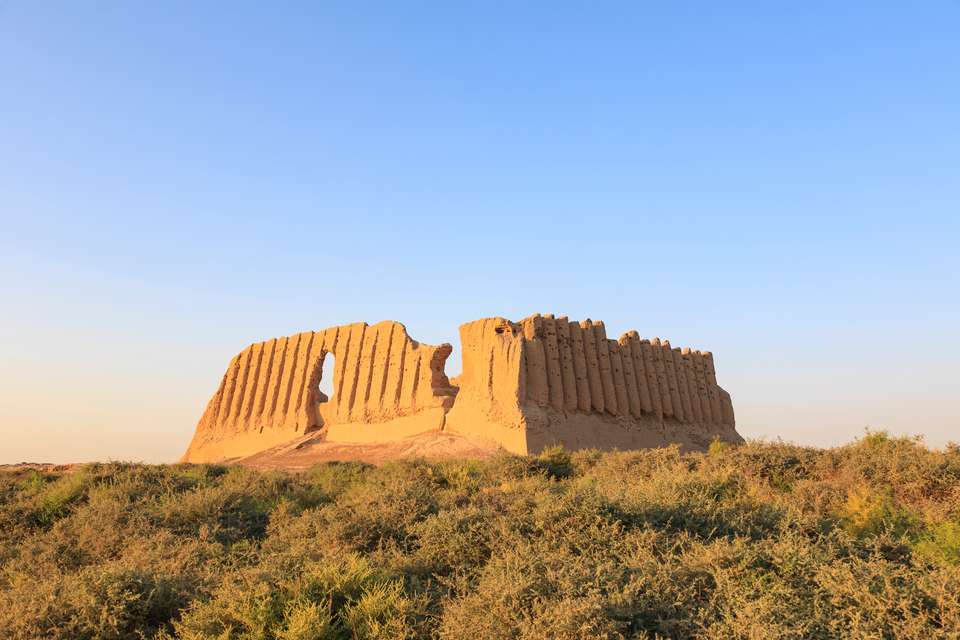
In the early afternoon, we continue to this vast World Heritage site, once among the largest cities on Earth. We move between key surviving areas, including the windswept remains of crumbling towers and walls, to gain a sense of the scale that so impressed medieval travellers.
Later, we return to Mary to look around the modern town, including the Juma Mosque and the small Russian Orthodox Church.
day 4 - Explore Nissa • Meet prized Akhal-Teke horses • Fly to Dashoguz
Returning to Ashgabat, we arrive early afternoon with time to visit the Magtymguly Monument, dedicated to the 18th-century poet whose work shaped Turkmen literary identity. From here, we continue to the archeological site of Nissa, once a capital of the Parthian Empire, which ruled a vast stretch of territory from present-day Iraq to Pakistan more than 2,000 years ago.
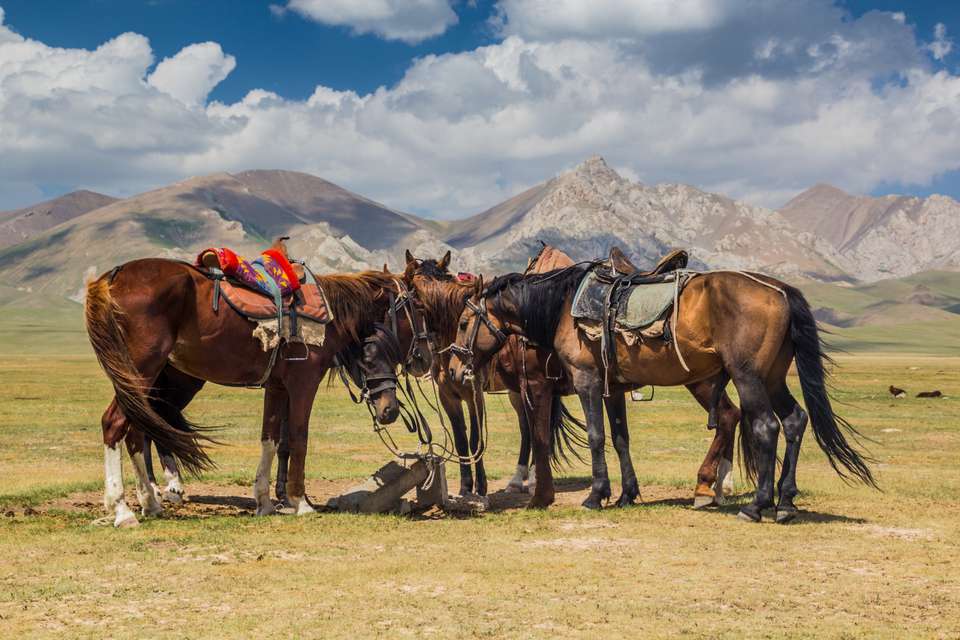
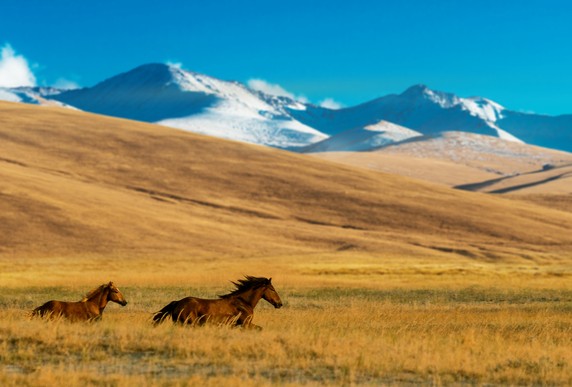
Our final visit is a local farm known for breeding Akhal-Teke horses. Celebrated for their distinctive metallic sheen and long-distance stamina, they remain an enduring emblem of Turkmen national heritage.
Later, we transfer to Ashgabat airport for our evening flight to Dashoguz.
day 5 - Trace Silk Road legacies at Kunya Urgench • Cross into Uzbekistan
After breakfast, we drive for two hours to Kunya Urgench. Once the capital of the Khorezm region under the Achaemenid Empire, this World Heritage site preserves a remarkable collection of monuments dating from the 11th to 16th centuries. Our tour leader guides us between the remains of mosques, caravanserai gates, fortresses and mausoleums, culminating at the 195ft (60m) Gutlug Timur Minaret. The craftsmanship seen here influenced architectural traditions across Iran and Afghanistan, and later shaped elements of 16th-century Mughal design in India.
We then make the two-hour return drive to Dashoguz, followed by a further 20 minutes to the Shavat border post. Here, we say goodbye to our Turkmen tour leader and complete border formalities before meeting our Uzbek leader on the other side. Procedures often take a couple of hours and include a short shuttle bus across no-man’s-land (have US$1 ready in cash). We continue to Khiva, aiming to arrive around 6pm.
day 6 - Uncover Khiva’s inner citadel • Meet master craftsmen
The walled Itchan Kala is Khiva’s meticulously preserved old city. Here, our tour leader takes us to: the tiled base of the never-completed Kalta Minar; the Kunya-Ark, the 12th-century fortress that once housed the Khiva khans; and the serene mausoleum of Pakhlavan Makhmud, Khiva’s patron poet-saint.
We continue to the Islam Khoja minaret and madrasah and the atmospheric Juma Mosque, whose roof is carried by 218 carved wooden columns. Further highlights include the richly decorated Tash Khauli palace complex and Allakuli Khan Madrassah.
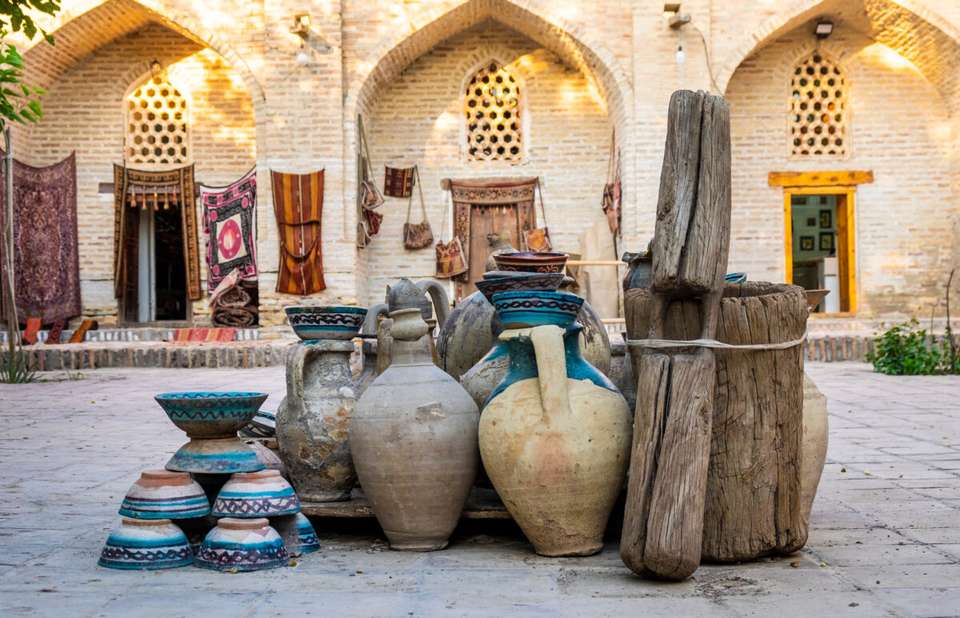
Along the way, we step into artisan workshops to see how Khiva’s crafts endure today, learning about the techniques behind wool and silk carpets, embroidery, ceramics and intricate wood inlay.
day 7 - Cross the Khorezm plains • Train to Bukhara
After breakfast, we drive for about two hours into the arid plains of Khorezm. Now sparsely settled, these lands were once marshy and densely inhabited by the Massagetae Scythians, horseback archers known for resisting successive empires – including defeating Cyrus the Great in 529 BCE. Our main stop is Ayaz-Qala, a sixth-century hilltop fortress with wide views across the steppe. Depending on timing, we may also visit other nearby castles before continuing to Urgench, about 1hr 30min away.
In the afternoon, we board a train from Urgench to Bukhara, travelling 6hr 30min across the Kyzyl-Kum desert. The service typically uses Soviet-era carriages with four-berth compartments, so it’s worth bringing snacks and water for the journey.
We arrive late into Bukhara and head straight to our hotel.
Please note: timings and itinerary may vary depending on train schedules.
day 8 - Explore the wonders of Bukhara
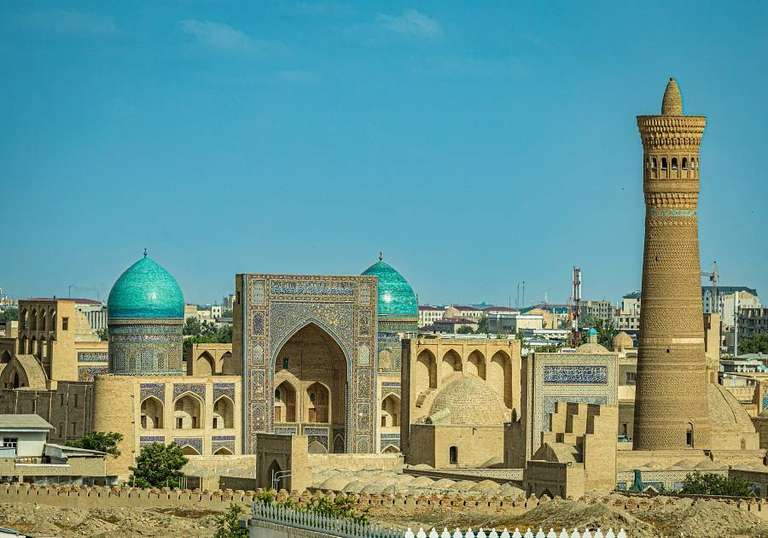
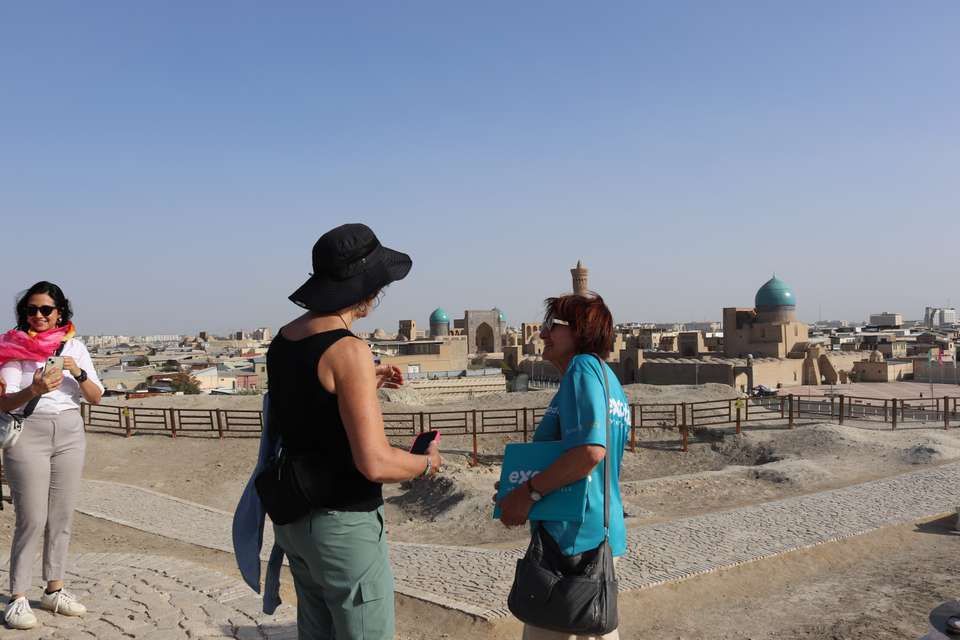
The 2,000-year-old city of Bukhara has an old centre that evokes the many centuries of traders and travellers who’ve passed through here on their way between the Mediterranean and China. We spend the day exploring this fascinating city, including a visit to the historic Lyabi Khauz architectural complex, which has the oldest reflective pool in Central Asia.
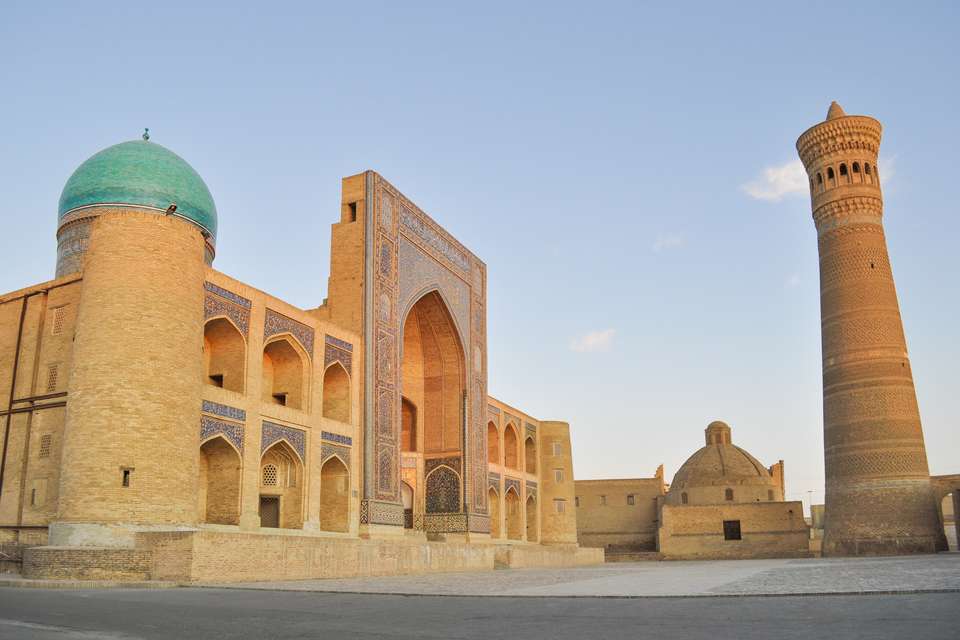
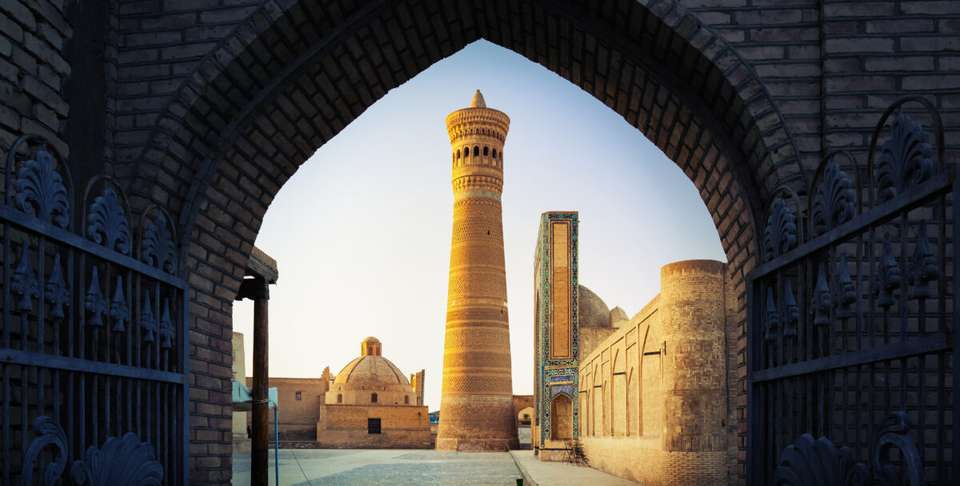
We also visit: Chashma-Ayub Mausoleum, a sarcophagus over an ancient sacred spring; the Mausoleum of the Samanids, the family tomb of the rulers of Bukhara; Ark Citadel, the residence of Bukhara’s rulers since the first century CE; the Poi Kalyan Complex, home to the 157ft (48m) high Kalyan Minaret; the Kalyan Mosque, which has 288 domes covering galleries below; Nodir Divanbegi Madrasah; and Chor-Minor, a small mosque of an original form.
day 9 - Visit the summer palace of the Bukharan emirs • Train to Samarkand
This morning, we delve further into Bukharan history at the Sitorai-Mokhi-Khosa Palace, the summer residence of the emirs. Our tour leader walks us through its blend of local design and Russian influence, pointing out the intricate ganch plasterwork, carved wood panels and richly painted reception rooms that once hosted courtly gatherings.
In the afternoon, we board the train to the great Silk Road city of Samarkand. When schedules allow, we use the high-speed Afrosiyob service, which covers the journey in just under two hours.
day 10 - Explore Samarkand
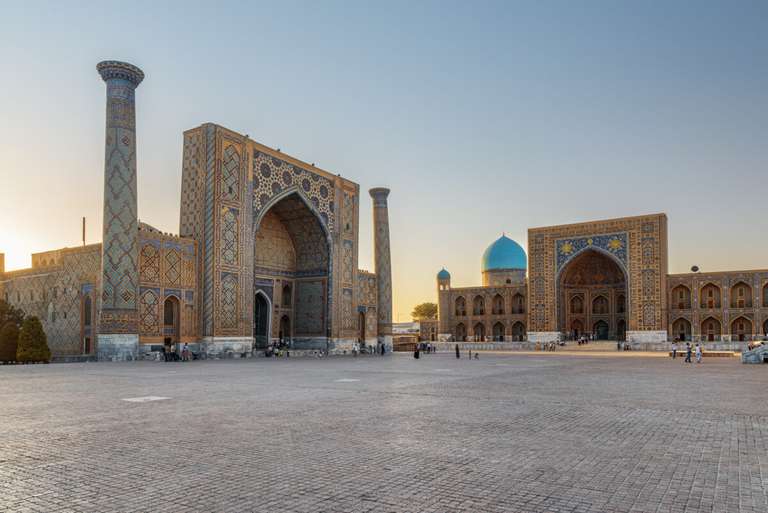
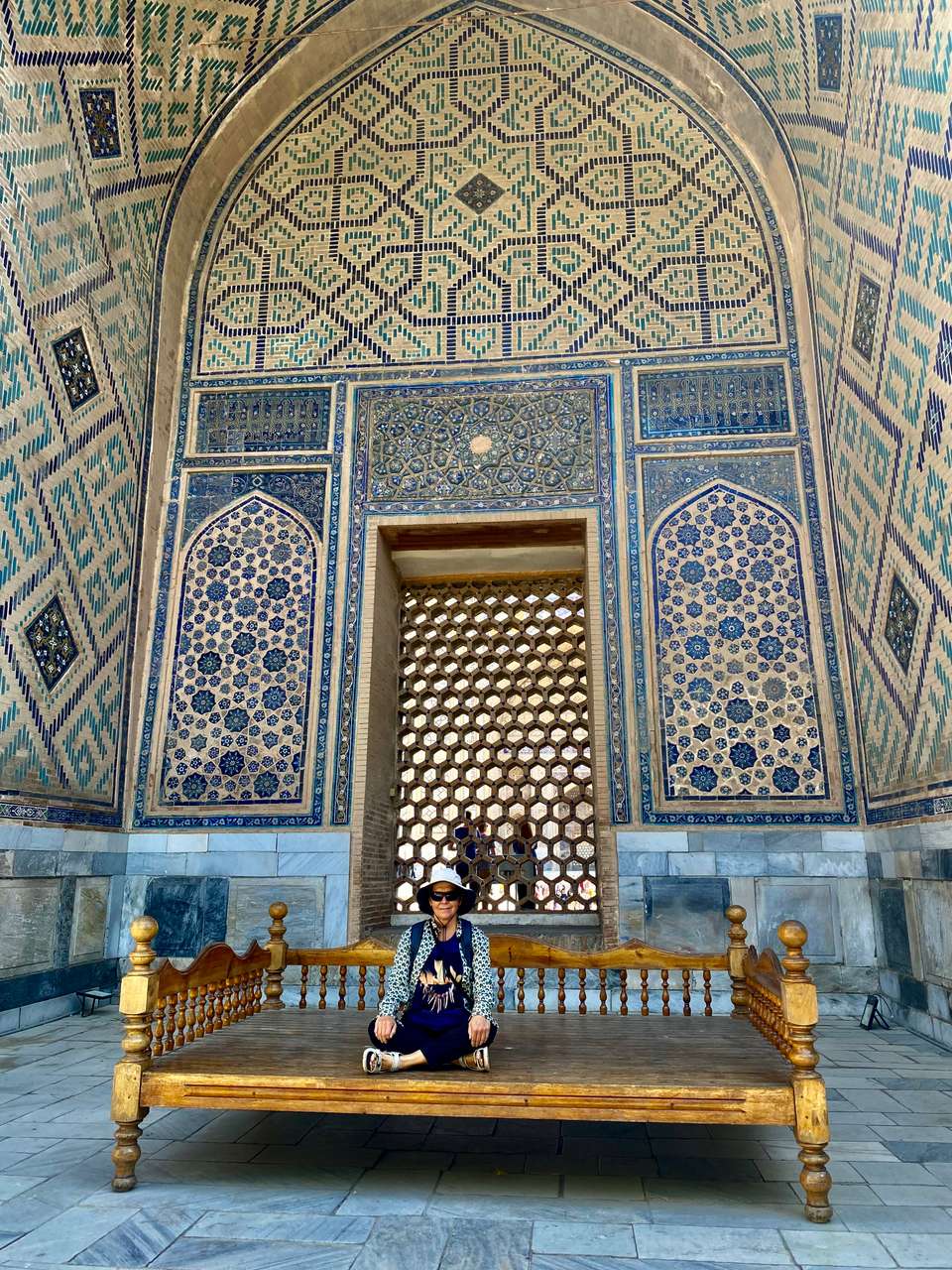
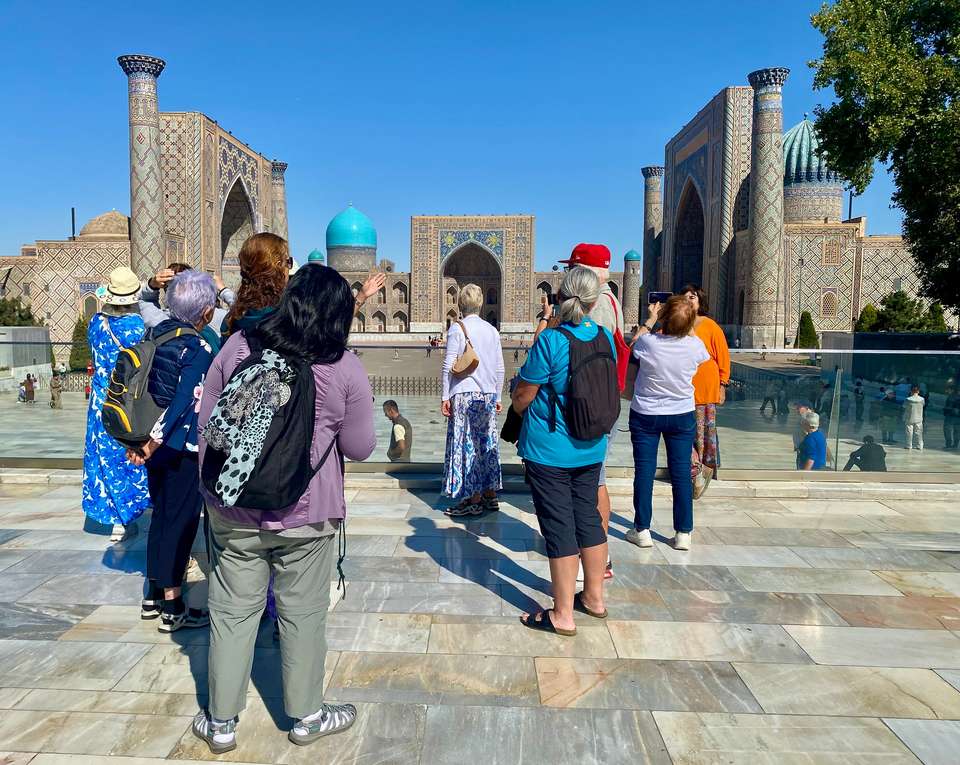
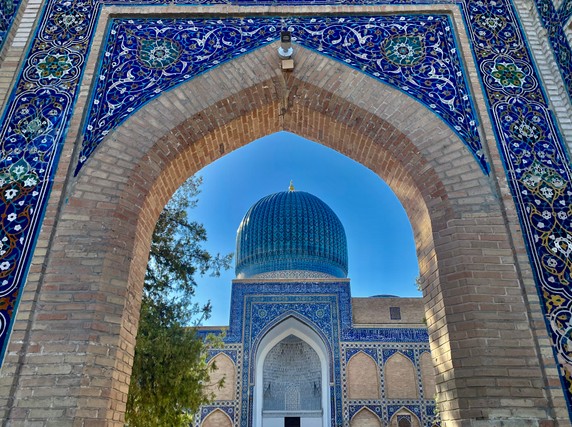
Possibly the most famous of the Silk Road cities, Samarkand has blue-tiled buildings that dazzle in the bright sun. Dating 2,500 years old and impacted by such figures as Alexander the Great, Genghis Khan and Tamerlane, it is home to one of the world’s great squares, Registan Square, surrounded on three sides by the madrassahs of Ulugh Beg, Sher-Dor and Tilya-Kori.
The city was the capital of the Tamerlane, and we spend the day visiting a number of Tamerlane-era sites, including the Gur-Emir Mausoleum, burial place of Tamerlane, his sons and his grandson, Ulughbek. The Ulugbek Observatory was built in 1420 by Tamerlane’s grandson who was not just a ruler but also a well-known astronomer.
We move to the oversized Bibi Khanum Mosque and Shakhi Zinda (the ‘Living King’ necropolis) where the mausoleums date to the 14th and 15th centuries. Our final visit is to the Siab Bazaar with its fresh and dried fruit and nuts and other local food produce, plus a paper factory. The exact order of visits may vary.
day 11 - Cross into Tajikistan • Sarazm and Penjikent
Drive to the Tajik border early this morning. We cross into Tajikistan, meet our local guide and transfer (20 minutes) to the town of Penjikent.
Our first stop is the World Heritage site of Sarazm, which dates back 5,500 years. In Penjikent, we enjoy a tour (three to four hours) that takes us to the Museum of Rudaki (Rudaki is considered by many to be the father of Persian poetry and he was born in Penjikent) and ancient Penjikent, ruins of a fifth-century Sogdian town founded, which was abandoned in the eighth century. We also explore the remains of houses, a citadel with Zoroastrian fire temples and a bazaar in the excavated ruins.
day 12 - Explore the Seven Lakes in the Fann Mountains
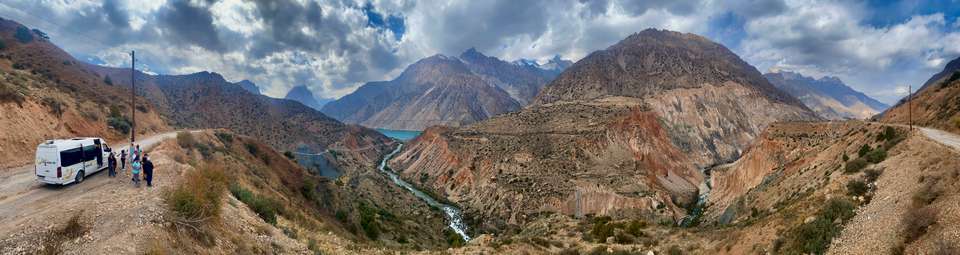
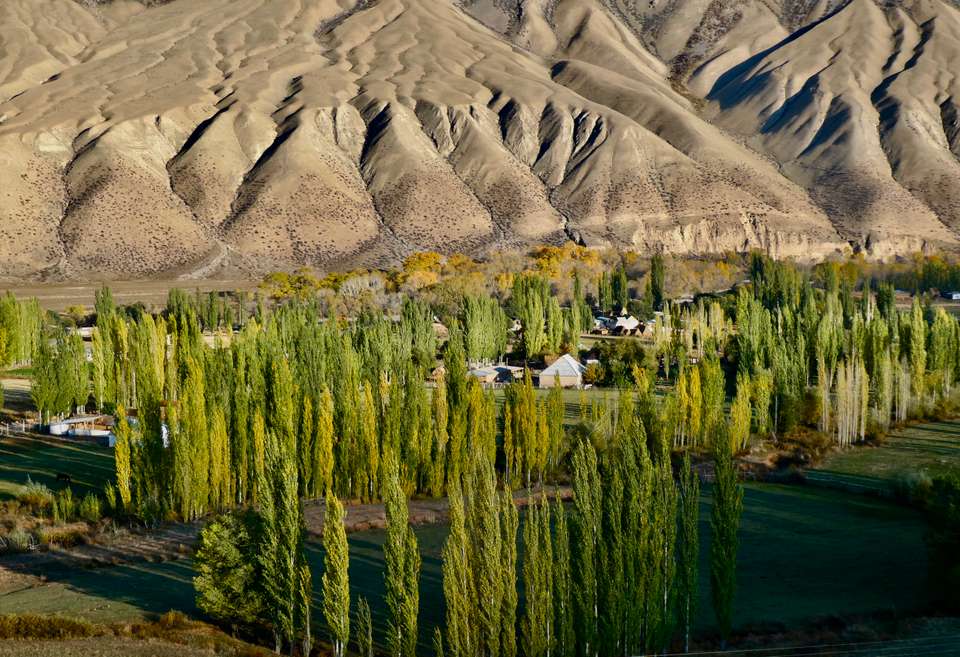
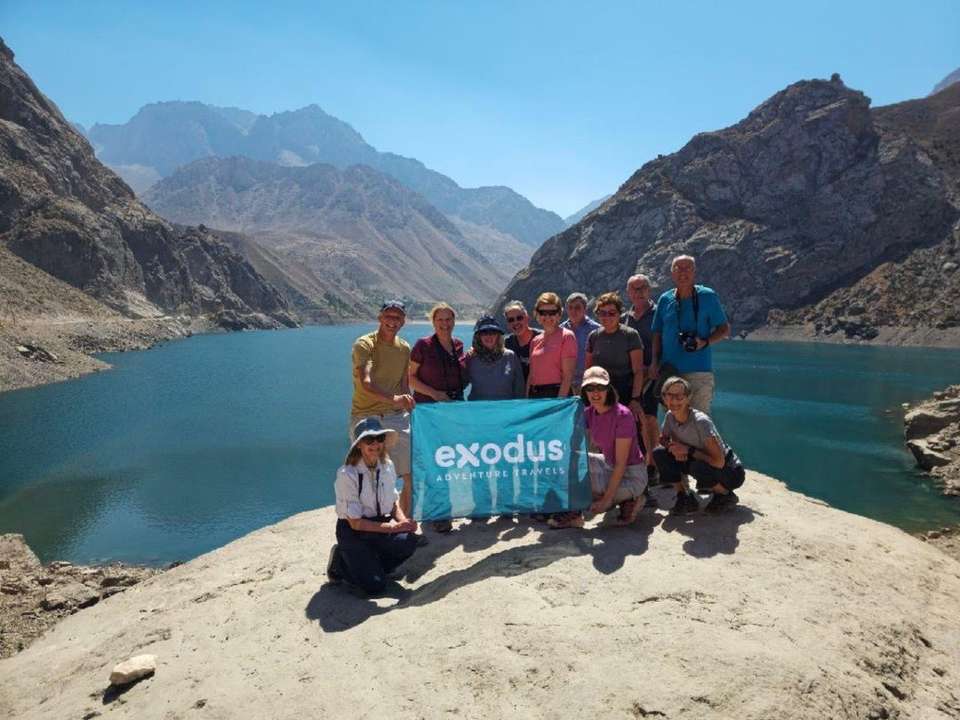
Take a trip into the heart of the Fann Mountains. We drive (50mi/80km) to Seven Lakes (Haf Kul in Tajik) in the Shing Valley, taking a sometimes bumpy and narrow road. The high mineral content in the water gives the lakes an unusual colour. We have time to enjoy the mountains, with a walk to Hazorchashma Lake and a picnic lunch in the village of Nofin before we return to Penjikent.
day 13 - To Khujand via Istaravshan
Leaving the Fann Mountains, head into the industrial and agricultural heartland around the city of Khujand (about four hours’ drive). En route, visit the town of Istravashan founded by the Persian king Kier in the sixth century, and visit the bazaar.
While Khujand, today, is not the most attractive of cities it has a complex history. Believed to be one of the oldest in Central Asia, it was attacked by Alexander the Great, Arab invaders and Genghis Khan, as well as being an important Silk Road stop. There are still traces of the glory days and we take a tour of the sites, including the Musuem of Archeology, Sheikh Maslikhiddin Mosque, the Payshanba bazaar and, if time, Arbob Palace, the Urumkhodjaev family country estate, a copy of the Russian tsarist palace of Peterhof.
day 14 - Khujand • Back into Uzbekistan • Rishtan and Margilan
Return to Uzbekistan via the border crossing at Andurkhan, where we say goodbye to our Tajik crew and re-join the Uzbeks.
The total driving time to Ferghana town is about five hours from Khujand, but we make several stops along the way. The first is at Kokand, which was the capital of the 19th-century Kokand Khanate. We visit the Khudoyar-Khan Palace (1871) home to a museum, the Norbuta-Biy Madrassah and the Modarikhon Mausoleum.
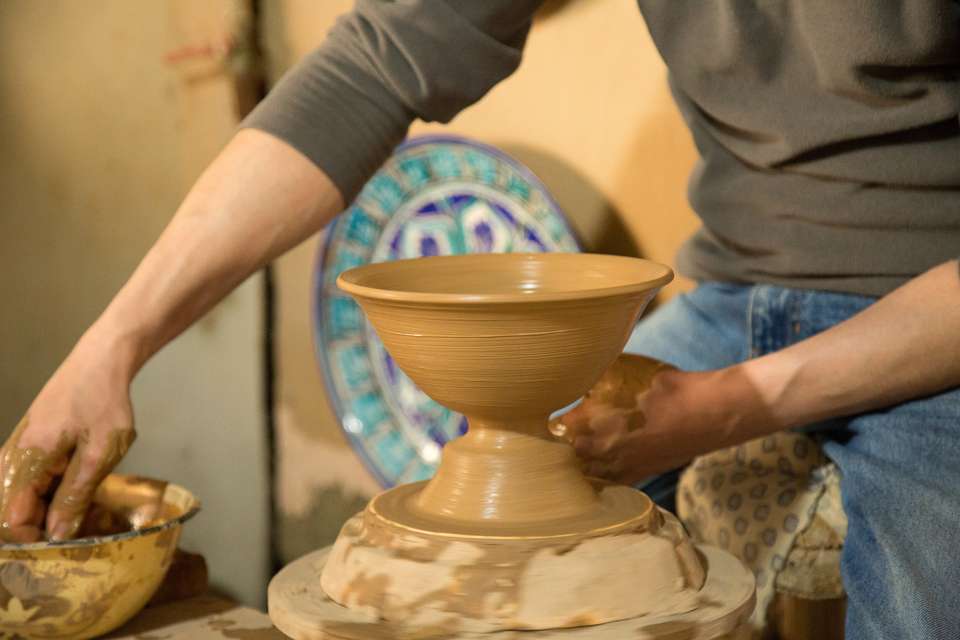
From here, continue to the small village of Rishtan, home to potter dynasties and ceramics masters. We visit a ceramics studio and witness a demonstration of the craft before the opportunity to buy earthenware.
Our final stop is at Margilan, where we visit a silk factory and learn about the material that gave its name to the greatest trade route in history. Eventually, we arrive in Fergana town where we spend the night.
day 15 - Cross into Kyrgyzstan • Visit Osh and Uzgen
Transfer to the Kyrgyz border this morning and say goodbye to our Uzbek leader. After border formalities at the Dustlik crossing, we meet our Kyrgyz leader and head into nearby Osh, the second-largest city in Kyrgyzstan. We visit the sacred Sulayman Mountain, a holy Muslim site (and burial place of the prophet Sulayman (Solomon) and the central point on the Silk Road. The walk to the top of Sulayman Mountain is paved with some steps and can be tiring in the heat but the views over the city and valley below, small museum and 15th-century church are worth the effort.
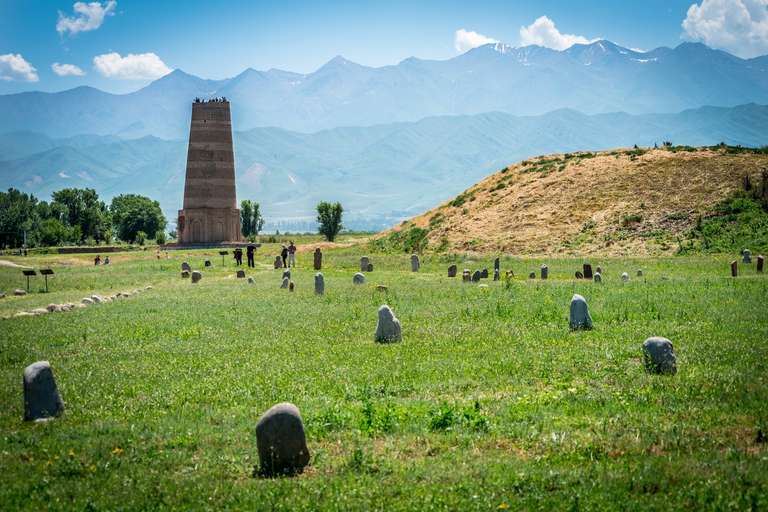
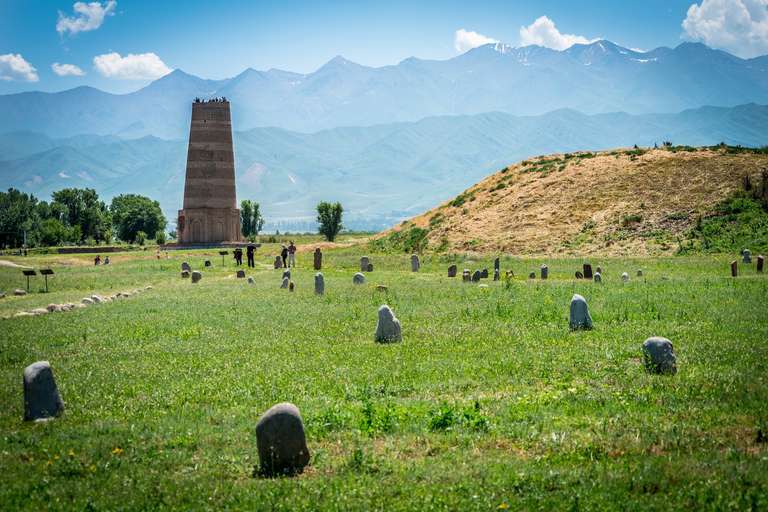
On the way to Jalal-Abad, we make a sightseeing stop at Uzgen. We take an excursion to an old minaret and mausoleums nearby and visit a rice bazaar. Uzgen has a history of over 2,000 years — it is claimed to be a site of numerous citadels built at various times since the first century BCE. It was an important centre of trade routes between the Fergana Valley and northern territories of Central Asia. Uzgen became a highly developed town in the Karakhanid’s epoch and developed into a large trading and handicrafts centre.
day 16 - Arslanbob Nature Reserve
Leave Jalal-Abad and transfer (approximately 1hr 30min) to Arslanbob Nature Reserve. The village of Arslanbob is in the mountains at around 5,250ft (1,600m) – though the top and bottom of the village vary considerably in altitude – and is surrounded by an ancient walnut forest believed to be the largest in the world.
We go for a walk and picnic lunch in the surrounding countryside. The walk takes around four hours (including lunch and stops) and requires walking shoes/boots. The pace is leisurely but if anyone prefers not to join, you are free to opt out.
After, we return (approximately 1hr 30min drive) to our guesthouse in Jalal-Abad.
day 17 - Rise to the high pastures of Son Kul • Settle into our yurt camp
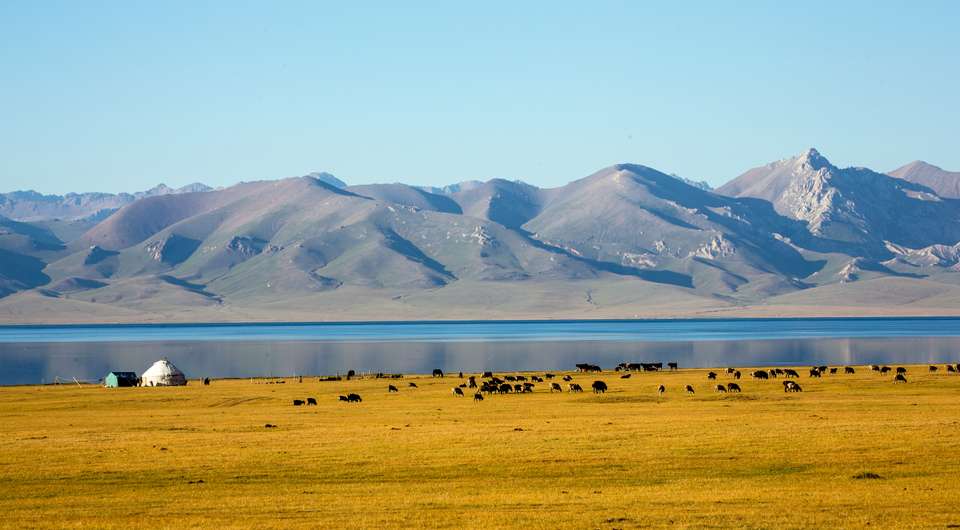
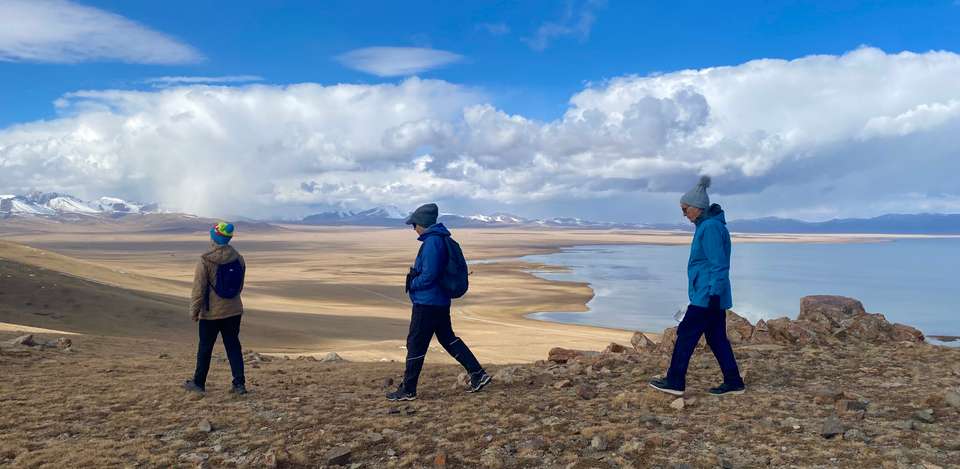
Leaving the gorges behind, we make the long journey towards the upland pastures surrounding Son Kul Lake, set at 9,895ft (3,016m). The drive takes around nine hours and includes stretches of rough road; a new route is under construction, though its opening date remains uncertain.
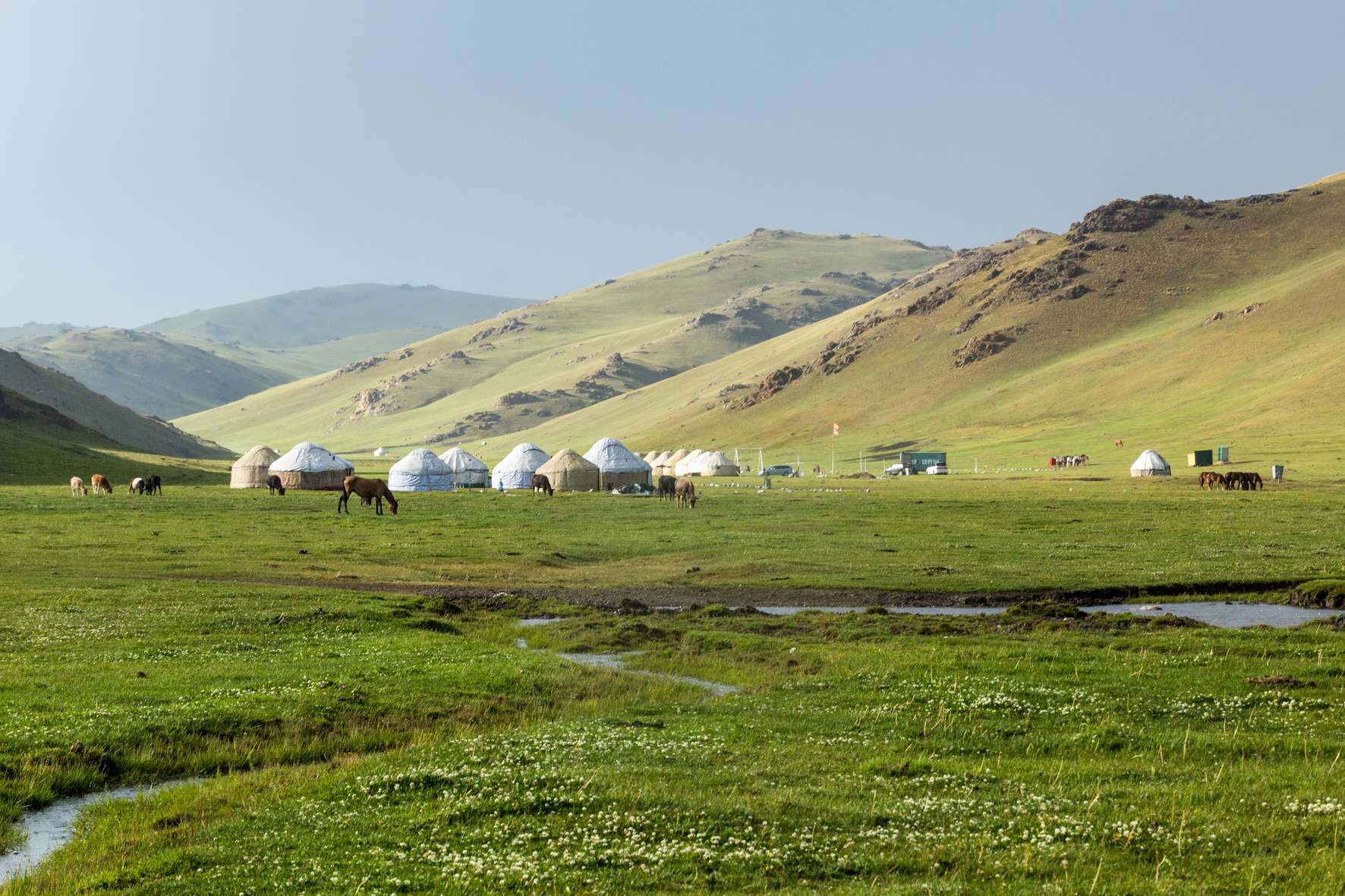
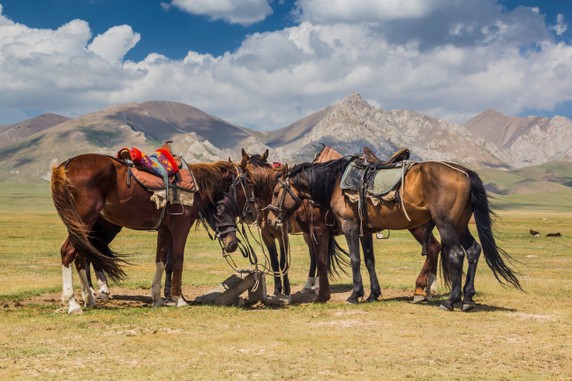
Son Kul is one of Kyrgyzstan’s most celebrated mountain landscapes, where herding families still bring their sheep and cattle to the jailoo (high summer pastures). Yurt camps have increased in recent years, but many are still run by the same families who tend the animals, giving us a window into a seasonal way of life that continues today.
We spend the night in a yurt camp, experiencing a comfortable, modernised version of nomadic living. Facilities now include Western-style toilets and a dedicated ‘shower yurt’ with proper showers and basins. Hot water is available when the generator is running (usually morning and evening), though it can be intermittent.
day 18 - Son Kul Lake
Spend today soaking up the beauty of the landscape around Son Kul. There is the option to go on a 2hr to 2hr 30min walk to the nearby hills – the slopes are quite steep, and this may not be for everyone, but at the top are a few petroglyphs to admire.
day 19 - To the shores of Issyk-Kul Lake • Watch an eagle-hunting demonstration
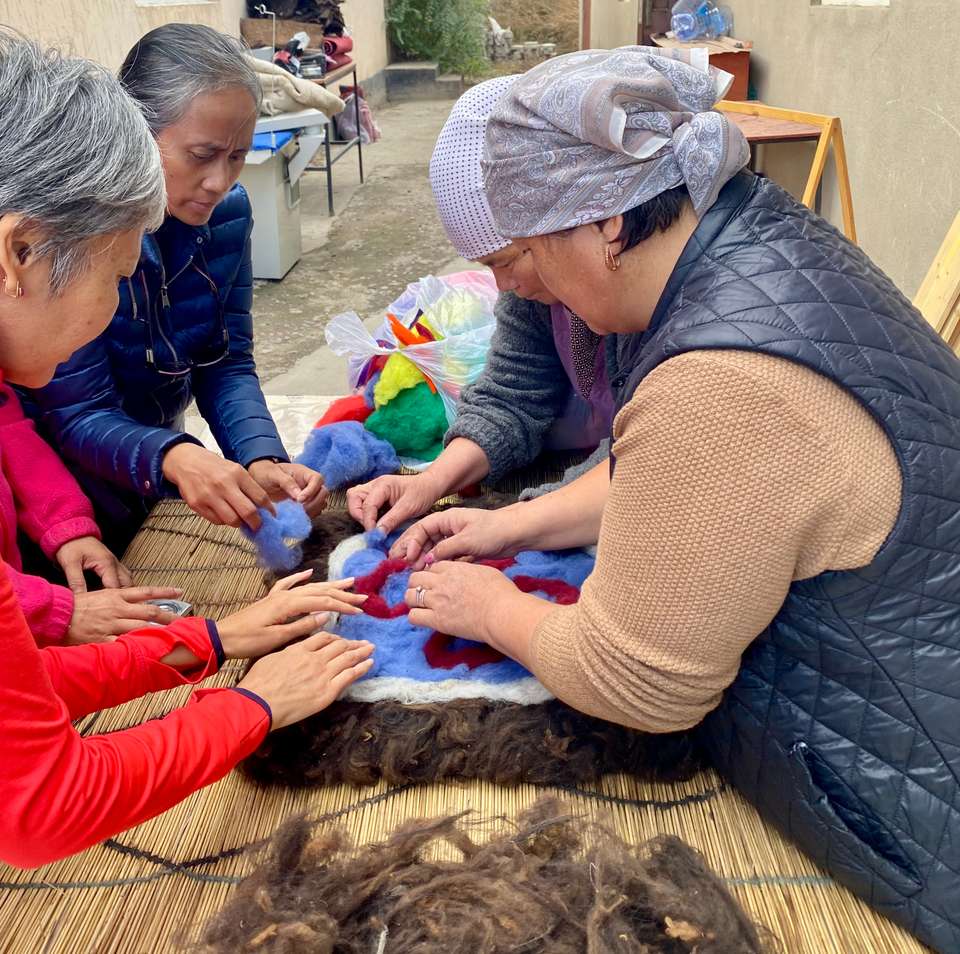
Our journey today first takes us to Kochkor, Kyrgyzstan’s most important centre for felt handicrafts. We visit a workshop and can participate in the manufacturing of national carpets.
From Kochkor, we travel through the central Tien Shan mountains, driving through picturesque canyons and gorges along the southern shores of Issyk-Kul, the second-largest salt lake in the world, measuring 43mi by 112mi (70km by 180km) and almost 2,300ft (700m) deep. Its name means Hot Lake and was given as it never freezes, even in the depths of winter. The surrounding area is a mixture of forest and meadow with a backdrop of towering mountains and glaciers.
We have an excursion at Bokonbaev village to observe a traditional form of falconry found throughout Central Asia – hunting with eagles. Eagle hunting plays a key role in the nomadic lifestyle here and can also be seen during national competitions.
day 20 - To Karakol • Sightseeing tour
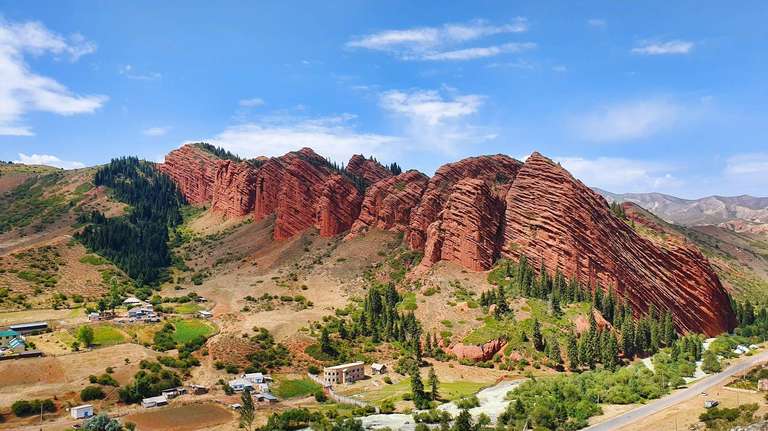
This morning, we continue our journey to Karakol. We head first to Barskoon Gorge, known for high waterfalls and dense spruce forests and visited by Yuri Gagarin, the first man in space. We hike to a waterfall called Bowl of Manas (named after the Kyrgyz national hero). Next is Djety Oguz Gorge where the Seven Bulls and Broken Heart rocks formations can be seen. From Djety Oguz, we continue to Karakol. There are about 2hr 30min of driving in total today.
The atmosphere of Karakol town takes you a hundred years back and gives you an impression of Tsarist Russia. We enjoy a sightseeing tour of Karakol, taking in old Russian-style houses, a Russian Orthodox church dating to 1886, a wooden Dungan mosque (1899) made without the use of nails, and Karakol bazaar.
This evening, we enjoy a home-cooked meal at a Uygur or Dungan family home.
day 21 - Visit Charyn River and Black Canyon • To Almaty, Kazakhstan
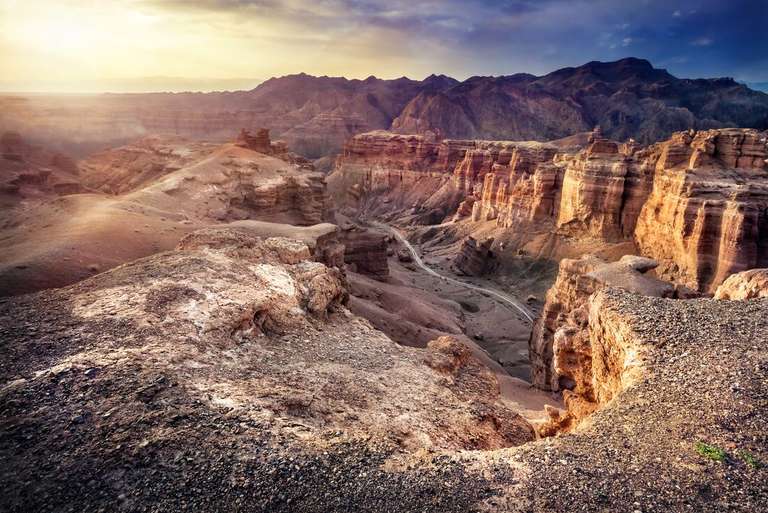
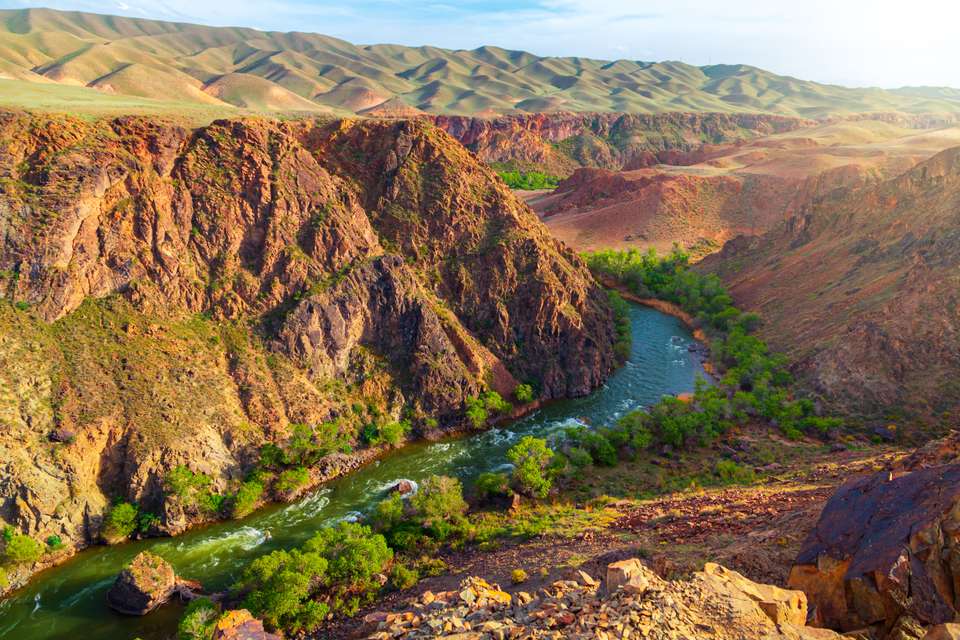
Today we cross the Kyrgyz-Kazakh border and, after border procedures (which may take one to two hours), travel along the picturesque Karkara valley, where mountain flowers attract many beekeepers. We head towards Charyn River, where the dramatic erosion caused by the river has created an impressive landscape. We have some time to observe the beginning of Charyn and Moon Canyons from different viewpoints. After a short walk and some time for photographs, we continue towards the Black Canyon. There is time for a picnic lunch in the canyon (you can buy your picnic from a supermarket earlier in the day). After our visit we continue to Almaty with an expected arrival time of around 5pm. There are about six hours of driving today.
day 22 - Explore Almaty • See Panfilov Park
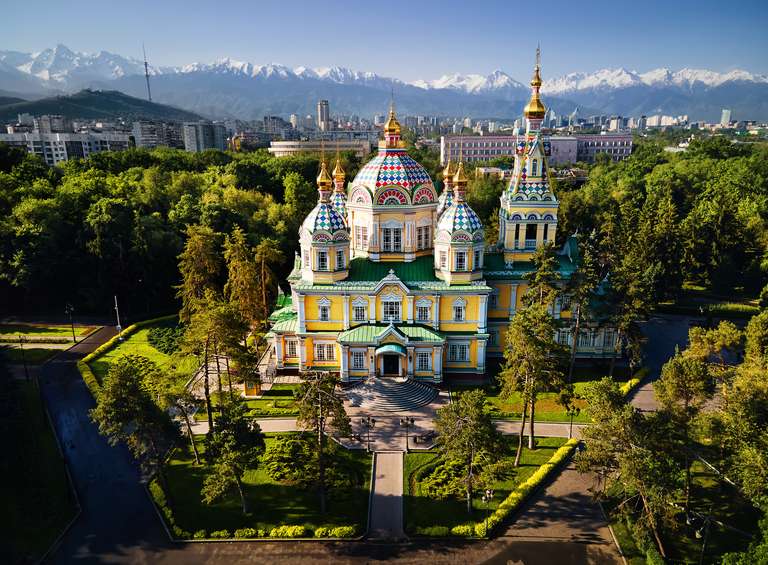
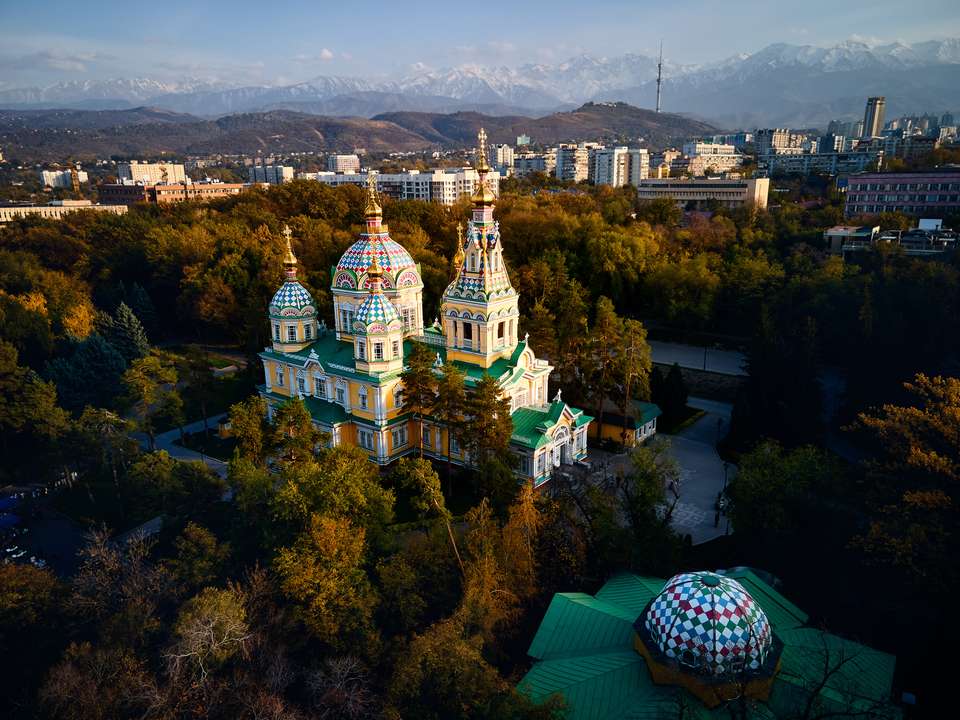
Almaty is a beautiful city with its backdrop of the Tien Shan mountains, and we have the whole day to explore. With leafy streets and a cafe culture, the former Kazakh capital has a distinctly European feel. We set off on a city tour after breakfast, visiting a number of sites, including Zhenkov Cathedral (Ascension Cathedral), made entirely of wood and without the use of nails, Panfilovs Park, home to the Piously-Voznesenskiy Orthodox Cathedral (1907), which was built without any nails, the Great Patriotic and Civil War monuments and eternal flame, and the Museum of National Instruments.
day 23 - Adventure ends in Almaty
Our adventure comes to an end in Almaty after breakfast.

Get Trip Brochure & Exclusive Discount
Download a detailed PDF brochure and unlock an exclusive discount for this tour
What's Included
What's Excluded
Customer Reviews
Read what other travelers have to say about The Five Stans of the Silk Road - Ashgabat to Almaty
Amazing!
If you want to discover 5 countries and their varied cultures, histories and scenery and meet some lovely people, all in three weeks, this trip is for you. We saw some wonderful, stunning scenery, met some amazing friendly people, found out about the past complicated history and the challenges they face today. It is fast paced, there are long journeys but totally worth it and loads to see and do on the way.
From desert camels to mountain yak
This was the longest duration trip I’ve ever taken, covering the most ground by road and with some (by my standards) fairly extreme variations of temperature, altitude and landscape. But it was mostly very unusual, often spectacular and totally worth the bumpy ride - take layers, medications and a better camera than I did. The people were also a particular highlight. Jabbar in Turkmenistan was an impossible act to follow, but the local leaders were all very good. The group was a great mix and we bonded over one or two minor glitches and some medicinal vodka. We met the friendliest local people in markets, at the border crossings, on the road. They were very often willing to share my three words of Russian, and to practice their English. It was also very nice to be asked to join them for their photos - probably some of these invitations were from other tourists, but was still great to feel like the exotic extra for a change.
Superb tour through the 'Five Stans of the Silk Road'!
I can honestly say as a seasoned traveller the 'Five Stans of the Silk Road' tour was one of the best I've been on! In a well-planned and packed 3-week itinerary we got to compare & contrast the highlights of five countries in Central Asia (Turkmenistan, Uzbekistan, Tajikistan, Kyrgyzstan and Kazakhstan) each with its own distinct culture, history and approach to life. Exodus provided local guides for each country to ensure we got beneath the surface to learn more about the people. We stayed in a variety of excellent accommodation from plush hotels to lakeside yurts and the food was usually locally sourced, freshly cooked and delicious. An endlessly fascinating and thoroughly recommended for anyone with a sense of adventure and desire to learn about & experience a little-known corner of the world!
Amazing, Extensive, Exhausting Trip
If you want to see classic Silk Road architecture then go to Uzbekistan. If you want to see amazing mountain scenery then go to Kyrgyzstan. If you want to see both of the above plus three other countries in Central Asia, whilst experiencing a wide range of 'best of' activites plus a few off the beaten track sights, all crammed into three hectic weeks, then the Five Stans trip is the one for you. My expectations were high, but this trip surpassed them.
A long and varied road
This amazing trip was like several holidays rolled into one. From the surreal weirdness of Ashghabat and Darvaza, through ancient archaeological sites to the stunning monuments in Bukhara and Samarkand, through the desert to the Afghan border then up into beautiful mountains, lakes, rivers and nomad camps, before descending back down to the modern post-Soviet cities… every day there was something new and wonderful to see.
Tour Availability
Select your preferred departure date and secure your spot
Loading availability...
Do you need help from our trip consultants?
If you have any question about this tour or need help with planning a trip, please do not hesitate to get in touch with us.
Our travel experts are ready to help.



Why Book with Bookmundi
Earn USD 316+ in travel credits.
Best price guaranteed.
No credit card or booking fees.
100% financial protection.
Carbon neutral tours.
25,000+ trip reviews, with an average rating of 4.8 out of 5.