UK and Britain Trekking and Hiking Trips 2025/2026
Great trekking and hiking trips in UK and Britain in 2025/2026. Compare prices for 65+ trekking and hiking tours with 140+ trip reviews. Book today and save up to 3% on Bookmundi.com!
Page 4 of 40 Trekking and Hiking Trips in UK and Britain with 148 Reviews
Follow the Coast to Coast Walk from St Bees towards the historic villages and beautiful landscapes of the Yorkshire Dales. Experience the most dramatic section of Wainwright’s legendary Coast to Coast route on this self-guided walking holiday from the Irish Sea at St Bees to the market town of Kirkby Stephen. The western half of the trail showcases some of the most spectacular scenery in northern England, taking you across the rugged heart of the Lake District National Park and into the edge of the Yorkshire Dales.
If you're short on time, new to long-distance walking, or prefer to explore the route in manageable stages, this itinerary is an ideal way to sample the best-loved landscapes of the Coast to Coast. It’s also perfect for hikers who simply want the thrill of crossing the Lake District on foot, experiencing the quiet valleys, shimmering lakes, towering peaks and traditional fellside villages. You’ll start your journey by dipping your boots in the Irish Sea at St Bees, then head east with the prevailing wind at your back. The route leads through dramatic valleys such as Ennerdale, Borrowdale, and Patterdale, with the chance to take optional high-level detours to iconic Lakeland summits like Helvellyn. As the Lake District fells give way to the gentler landscapes of the Yorkshire Dales, your walk concludes in Kirkby Stephen, a charming town with rail links and a great place to relax after an inspiring week on the trail.
Looking to take things at a gentler pace? Our 9-day version of this trip (trip code WSK) breaks up the longer stage between Shap and Kirkby Stephen, offering a more relaxed alternative.
Scroll down to explore all our Coast to Coast walking options.
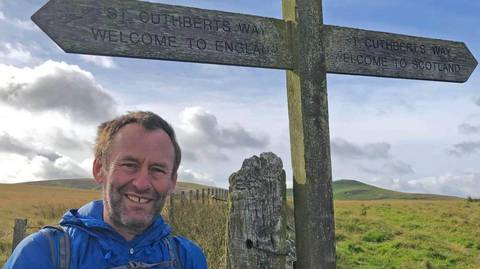
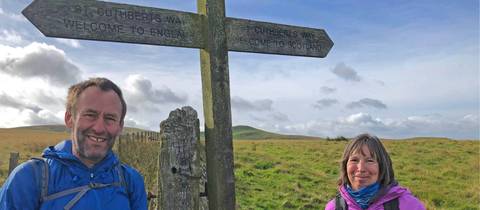
Walk through the Cheviot Hills from Scotland to England en-route to Britain's very own Galapagos. The St Cuthbert’s Way is a long-distance path that was established in 1996. The route reflects the life of this 7th century monk, extending from Melrose Abbey in the Scottish borders, where he became bishop to the island of Lindisfarne just off the coast of Northumberland in northeast England, where he was buried. So the ‘Way’ links places associated with his life. It includes a variety of delightfully unspoilt countryside: the Tweed Valley (origin of the famous woollen cloth), the Eildon Hills, the Cheviot Hills (origin of one of the most famous breeds of sheep), and the Northumberland coast with its broad horizons, sandy beaches and dramatic contrasts between high and low tide. The small historic towns en route - Melrose, Kirk Yetholm and Wooler - are equally unspoilt and offer a pleasant contrast with the thinly populated countryside. There is an abundance of historical features, including ruined abbeys at Melrose and Lindisfarne, the battle site at Harestanes Moor and old castles. The standard route is intended to be walked in 4 long days, but we have made several modifications to make the day stages slightly shorter and perhaps more interesting. The tour ends on Lindisfarne, but we recommend that if you have time, you opt for the extended tour which takes you back to the mainland and the beautiful village of Bamburgh overlooked by its grand castle and further down the coast, past the magnificent ruins of Dunstanburgh Castle to near the ancient kipper producing village of Craster.
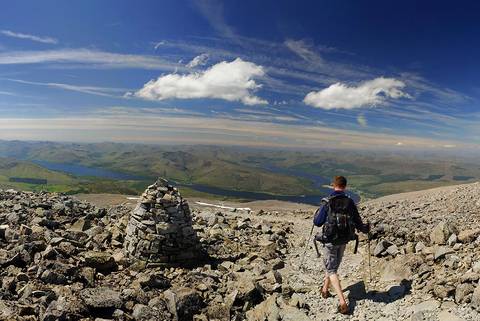
Craving the thrill of Scotland’s wild landscapes? The "Classic Walks of Scotland" tour invites you to experience the country’s most legendary hiking trails, from the West Highland Way to the dramatic ascent of Ben Nevis—the UK’s highest peak. Over six days, you’ll trek alongside expert guides through ever-changing scenery, from the atmospheric pubs and cozy guesthouses of Fort William to the breathtaking vistas along the Great Glen Way. Perfect for active travelers and hiking enthusiasts, this challenging tour combines physical adventure with cultural richness. The unique selling point is the chance to conquer iconic Scottish walks while celebrating each day in true Highland style, making for a truly memorable trekking holiday.
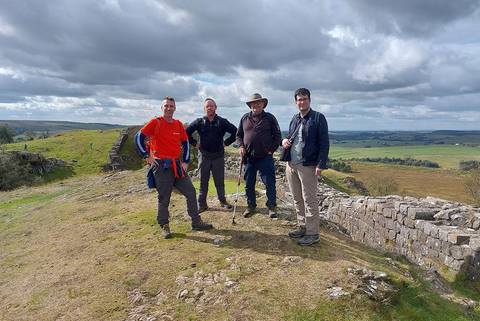
Step into Britain’s ancient history with this seven-day walking trip along Hadrian’s Wall, stretching from Carlisle to Hexham. Traverse rolling countryside, pause in charming English villages, and explore well-preserved Roman ruins along this UNESCO World Heritage trail. With moderate activity suited for those comfortable with daily walking, this guided tour balances physical adventure with cultural enrichment. The standout feature? A unique opportunity to walk in the footsteps of Roman legions while soaking up the pastoral beauty of northern England.
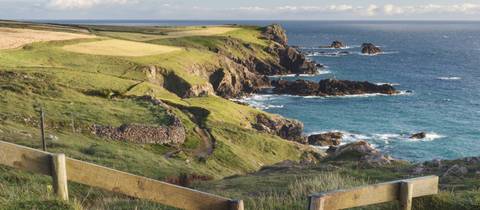
Follow the rugged Cornish Coastal Path from Padstow to Penzance in Cornwall. From Padstow to Penzance, this South West Coast Path adventure offers a rich blend of natural beauty and Cornish heritage in a 13-day itinerary. Follow the Camel Estuary and cliff-top paths past hidden coves and golden beaches to the surfing hub of Newquay. Explore ancient Iron Age forts at Trevelgue Head and spot remnants of Cornwall’s tin mining past near Perranporth and Portreath. Highlights include the dramatic cliffs at Hell’s Mouth, seal sightings near Godrevy Point, and a scenic walk through the Hayle dunes into charming St Ives. Beyond the cobbled streets and art galleries of St Ives, the trail continues past shipwreck sites like the Carracks, inland to Zennor, and along the rugged Penwith coastline. Visit iconic Land’s End, the cliffside Minack Theatre at Porthcurno, and the old smuggler’s pub , the “Lamorna Wink”. Pass through the picture-postcard fishing village of Mousehole (pronounced “Mowzl) and end your journey in the bustling coastal town of Penzance with sea views of striking St Michael’s Mount.
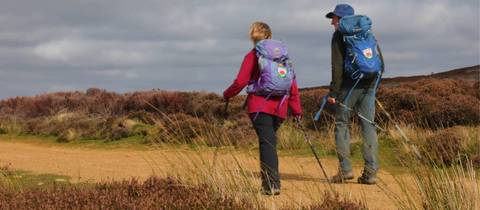
A mixture of coastal and moorland walking The Cleveland Way. Walkers familiar with Wainwright’s Coast to Coast path will already be well acquainted with a couple of spots along the rolling Cleveland Way such as The Wainstones, Urra Moor and Robin Hood Bay. In fact it shares about 10 miles of routing with the ‘C to C’. Maybe they will be intrigued enough by their flirtation with the trail to don their boots once again and take up the challenge of the 110 mile Cleveland Way route from Helmsley to Filey in its entirety. What stands out is the experience of half a walk over hill and scarp edges and half along the hilly coastline of the Yorkshire seaside. There is much to enjoy for those interested in history, those ‘collecting’ National Trails and for aficionados who wish to enjoy arguably the best Fish ‘n’ Chips in England at Whitby Bay! This is the second of the ‘National Trails’, dating from 1969 and is rooted in the North York Moors National Park / Yorkshire Heritage Coast. Along its length there are contrasts in walking between field - quilted farmlands, forest patches, dramatic sandstone rock scarps, bleak moorlands and the highly eroded coastline, punctuated by beautiful little fishing villages, clinging to the cliffs. It is an area that has been threatened by the expansion of the Tyne – Tees Conurbation on the one side and by the encroaching North Sea on the other. However apart from busy coastal towns such as Scarborough, it remains a tranquil area, bolstered and protected by the presence of the National Park of which about 80% of the walk occupies. Highlights of the Cleveland Way include, the remains of the Norman Rievaulx Abbey, and 13th century Whitby Abbey (but dating from the 7th century!), the Captain Cook Monument and Robin Hoods Bay with it's cliff-hanging cottages. Most of the route follows well sign-posted footpaths, which generally have good surfaces and are easy to follow. The exception to this is along the coastal path, which, in some places, is overgrown and uneven underfoot. The amount of daily ascent and descent is moderate, with much of the walk being on level or gently sloping ground. There are a number of steep ascents along the section from Osmotherley to Urra Moor and at some places along the coast, but these are generally of no more than one or two hundred metres at a time.
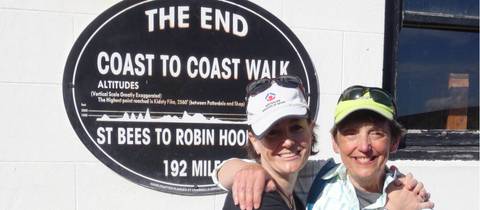
Walk part of the Coast to Coast Walk through the Yorkshire Dales and North York Moors at your own pace. Embark on the eastern half of Alfred Wainwright’s legendary Coast to Coast walk, tracing the route from the rugged Pennines through the Yorkshire Dales and across the heather-covered North York Moors to the dramatic cliffs of the North Sea.
Your hike begins near the halfway point of the trail in the Pennines Area of Outstanding Natural Beauty. Cross into the Yorkshire Dales National Park and climb the mystical Nine Standards Rigg. From there, you will follow the scenic River Swale past timeless villages and rolling farmland before arriving in the historic market town of Richmond. The journey continues into the North York Moors National Park, where panoramic vistas and sweeping moorland paths guide you towards the coast.
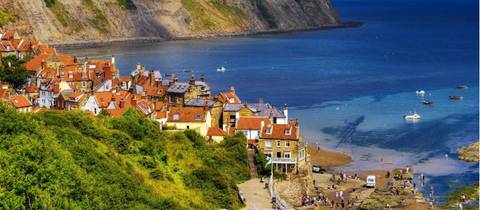
The final stretch leads to Robin Hood’s Bay, where tradition calls for dipping your boots in the North Sea and marking your achievement with a pint, a glass of champagne, or an ice cream on the beach. Along the way, you’ll enjoy the charm of classic northern England; fields of sheep, rolling hills, dry stone walls, friendly local communities, and hearty full English breakfasts. Accommodation is in cosy country hotels, welcoming guesthouses, and traditional pubs—each reflecting the warm hospitality of rural England.
For a gentler pace, our 11-day itinerary (trip code WCO) breaks up the final two long stages between Richmond and Blakey Ridge, giving you more time to savour the scenery. Scroll down to explore all our Coast to Coast walking holiday options.
Walk through the Cheviot Hills from Scotland to England en-route to Britain's very own Galapagos. The St Cuthbert’s Way is a long-distance path that was established in 1996. The route reflects the life of this 7th century monk, extending from Melrose Abbey in the Scottish borders, where he became bishop to the island of Lindisfarne just off the coast of Northumberland in northeast England, where he was buried. So the ‘Way’ links places associated with his life. It includes a variety of delightfully unspoilt countryside: the Tweed Valley (origin of the famous woollen cloth), the Eildon Hills, the Cheviot Hills (origin of one of the most famous breeds of sheep), and the Northumberland coast with its broad horizons, sandy beaches and dramatic contrasts between high and low tide. The small historic towns en route - Melrose, Kirk Yetholm and Wooler - are equally unspoilt and offer a pleasant contrast with the thinly populated countryside. There is an abundance of historical features, including ruined abbeys at Melrose and Lindisfarne, the battle site at Harestanes Moor and old castles. The standard route is intended to be walked in 4 long days, but we have made several modifications to make the day stages slightly shorter and perhaps more interesting. The tour ends on Lindisfarne, but we recommend that if you have time, you opt for the extended tour which takes you back to the mainland and the beautiful village of Bamburgh overlooked by its grand castle and further down the coast, past the magnificent ruins of Dunstanburgh Castle to near the ancient kipper producing village of Craster.